(Press-News.org) This news release is available in German.
In a paper published this week in the journal Nature Chemistry, researchers from the Center for Electrochemical Sciences – CES at the Ruhr-University Bochum and from the Max-Planck-Institute for Chemical Energy Conversion in Mülheim an der Ruhr report a novel concept to work with efficient and possibly cheaper catalysts. A kind of buffer protects the catalysts against the hostile conditions encountered in fuel cells, which have been to date dismissed utilization. The scientists report in the current issue of Nature Chemistry.
Hydrogenases, an alternative to platinum?
Bio-catalysts for hydrogen oxidation – so called hydrogenases – are also part of nature. They developed just by using elements available to living organisms, that means without any noble metals. Complex hydrogenases evolved based solely on abundant elements such as nickel and iron. The most efficient hydrogenases reach the turnover rate of platinum and the supply of the elements they consist of is virtually unlimited. "For this reason Hydrogenases are potentially interesting alternatives to noble metals", says Prof. Dr. Wolfgang Schuhmann (Professorship for analytical chemistry at the RUB). Though hydrogenases are not able to work while being under the constraints encountered in a fuel cell. Traces of oxygen and extreme electrical potentials cause deactivation processes.
Redox hydrogel, a shield for efficient but sensitive catalysts
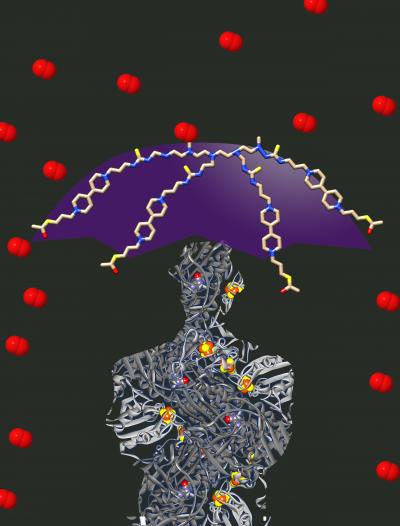
The team in Bochum and Mülheim focused nevertheless on a new strategy to accommodate sensitive catalyst to the working conditions of standard fuel cells. The key idea is to shield the catalyst in a protective matrix with properties specifically designed to prevent the deactivation processes. Instead of contacting the hydrogenase directly to the electrode, an immobilization in a redox hydrogel shall protect the construct. It is designed to serve both as a redox buffer and an oxygen scavenger. Hence, within the hydrogel film, neither high potential, nor oxygen affects the bio-catalyst. Under working conditions the hydrogel-modified fuel cell is able to convert chemical energy from hydrogen into electrical energy over several weeks, while in absence of the hydrogel, the hydrogenase is deactivated within seconds.
A major step toward a novel fuel cell redesign
"The hydrogel concept opens the possibility to integrate a variety of other sensitive biological or artificial catalyst for which the intrinsic stability cannot be further increased", says Prof. Wolfgang Lubitz, Director at the MPI CEC. "This is a major step toward a novel fuel cell redesign, which may reposition them at the forefront in the race toward global sustainable energy industry."
INFORMATION:
Funding
The project was funded by the German Research Foundation (Deutsche Forschungsgemeinschaft) as part of the Cluster of Excellence RESOLV – Ruhr explores solvation (EXC 1069).
A protecting umbrella against oxygen
Toward fuel cells built from renewable and abundant components
2014-08-04
ELSE PRESS RELEASES FROM THIS DATE:
Self-assembly of gold nanoparticles into small clusters
2014-08-04
This news release is available in German.
This was determined using Small-Angle X-ray Scattering (SAXS) at BESSY II. A thorough examination with an electron microscope (TEM) confirmed their result. "The research on this phenomenon is now proceeding because we are convinced that such nanoclusters lend themselves as catalysts, whether in fuel cells, in photocatalytic water splitting, or for other important reactions in chemical engineering", explains Dr. Armin Hoell of HZB. The results have just appeared in two peer reviewed international academic journals.
"What ...
Lung cancer diagnosis tool shown to be safe and effective for older patients
2014-08-04
A recent study in Manchester has found that a procedure to take tissue samples from lung cancer patients can be used safely in the elderly – allowing doctors to make a more accurate diagnosis and to choose appropriate treatment.
Half of all lung cancer patients are over 70 years old when first diagnosed, but studies have shown that these older patients are less likely to receive an accurate diagnosis.
A correct assessment of the stage of a patient's disease – how much their tumour has grown and spread – is key to ensuring they receive the right treatment.
Non-invasive ...
Protein ZEB1 promotes breast tumor resistance to radiation therapy
2014-08-04
Twist, Snail, Slug. They may sound like words in a children's nursery rhyme, but they are actually the exotic names given to proteins that can generate cells with stem cell-like properties that have the ability to form diverse types of tissue.
One protein with the even more out-there name of ZEB1 (zinc finger E-box binding homeobox 1), is now thought to keep breast cancer cells from being successfully treated with radiation therapy, according to a study at The University of Texas MD Anderson Cancer Center in Houston.
Li Ma, Ph.D., an assistant professor of experimental ...
Phases of clinical depression could affect treatment
2014-08-04
Research led by the University of Adelaide has resulted in new insights into clinical depression that demonstrate there cannot be a "one-size-fits-all" approach to treating the disease.
As part of their findings, the researchers have developed a new model for clinical depression that takes into account the dynamic role of the immune system. This neuroimmune interaction results in different phases of depression, and has implications for current treatment practices.
"Depression is much more complex than we have previously understood," says senior author Professor Bernhard ...
Analysis of African plant reveals possible treatment for aging brain
2014-08-04
LA JOLLA—For hundreds of years, healers in São Tomé e Príncipe—an island off the western coast of Africa—have prescribed cata-manginga leaves and bark to their patients. These pickings from the Voacanga africana tree are said to decrease inflammation and ease the symptoms of mental disorders.
Now, scientists at the Salk Institute for Biological Studies have discovered that the power of the plant isn't just folklore: a compound isolated from Voacanga africana protects cells from altered molecular pathways linked to Alzheimer's disease, Parkinson's disease and the neurodegeneration ...
Becoming bad through video games
2014-08-04
Previous studies show that violent video games increase adolescent aggressiveness, but new Dartmouth research finds for the first time that teen-agers who play mature-rated, risk-glorifying video games are more likely subsequently to engage in a wide range of deviant behaviors beyond aggression, including alcohol use, smoking cigarettes, delinquency and risky sex.
More generally, such games – especially character-based games with anti-social protagonists – appear to affect how adolescents think of themselves, with potential consequences for their alter ego in the real ...
Still no 'justice for all' for female athletes
2014-08-04
Spanish hurdler María José Martínez-Patiño, who in the 1980s endured harsh global media attention when she was subjected to unscientific gender tests, is co-author of a study that takes stock of current sexual verification policies in athletics. While such policies were originally designed to weed out men who impersonate women at female-only events, issues of privacy and confidentiality remain paramount to safeguard athletes from unnecessary embarrassment, says Nathan Ha of the University of California Los Angeles in the US, lead author of the review in Springer's journal ...
Attention, bosses: web-surfing at work has its benefits
2014-08-04
A new e-memo for the boss: Online breaks at work can refresh workers and boost productivity. Early findings from a University of Cincinnati study will be presented on Aug. 5, at the 74th annual meeting of the Academy of Management in Philadelphia.
The study led by Sung Doo Kim, a doctoral candidate in the Carl H. Lindner College of Business, opens a rare avenue of research into coping with technology-induced distractions in our contemporary society.
Previous research has focused on breaks during off-job hours such as evening, weekend and vacation periods, or on traditional ...
Fruit flies going high-tech: How touchscreen technology helps to understand eating habits
2014-08-04
A new study reveals surprising similarities between the way mammals and flies eat. What and how we eat is a crucial determinant of health and wellbeing. Model organisms such as fruit flies have provided crucial insights into how our brain decides what and how much to eat. But until now it was not clear how similar eating was in fruit flies and mammals (vertebrates).
In a paper published today (Itskov et. al 2014) in the scientific journal Nature Communications, scientists from the Champalimaud Neuroscience Programme, Lisbon, Portugal, in collaboration with the University ...
Nanoscale details of electrochemical reactions in electric vehicle battery materials
2014-08-04
UPTON, NY-Using a new method to track the electrochemical reactions in a common electric vehicle battery material under operating conditions, scientists at the U.S. Department of Energy's Brookhaven National Laboratory have revealed new insight into why fast charging inhibits this material's performance. The study also provides the first direct experimental evidence to support a particular model of the electrochemical reaction. The results, published August 4, 2014, in Nature Communications, could provide guidance to inform battery makers' efforts to optimize materials ...
LAST 30 PRESS RELEASES:
Brainwaves of mothers and children synchronize when playing together – even in an acquired language
A holiday to better recovery
Cal Poly’s fifth Climate Solutions Now conference to take place Feb. 23-27
Mask-wearing during COVID-19 linked to reduced air pollution–triggered heart attack risk in Japan
Achieving cross-coupling reactions of fatty amide reduction radicals via iridium-photorelay catalysis and other strategies
Shorter may be sweeter: Study finds 15-second health ads can curb junk food cravings
Family relationships identified in Stone Age graves on Gotland
Effectiveness of exercise to ease osteoarthritis symptoms likely minimal and transient
Cost of copper must rise double to meet basic copper needs
A gel for wounds that won’t heal
Iron, carbon, and the art of toxic cleanup
Organic soil amendments work together to help sandy soils hold water longer, study finds
Hidden carbon in mangrove soils may play a larger role in climate regulation than previously thought
Weight-loss wonder pills prompt scrutiny of key ingredient
Nonprofit leader Diane Dodge to receive 2026 Penn Nursing Renfield Foundation Award for Global Women’s Health
Maternal smoking during pregnancy may be linked to higher blood pressure in children, NIH study finds
New Lund model aims to shorten the path to life-saving cell and gene therapies
Researchers create ultra-stretchable, liquid-repellent materials via laser ablation
Combining AI with OCT shows potential for detecting lipid-rich plaques in coronary arteries
SeaCast revolutionizes Mediterranean Sea forecasting with AI-powered speed and accuracy
JMIR Publications’ JMIR Bioinformatics and Biotechnology invites submissions on Bridging Data, AI, and Innovation to Transform Health
Honey bees navigate more precisely than previously thought
Air pollution may directly contribute to Alzheimer’s disease
Study finds early imaging after pediatric UTIs may do more harm than good
UC San Diego Health joins national research for maternal-fetal care
New biomarker predicts chemotherapy response in triple-negative breast cancer
Treatment algorithms featured in Brain Trauma Foundation’s update of guidelines for care of patients with penetrating traumatic brain injury
Over 40% of musicians experience tinnitus; hearing loss and hyperacusis also significantly elevated
Artificial intelligence predicts colorectal cancer risk in ulcerative colitis patients
Mayo Clinic installs first magnetic nanoparticle hyperthermia system for cancer research in the US
[Press-News.org] A protecting umbrella against oxygenToward fuel cells built from renewable and abundant components