How are hybridized species affecting wildlife?
Published 2014-09-15 · Original archive entry · Explore research explainers
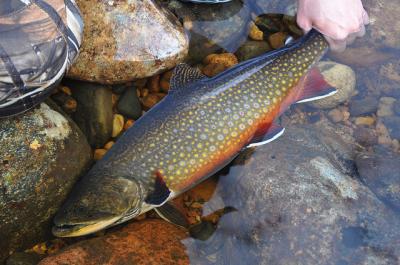
Researchers who transplanted combinations of wild, domesticated, and domesticated-wild hybridized populations of a fish species to new environments found that within 5 to 11 generations, selection could remove introduced foreign genes from wild populations that hybridized with domesticated populations.
The Evolutionary Applications study provides evidence that natural selection, over time, removes the adaptive advantages that hybridized populations experience as a result of increased genetic diversity.
"The results may be useful for policy makers who classify the protection status or management practices for hybridized populations," said senior author Dr. Dylan Fraser. "They also provide hope for wild populations currently displaying negative effects as a result of human-mediated hybridization with domesticated species." INFORMATION:
The Evolutionary Applications study provides evidence that natural selection, over time, removes the adaptive advantages that hybridized populations experience as a result of increased genetic diversity.
"The results may be useful for policy makers who classify the protection status or management practices for hybridized populations," said senior author Dr. Dylan Fraser. "They also provide hope for wild populations currently displaying negative effects as a result of human-mediated hybridization with domesticated species." INFORMATION: