(Press-News.org) When doctors want their patients asleep during surgery they gently turn the gas tap. But Anaesthetic gasses have a global warming potential as high as a refrigerant that is on its way to being banned in the EU. Yet there is no obligation to report anaesthetic gasses along with other greenhouse gasses such as CO2, refrigerants and laughing gas.
One kilo of anaesthetic gas affects the climate as much as 1620 kilos of CO2. That has been shown by a recent study carried out by chemists from University of Copenhagen and NASA in collaboration with anaesthesiologists from the University of Michigan Medical School. The amount of gas needed for a single surgical procedure is not high, but each year surgery related anaesthetics affects the climate as much as would one million cars, states a new report in respected medical journal "British Journal of Anaesthesia".
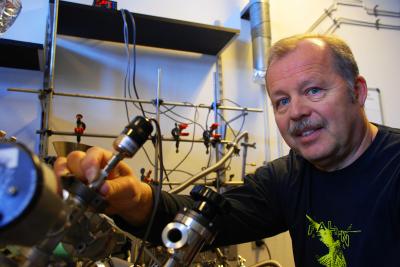
Analyses of the anaesthetics were carried out by Ole John Nielsen, a Professor of atmospheric chemistry at the University of Copenhagen. And he's got an important message for doctors.
"We studied three different gasses in regular use for anaesthesia, and they're not equally harmful," explains Professor Nielsen
All three are worse than CO2 but where the mildest ones have global warming potentials of 210 and 510 respectively, the most harmful will cause 1620 times as much global warming as an equal amount of CO2, explains the professor.
"This ought to make anaesthesiologists sit up and take notice. If all three compounds have equal therapeutic worth, there is every reason to choose the one with the lowest global warming potential", says professor Ole John Nielsen.
The three anaesthetic gasses isoflurane, desflurane and sevoflurane were studied at the Ford atmospheric laboratories near Detroit, Michigan. Mads Andersen of NASA's Jet Propulsion Laboratories collaborated on the analyses with Ole John Nielsen who is his former PhD supervisor. He relates how he got the idea for the study while his wife was giving birth.
"The anaesthesiologist told me, that the gas used is what we chemist know as a halogenated compound. That's the same family of compound as the Freon that was famously eating the ozone layer back in the eighties" says research scientist Mads Andersen.
But the gasses are also related to HFC-134a which is slated to be banned across Europe from January 2011. With a global warming potential some 1.300 times that of CO2, HFC-134a is in the exact same range as the worst of the knock-out gasses. Not that the amounts of anaesthetic used warrant a ban as far as Professor Ole John Nielsen is concerned. But that doesn't mean we should be unconcerned.
"The surprising properties of anaesthetic gasses are an important reminder to anyone using any kind of gasses. They really ought to examine the atmospheric fate of them, before releasing them into nature", says Professor Nielsen.
INFORMATION:
British Journal of Anaesthesia is an Oxford Journals release.
Anesthetic gases heats climate as much as 1 million cars
New study by atmosphere chemists reveals that gasses for anaesthesia cause global warming
2010-12-04
ELSE PRESS RELEASES FROM THIS DATE:
Dynamics of chaperone protein critical in rescuing brains of Alzheimer's mice from neuron damage
2010-12-04
Tampa, FL (Dec. 3, 2010) -- Dynamic regulation of the chaperone protein Hsp27 was required to get rid of abnormally accumulating tau in the brains of mice genetically modified to develop the memory-choking tau tangles associated with Alzheimer's disease, a University of South Florida-led study found.
Researchers at the USF Health Byrd Alzheimer's Institute demonstrated that the effective switching of Hsp27 between its active and deactivated states was critical on two fronts -- to promote the recycling of the tau protein in healthy nerve cells and to clear abnormal tau ...
Data mining depression
2010-12-04
Could information technology and data mining techniques be used to improve the diagnosis and treatment of depression? That's the question scientists in Australia hope to have answered in a forthcoming issue of the International Journal of Functional Informatics and Personalised Medicine.
Maja Hadzic, Fedja Hadzic and Tharam Dillon of the Digital Ecosystems and Business Intelligence Institute, at Curtin University of Technology, in Perth, explain how depression is rapidly emerging as one of the major health problems now facing society. They add that the World Health Organization ...
Polymeric porous framework of a bismuth citrate-based complex: A potential vehicle for drug delivery
2010-12-04
YANG Nan, MAO ZongWan and SUN HongZhe et al., at the Department of Chemistry, University of Hong Kong and Sun Yat-sen University have characterized a series of bismuth citrate complexes by X-ray crystallography and modeled the structure of ranitidine bismuth citrate, a medicine used widely for the treatment of peptic ulcer and gastric reflux disease. The polymeric framework of bismuth citrate may serve as a "drug carrier" for delivery of other drugs in the human body. This significant contribution is reported in SCIENCE CHINA Chemistry 2010, 53(10).
Elements that possess ...
Faulty gene linked to disorders of sexual development
2010-12-04
Scientists have discovered that the alteration of a single gene could cause some male embryos to develop as females.
The breakthrough will improve diagnosis and clinical management of patients with disorders of sex development (DSD). These conditions occur when the testis or ovary does not develop properly in the embryo, causing genital abnormalities in one in 4500 babies.
An international team including researchers from the Murdoch Childrens Research Institute and the University of Melbourne identified the gene alteration in a group of patients including two families ...
Your Web surfing history is accessible (without your permission) via JavaScript
2010-12-04
The Web surfing history saved in your Web browser can be accessed without your permission. JavaScript code deployed by real websites and online advertising providers use browser vulnerabilities to determine which sites you have and have not visited, according to new research from computer scientists at the University of California, San Diego.
The researchers documented JavaScript code secretly collecting browsing histories of Web users through "history sniffing" and sending that information across the network. While history sniffing and its potential implications for ...
Graptolite fauna indicates the beginning of the Kwangsian Orogeny
2010-12-04
Our research at the State Key Laboratory of Palaeobiology and Stratigraphy, Nanjing Institute of Geology and Palaeontology, has shown, based on a refined division and correlation of the graptolite-bearing strata in southern Jiangxi, China, that the Kwangsian Orogeny commenced in the early Katian Age of the Late Ordovician. Because of its significant research value, this study is published in Issue 11 of Science China Earth Sciences.
An angular unconformity separating the Lower-Middle Devonian and underlying strata is widespread in the Zhujiang region of South China, and ...
India launch of food security report focuses on rice
2010-12-04
Mumbai, India – The International Rice Research Institute (IRRI) and the Asia Society launched a new food security report for Asia in Mumbai today, calling for increased investment in rice research.
The report, Never an empty bowl: sustaining food security in Asia, emphasizes the importance of rice as the primary staple food in Asia and a major source of income for Asian farmers. Existing global efforts to combat hunger and achieve food security are evaluated in the report, which also recommends more research on: climate change mitigation for farming, farming infrastructure, ...
Smashing fluids: The physics of flow
2010-12-04
VIDEO:
Hit it hard and it will fracture like a solid, but tilt it slowly and it will flow like a fluid. This is the intriguing property of a type of...
Click here for more information.
The new findings will be highly useful to the manufacturing industry because the processing and dispensing of everyday products like toothpaste, cosmetics, pharmaceuticals and foodstuffs depends on an understanding of the physical properties and behaviours of these fluids.
The research ...
What can ice reveal about fire?
2010-12-04
Scientists studying a column of Antarctic ice spanning 650 years have found evidence for fluctuations in biomass burning--the consumption of wood, peat and other materials in wildfires, cooking fires and communal fires--in the Southern Hemisphere.
The record, focused primarily on carbon monoxide (CO), differs substantially from the record in the Northern Hemisphere, suggesting changes may be necessary for several leading climate models.
The research appears in Science on Dec. 2, 2010, in an early online release.
The scientists studied variations in stable (non-radioactive, ...
New report summarizes key themes in American doctoral education
2010-12-04
A new report recently released by the National Science Foundation, titled "Doctorate Recipients from U.S. Universities: 2009," presents a statistical overview of the U.S. doctoral education system in snapshots and long-term trends.
It notes the American system of doctoral education is widely considered the world's best, as evidenced by the large number of international students who choose to pursue a doctorate at U.S. universities. But this status is subject to the many factors that shape U.S. doctoral education.
"Given the increased global engagement and economic prosperity ...
LAST 30 PRESS RELEASES:
Sport in middle childhood can breed respect for authority in adolescence
From novel therapies to first-in-human trials, City of Hope advances blood cancer care at the American Society of Hematology (ASH) annual conference
Research aims to strengthen the security of in-person voting machines
New study exposes hidden Alzheimer’s 'hot spots' in rural Maryland and what they reveal about America’s growing healthcare divide
ASH 2025: Study connects Agent Orange exposure to earlier and more severe cases of myelodysplastic syndrome
ASH 2025: New data highlights promise of pivekimab sunirine in two aggressive blood cancers
IADR elects George Belibasakis as vice-president
Expanding the search for quantum-ready 2D materials
White paper on leadership opportunities for AI to increase employee value released by University of Phoenix College of Doctoral Studies
ASH 2025: New combination approach aims to make CAR T more durable in lymphoma
‘Ready-made’ T-cell gene therapy tackles ‘incurable’ T-cell leukemia
How brain activity changes throughout the day
Australian scientists reveal new genetic risk for severe macular degeneration
GLP-1 receptor agonists likely have little or no effect on obesity-related cancer risk
Precision immunotherapy to improve sepsis outcomes
Insilico Medicine unveils winter edition of Pharma.AI, accelerating the path to pharmaceutical superintelligence
Study finds most people trust doctors more than AI but see its potential for cancer diagnosis
School reopening during COVID-19 pandemic associated with improvement in children’s mental health
Research alert: Old molecules show promise for fighting resistant strains of COVID-19 virus
Journal of Nuclear Medicine Technology supplement highlights advances in theranostics and opportunities for growth
New paper rocks earthquake science with a clever computational trick
ASH 2025: Milder chemo works for rare, aggressive lymphoma
Olfaction written in bones: New insights into the evolution of the sense of smell in mammals
Engineering simulations rewrite the timeline of the evolution of hearing in mammals
New research links health impacts related to 'forever chemicals' to billions in economic losses
Unified EEG imaging improves mapping for epilepsy surgery
$80 million in donations propels UCI MIND toward world-class center focused on dementia
Illinois research uncovers harvest and nutrient strategies to boost bioenergy profits
How did Bronze Age plague spread? A sheep might solve the mystery
Mental health professionals urged to do their own evaluations of AI-based tools
[Press-News.org] Anesthetic gases heats climate as much as 1 million carsNew study by atmosphere chemists reveals that gasses for anaesthesia cause global warming