PRESS-NEWS.org - Press Release Distribution
PRESS RELEASES DISTRIBUTION

Brain's reaction to certain words could replace passwords

Brain's reaction to certain words could replace passwords
2015-06-02
(Press-News.org) You might not need to remember those complicated e-mail and bank account passwords for much longer. According to a new study, the way your brain responds to certain words could be used to replace passwords.

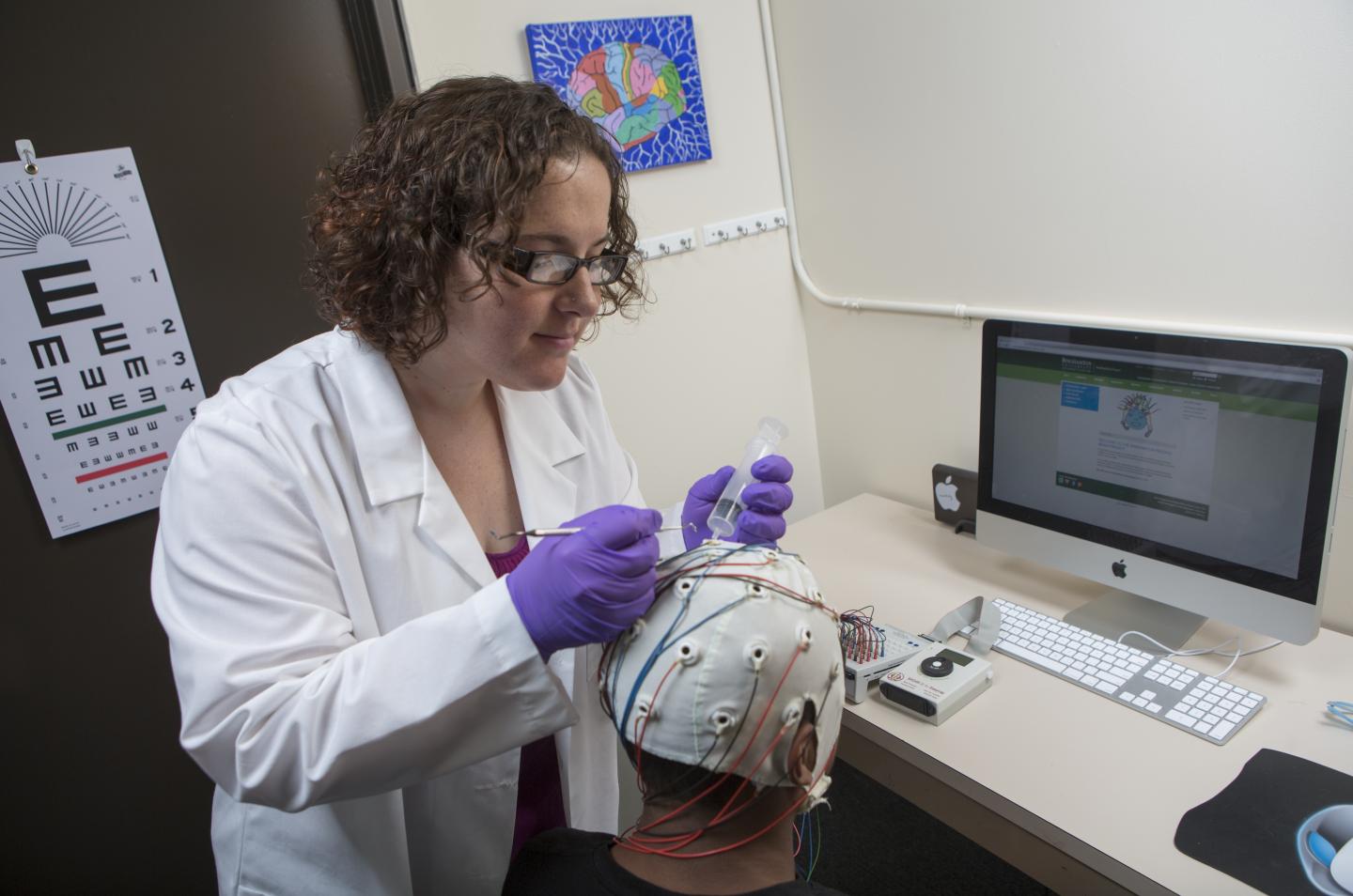
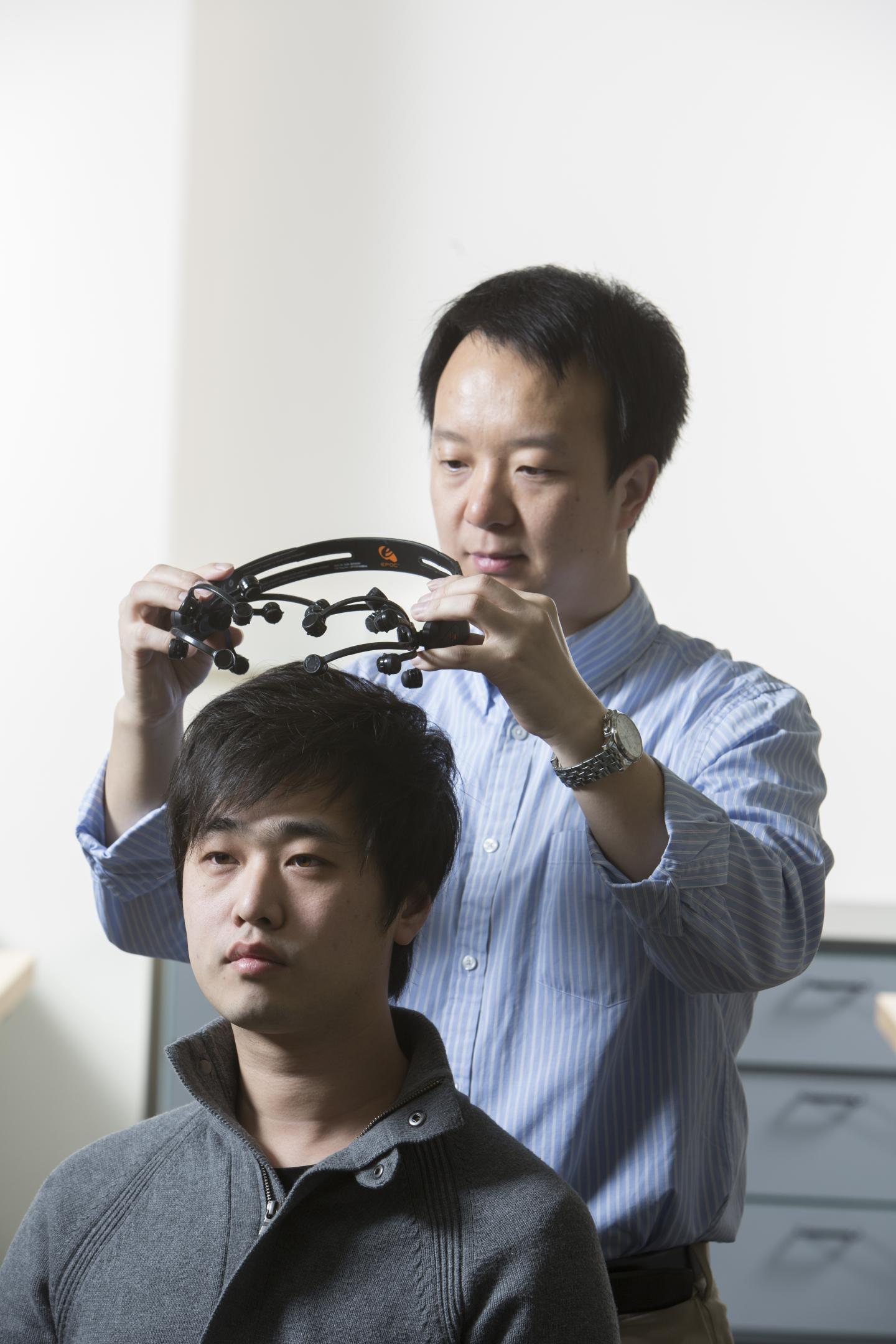
In "Brainprint," a newly published study in academic journal Neurocomputing, researchers from Binghamton University observed the brain signals of 45 volunteers as they read a list of 75 acronyms, such as FBI and DVD. They recorded the brain's reaction to each group of letters, focusing on the part of the brain associated with reading and recognizing words, and found that participants' brains reacted differently to each acronym, enough that a computer system was able to identify each volunteer with 94 percent accuracy. The results suggest that brainwaves could be used by security systems to verify a person's identity. According to Sarah Laszlo, assistant professor of psychology and linguistics at Binghamton University and co-author of "Brainprint," brain biometrics are appealing because they are cancellable and cannot be stolen by malicious means the way a finger or retina can.

"If someone's fingerprint is stolen, that person can't just grow a new finger to replace the compromised fingerprint -- the fingerprint for that person is compromised forever. Fingerprints are 'non-cancellable.' Brainprints, on the other hand, are potentially cancellable. So, in the unlikely event that attackers were actually able to steal a brainprint from an authorized user, the authorized user could then 'reset' their brainprint," Laszlo said.

Zhanpeng Jin, assistant professor at Binghamton University's departments of Electrical and Computer Engineering, and Biomedical Engineering, doesn't see brainprint as the kind of system that would be mass-produced for low security applications (at least in the near future) but it could have important security applications.

"We tend to see the applications of this system as being more along the lines of high-security physical locations, like the Pentagon or Air Force Labs, where there aren't that many users that are authorized to enter, and those users don't need to constantly be authorizing the way that a consumer might need to authorize into their phone or computer," Jin said.

INFORMATION:

The project is funded by the National Science Foundation and Binghamton University's Interdisciplinary Collaboration Grants (ICG) Program.


[Attachments] See images for this press release:
Brain's reaction to certain words could replace passwords Brain's reaction to certain words could replace passwords 2

ELSE PRESS RELEASES FROM THIS DATE:

Alice instrument's ultraviolet close-up provides a surprising discovery about comet's atmosphere

2015-06-02
San Antonio -- June 2, 2015 -- A close-up of Comet 67P/Churyumov-Gerasimenko by NASA's ultraviolet instrument surprised scientists by revealing that electrons close to the comet's surface -- not photons from the Sun as had been believed -- cause the rapid breakup of water and carbon dioxide molecules spewing from the surface. Since last August, the European Space Agency's Rosetta spacecraft has orbited within a hundred miles of the comet in this historic mission. The spectrograph onboard, named Alice, specializes in the far-ultraviolet wavelength band and was developed ...

No improvement in cognition with post-menopausal hormones

2015-06-02
Menopausal hormone therapy (MHT) given to recently postmenopausal women in the US for up to four years does not improve cognition, but may have some positive benefits for some mood symptoms, according to a study published by Carey Gleason and colleagues from the University of Wisconsin, Madison, USA, in this week's PLOS Medicine. The researchers reached these conclusions by conducting a randomized placebo-controlled clinical trial (the KEEPS-Cog trial), including 693 recently postmenopausal women living in the US who were randomly assigned to receive either oral estrogen ...

How to weigh the Milky Way

2015-06-02
What if your doctor told you that your weight is somewhere between 100 and 400 lbs.? With any ordinary scale every patient can do better at home. Yet, one patient can't: the Milky Way. Even though today we peer deeper into space than ever before, our home galaxy's weight is still unknown to about a factor of four. Researchers at Columbia University's Astronomy Department have now developed a new method to give the Milky Way a more precise physical checkup. The Milky Way consists of roughly 100 billion stars that form a huge stellar disk with a diameter of 100-200 thousand ...

'Master controller' behind DNA structure reorganization during senescence identified

2015-06-02
PHILADELPHIA--(June 2, 2015)--Senescence, a phenomenon in which cells cease to divide and grow, can be caused by everything from natural DNA damage to treatment with chemotherapy. However, several mechanisms allow for cells to bypass senescence and grow out of control, eventually becoming cancerous. Now, scientists at The Wistar Institute have identified how a specific variant of a key protein complex found in human cells called condensin can reorganize a cell's genetic architecture in such a way as to promote senescence, making it an important facilitator in a cell's ...

Mass. General team develops transplantable bioengineered forelimb in an animal model

Mass. General team develops transplantable bioengineered forelimb in an animal model
2015-06-02
A team of Massachusetts General Hospital (MGH) investigators has made the first steps towards development of bioartificial replacement limbs suitable for transplantation. In their report, which has been published online in the journal Biomaterials, the researchers describe using an experimental approach previously used to build bioartificial organs to engineer rat forelimbs with functioning vascular and muscle tissue. They also provided evidence that the same approach could be applied to the limbs of primates "The composite nature of our limbs makes building a functional ...

UF study shows benefits of multi-tasking on exercise

2015-06-02
Who says you can't do two things at once and do them both well? A new University of Florida study challenges the notion that multi-tasking causes one or both activities to suffer. In a study of older adults who completed cognitive tasks while cycling on a stationary bike, UF researchers found that participants' cycling speed improved while multi-tasking with no cost to their cognitive performance. Results of the study, which was supported by a grant from the National Institute on Aging, were published May 13 in the journal PLOS ONE. The discovery was a surprise finding ...

Why the 'cool factor' won't lure college grads to your city

2015-06-02
COLUMBUS, Ohio - A new nationwide study reveals that the kind of cities that attract college graduates has changed since the 1990s. In the 1990s, grads were moving to cities with fast-growing "smart" industries in fields like high tech, the study found. But since 2000, with a less vibrant national economy, college graduates are flocking toward the biggest cities with the biggest labor markets and the best chances of landing a job. In fact, the effect of city population size in attracting college grads was nearly four times as large in the 2000s as it was in the 1990s, ...

Amount of time New Yorkers spend sitting around far exceeds healthy levels

2015-06-02
(New York, NY, June 1, 2015)-- The Big Apple is one of the most walkable cities in the nation, providing many opportunities for physical activity, and New Yorkers are more likely to exercise regularly than the average U.S. adult. But they are also sitting far more than what is considered healthy. According to a new study published by the U.S. Centers for Disease Control and Prevention in its journal Preventing Chronic Disease, the average New York City resident sits more than seven hours a day--greatly exceeding the three hours or more per day that is associated with ...

New report: Texas Hispanics, women show largest reductions in rates of uninsured

2015-06-02
HOUSTON - (June 2, 2015) - Hispanics and women in Texas showed the largest percentage of reductions in rates of uninsured since enrollment began in the Affordable Care Act's (ACA) Health Insurance Marketplace, according to a new report released today by the Episcopal Health Foundation and Rice University's Baker Institute for Public Policy. The report found that from September 2013 to March 2015, the percentage of Hispanics without health insurance fell 38 percent (from 39.1 percent uninsured to 24.3 percent), more than any other ethnic group. The percentage of uninsured ...

Hyperbaric hope for fibromyalgia sufferers

Hyperbaric hope for fibromyalgia sufferers
2015-06-02
HOUSTON - (June 2, 2015) - Women who suffer from fibromyalgia benefit from a treatment regimen in a hyperbaric oxygen chamber, according to researchers at Rice University and institutes in Israel. A clinical trial involving women diagnosed with fibromyalgia showed the painful condition improved in every one of the 48 who completed two months of hyperbaric oxygen therapy. Brain scans of the women before and after treatment gave credence to the theory that abnormal conditions in pain-related areas of the brain may be responsible for the syndrome. Results of the study ...

LAST 30 PRESS RELEASES:

Making lighter work of calculating fluid and heat flow

Normalizing blood sugar can halve heart attack risk

Lowering blood sugar cuts heart attack risk in people with prediabetes

Study links genetic variants to risk of blinding eye disease in premature infants

Non-opioid ‘pain sponge’ therapy halts cartilage degeneration and relieves chronic pain

AI can pick up cultural values by mimicking how kids learn

China’s ecological redlines offer fast track to 30 x 30 global conservation goal

Invisible indoor threats: emerging household contaminants and their growing risks to human health

Adding antibody treatment to chemo boosts outcomes for children with rare cancer

Germline pathogenic variants among women without a history of breast cancer

Tanning beds triple melanoma risk, potentially causing broad DNA damage

Unique bond identified as key to viral infection speed

Indoor tanning makes youthful skin much older on a genetic level

Mouse model sheds new light on the causes and potential solutions to human GI problems linked to muscular dystrophy

The Journal of Nuclear Medicine ahead-of-print tip sheet: December 12, 2025

Smarter tools for peering into the microscopic world

Applications open for funding to conduct research in the Kinsey Institute archives

Global measure underestimates the severity of food insecurity

Child survivors of critical illness are missing out on timely follow up care

Risk-based vs annual breast cancer screening / the WISDOM randomized clinical trial

University of Toronto launches Electric Vehicle Innovation Ontario to accelerate advanced EV technologies and build Canada’s innovation advantage

Early relapse predicts poor outcomes in aggressive blood cancer

American College of Lifestyle Medicine applauds two CMS models aligned with lifestyle medicine practice and reimbursement

Clinical trial finds cannabis use not a barrier to quitting nicotine vaping

Supplemental nutrition assistance program policies and food insecurity

Switching immune cells to “night mode” could limit damage after a heart attack, study suggests

URI-based Global RIghts Project report spotlights continued troubling trends in worldwide inhumane treatment

Neutrophils are less aggressive at night, explaining why nighttime heart attacks cause less damage than daytime events

Menopausal hormone therapy may not pose breast cancer risk for women with BRCA mutations

Mobile health tool may improve quality of life for adolescent and young adult breast cancer survivors

[Press-News.org] Brain's reaction to certain words could replace passwords