PRESS-NEWS.org - Press Release Distribution
PRESS RELEASES DISTRIBUTION

Déjà-vu, new theory says dark matter acts like well-known particle
Déjà-vu, new theory says dark matter acts like well-known particle
2015-07-22
(Press-News.org) A new theory says dark matter acts remarkably similar to subatomic particles known to science since the 1930s.

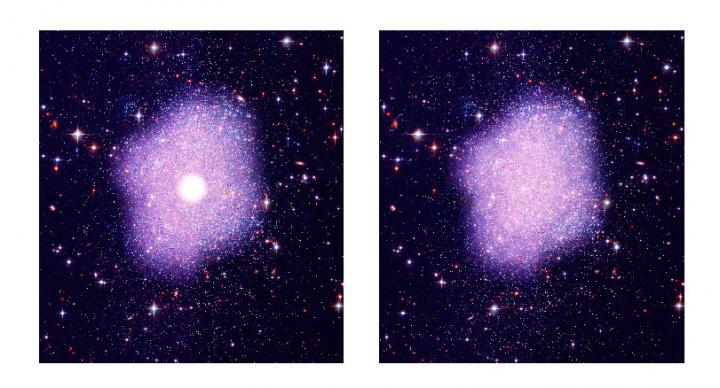
We owe a lot to dark matter - it is the thing keeping galaxies, stars, our solar system, and our bodies intact. Yet no one has been able to observe it, and it has often been regarded as a totally new exotic form of matter, such as a particle moving in extra dimensions of space or its quantum version, super-symmetry.

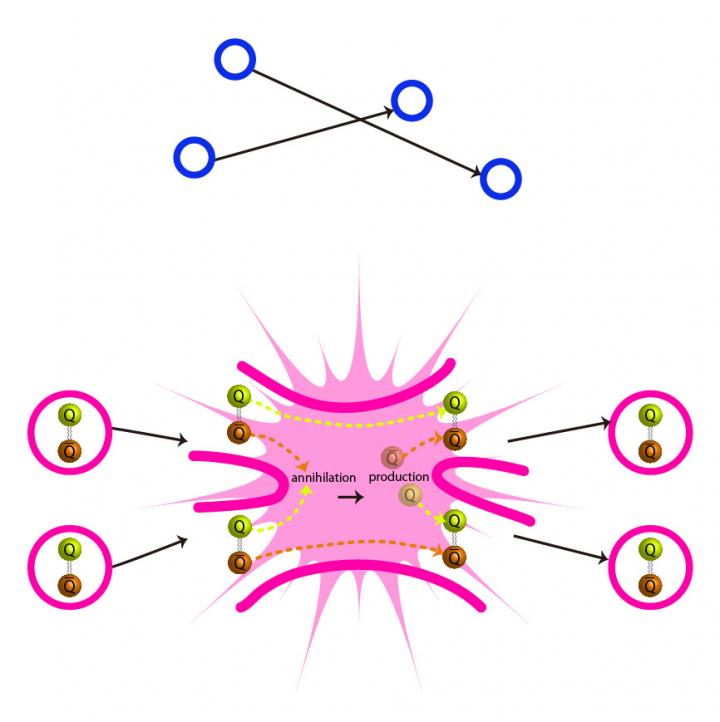
Now an international group of researchers has proposed a theory that dark matter is very similar to pions, which are responsible for binding atomic nuclei together. Their findings appear in the latest Physical Review Letters, published on July 10.

"We have seen this kind of particle before. It has the same properties - same type of mass, the same type of interactions, in the same type of theory of strong interactions that gave forth the ordinary pions. It is incredibly exciting that we may finally understand why we came to exist," says Hitoshi Murayama, Professor of Physics at the University of California, Berkeley, and Director of the Kavli Institute for the Physics and Mathematics of the Universe at the University of Tokyo.

The new theory predicts dark matter is likely to interact with itself within galaxies or clusters of galaxies, possibly modifying the predicted mass distributions. "It can resolve outstanding discrepancies between data and computer simulations," says Eric Kuflik, a postdoctoral researcher at Cornell University. University of California, Berkeley postdoctoral researcher Yonit Hochberg adds, "The key differences in these properties between this new class of dark matter theories and previous ideas have profound implications on how dark matter can be discovered in upcoming experimental searches."

The next step will be to put this theory to the test using experiments such as the Large Hadron Collider and the new SuperKEK-B, and a proposed experiment SHiP.

INFORMATION:

Paper details Journal: Physical Review Letters, 115, 021301 (2015)
Title: Model for Thermal Relic Dark Matter of Strongly Interacting Massive Particles Authors: Yonit Hochberg (1,2), Eric Kuflik
(3), Hitoshi Murayama (1,2,4), Tomer Volansky (5), and Jay G. Wacker (6,7)

Author affiliations: 1 Ernest Orlando Lawrence Berkeley National Laboratory, University of California, Berkeley, California
2 Department of Physics, University of California, Berkeley, California
3 Department of Physics, LEPP, Cornell University, Ithaca, New York
4 Kavli Institute for the Physics and Mathematics of the Universe (WPI), the University of Tokyo
5 Department of Physics, Tel Aviv University, Tel Aviv
6 Quora, Mountain View, California
7 Stanford Institute for Theoretical Physics, Stanford University, Stanford, California

DOI: 10.1103/PhysRevLett.115.021301 (Published July 10, 2015)

Paper Abstract (Physical Review Letters website)
Preprint (arXiv.org archive website)


[Attachments] See images for this press release:
Déjà-vu, new theory says dark matter acts like well-known particle Déjà-vu, new theory says dark matter acts like well-known particle 2 Déjà-vu, new theory says dark matter acts like well-known particle 3

ELSE PRESS RELEASES FROM THIS DATE:

Researchers identify genetic mutation causing lethal condition in infants

2015-07-22
Bethesda, MD (July 22, 2015) -- Newborn children born with a mutation in the Plasmalemma Vesicle Associated Protein (PLVAP) gene develop severe protein losing enteropathy, according to a case study1 published in Cellular and Molecular Gastroenterology and Hepatology, the basic science journal of the American Gastroenterological Association. Protein losing enteropathy is a condition of the GI tract that results in loss of protein from the body, and often leads to severe abdominal swelling, malnutrition and early death in affected infants The investigators utilized next-generation ...

Gene knockout: Loss of a gene can be compensated by another gene

Gene knockout: Loss of a gene can be compensated by another gene
2015-07-22
This news release is available in German. New methods for modifying the genome are currently widely discussed: Using CRISPR/Cas for instance, scientists can remove parts of the genetic code of a gene, thereby knocking it out. Furthermore, there are ways to inhibit translation of a gene into a protein. Both methods have in common that they impede production of a protein and should therefore have comparable consequences for an organism. However, it has been shown that consequences can differ, after a gene is either knocked, out or only blocked. Scientist from the ...

Serum biomarkers can predict women at risk of pre-eclampsia

2015-07-22
Levels of biomarkers in the blood of pregnant women can be used to predict which women are at risk of pre-eclampsia, finds a study published today (22 July) in BJOG: An International Journal of Obstetrics and Gynaecology (BJOG). ADMA and Hcy, both known to be raised in women with pre-eclampsia, are present in the blood in higher than normal concentrations a month before the onset of the condition. Pre-eclampsia is a combination of raised blood pressure (hypertension) and protein in the urine (proteinuria). It is quite common, usually occurring after 20 weeks of pregnancy, ...

New research from Lawson uncovers important molecule in ovarian cancer

2015-07-22
Scientists at Lawson Health Research Institute have uncovered an important new target for ovarian cancer therapy. Contrary to current research this new study found that LKB1, a molecule that regulates the metabolism of many adult cells, is an important molecule in the cancer's promotion and survival. Thousands of women are living with ovarian cancer in Canada. It is estimated that this year, 2,800 Canadian women will be newly diagnosed with this disease. Even though ovarian cancer continues to be one of the most serious women's cancers, there is a real lack in reliable ...

MoveSense app makes cellphone an oxygen saturation monitor for heart and lung patients

MoveSense app makes cellphone an oxygen saturation monitor for heart and lung patients
2015-07-22
Patients suffering from chronic cardiopulmonary diseases could soon have a solution to help them accurately monitor their health and warn doctors at the first sign of trouble. By simply carrying their cellphone, equipped with the health-tracking app, MoveSense, developed by researchers at the University of Illinois at Urbana-Champaign, a patient's oxygen saturation level can be passively monitored with medical accuracy. Oxygen saturation is a standard measure of health status, the single most important clinical measure. Unlike other methods of measuring oxygen saturation ...

New drug combination treats hepatitis C patients also infected with HIV

2015-07-22
Roughly 20 to 30 percent of patients with hepatitis C virus (HCV) are also infected with human immunodeficiency virus type 1 (HIV). Both blood-borne viruses share the same modes of transmission, but many HCV medications currently have significant limitations due to adverse interactions with HIV treatments. Researchers at University of California, San Diego School of Medicine report a new combination that effectively treats HCV in patients co-infected with HIV. The study, published online in the New England Journal of Medicine, found the combination of HCV drugs daclatasvir ...

Low-nicotine cigarettes fail to sway smokers

2015-07-22
Smokers who successfully lowered their nicotine intake when they were switched to low-nicotine cigarettes were unable to curb their smoking habits in the long term, according to a study by researchers at UCSF and San Francisco General Hospital and Trauma Center. The study, published online today (July 22) in the journal Addiction found that levels of cotinine, a derivative of nicotine measured in the blood, plummeted six months after smokers' regular cigarettes were replaced with low-nicotine ones. But levels started to rebound later into the study when smokers returned ...

Hair ice mystery solved

Hair ice mystery solved
2015-07-22
You may have never seen or heard of it, but hair ice - a type of ice that has the shape of fine, silky hairs and resembles white candy floss - is remarkable. It grows on the rotten branches of certain trees when the weather conditions are just right, usually during humid winter nights when the air temperature drops slightly below 0°C. Now, a team of scientists in Germany and Switzerland have identified the missing ingredient that gives hair ice its peculiar shape: the fungus Exidiopsis effusa. The research is published today (22 July) in Biogeosciences, an open access ...

Having wealthy neighbors may skew beliefs about overall wealth distribution

2015-07-22
Wealthy people may be likely to oppose redistribution of wealth because they have biased information about how wealthy most people actually are, according to new research published in Psychological Science, a journal of the Association for Psychological Science. The findings indicate that people use their own neighborhoods and communities as a gauge of how much wealth other people possess, leading wealthy people to perceive the broader population as being wealthier than it actually is. "If you're rich, there's a good chance you know lots of other rich people and relatively ...

Current dietary protein recommendations need updating

2015-07-22
New research based on modern techniques suggests that recommendations for protein intake in healthy populations may be incorrect. In a paper just published in Applied Physiology, Nutrition, and Metabolism, an NRC Research Press journal (a division of Canadian Science Publishing), researchers put the focus on protein as an essential component of a healthy diet. Protein helps people stay full longer, preserve muscle mass, and when combined with adequate physical activity, has the potential to serve as a key nutrient for important health outcomes and benefits. It's not ...

LAST 30 PRESS RELEASES:

Why do we get a skip in our step when we’re happy? Thank dopamine

UC Irvine scientists uncover cellular mechanism behind muscle repair

Platform to map living brain noninvasively takes next big step

Stress-testing the Cascadia Subduction Zone reveals variability that could impact how earthquakes spread

We may be underestimating the true carbon cost of northern wildfires

Blood test predicts which bladder cancer patients may safely skip surgery

Kennesaw State's Vijay Anand honored as National Academy of Inventors Senior Member

Recovery from whaling reveals the role of age in Humpback reproduction 

Can the canny tick help prevent disease like MS and cancer?

Newcomer children show lower rates of emergency department use for non‑urgent conditions, study finds

Cognitive and neuropsychiatric function in former American football players

From trash to climate tech: rubber gloves find new life as carbon capturers materials

A step towards needed treatments for hantaviruses in new molecular map

Boys are more motivated, while girls are more compassionate?

Study identifies opposing roles for IL6 and IL6R in long-term mortality

AI accurately spots medical disorder from privacy-conscious hand images

Transient Pauli blocking for broadband ultrafast optical switching

Political polarization can spur CO2 emissions, stymie climate action

Researchers develop new strategy for improving inverted perovskite solar cells

Yes! The role of YAP and CTGF as potential therapeutic targets for preventing severe liver disease

Pancreatic cancer may begin hiding from the immune system earlier than we thought

Robotic wing inspired by nature delivers leap in underwater stability

A clinical reveals that aniridia causes a progressive loss of corneal sensitivity

Fossil amber reveals the secret lives of Cretaceous ants

Predicting extreme rainfall through novel spatial modeling

The Lancet: First-ever in-utero stem cell therapy for fetal spina bifida repair is safe, study finds

Nanoplastics can interact with Salmonella to affect food safety, study shows

Eric Moore, M.D., elected to Mayo Clinic Board of Trustees

NYU named “research powerhouse” in new analysis

New polymer materials may offer breakthrough solution for hard-to-remove PFAS in water

[Press-News.org] Déjà-vu, new theory says dark matter acts like well-known particle