Procedures identify Barrett's esophagus patients at risk for cancer progression
Published 2021-03-29 · Original archive entry · Explore research explainers
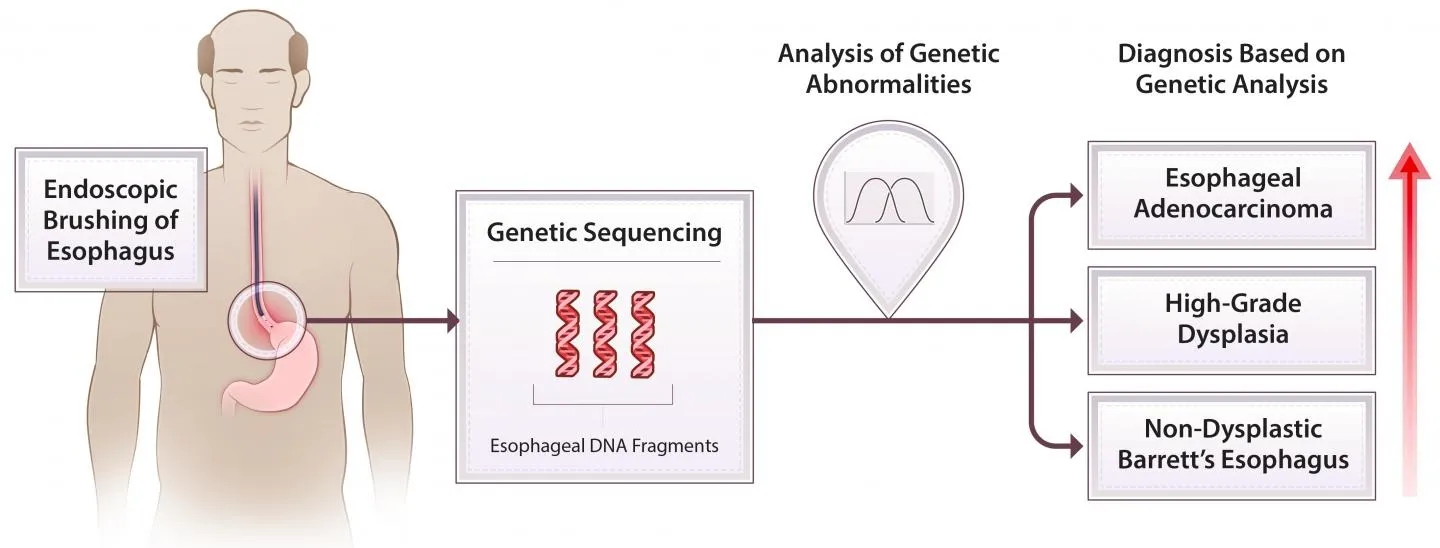
A combination of esophageal brushing and extensive genetic sequencing of the sample collected can detect chromosome alterations in people with Barrett's Esophagus, identifying patients at risk for progressing to esophageal cancer, according to a new study by researchers at the Johns Hopkins Kimmel Cancer Center and Case Western Reserve University.
In Barrett's Esophagus (BE), chronic acid reflux from the stomach damages the cells lining the lower esophagus, causing them to become more like cells of the lower digestive system. Cells in the lower esophagus progress through several precancerous stages before sometimes developing into esophageal adenocarcinoma, a cancer with a five-year survival rate below 20 percent. BE is the only known precursor to esophageal adenocarcinoma.
Clinicians can detect these progressive states in BE by looking for chromosomal alterations known as aneuploidy--a common feature in most cancer cells--but until now the process has involved multiple biopsies.
A single esophageal brushing paired with the sequencing technique called RealSeqS is sensitive and specific enough to identify aneuploidy at several stages of BE progression, and can even match specific types of aneuploidy with specific stages of the disease, the researchers say.
"Aneuploidy has long been implicated in the development, initiation or progression of esophageal cancer but the assays or experimental methods to detect this have not been as easily achieved or as high throughput as we would have wanted to allow for clinical implementation," says senior study author END
In Barrett's Esophagus (BE), chronic acid reflux from the stomach damages the cells lining the lower esophagus, causing them to become more like cells of the lower digestive system. Cells in the lower esophagus progress through several precancerous stages before sometimes developing into esophageal adenocarcinoma, a cancer with a five-year survival rate below 20 percent. BE is the only known precursor to esophageal adenocarcinoma.
Clinicians can detect these progressive states in BE by looking for chromosomal alterations known as aneuploidy--a common feature in most cancer cells--but until now the process has involved multiple biopsies.
A single esophageal brushing paired with the sequencing technique called RealSeqS is sensitive and specific enough to identify aneuploidy at several stages of BE progression, and can even match specific types of aneuploidy with specific stages of the disease, the researchers say.
"Aneuploidy has long been implicated in the development, initiation or progression of esophageal cancer but the assays or experimental methods to detect this have not been as easily achieved or as high throughput as we would have wanted to allow for clinical implementation," says senior study author END