History of giants in the gene: Scientists use DNA to trace the origins of giant viruses
Scientists investigate the evolution of Mimivirus, one of the world's largest viruses, through how they replicate DNA
Published 2021-05-11 · Original archive entry · Explore research explainers
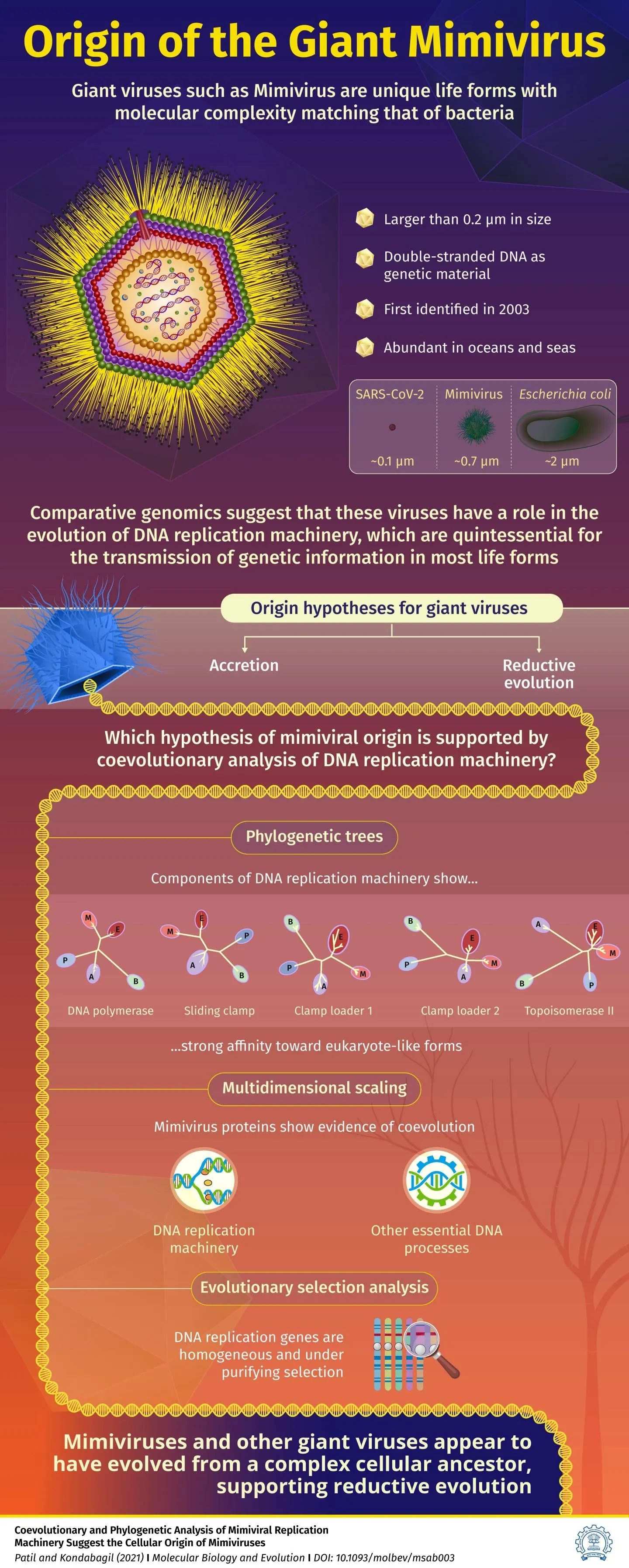
2003 was a big year for virologists. The first giant virus was discovered in this year, which shook the virology scene, revising what was thought to be an established understanding of this elusive group and expanding the virus world from simple, small agents to forms that are as complex as some bacteria. Because of their link to disease and the difficulties in defining them--they are biological entities but do not fit comfortably in the existing tree of life--viruses incite the curiosity of many people.
Scientists have long been interested in how viruses evolved, especially when it comes to giant viruses that can produce new viruses with very little help from the host--in contrast to most small viruses, which utilize the host's machinery to replicate.
Even though giant viruses are not what most people would think of when it comes to viruses, they are actually very common in oceans and other water bodies. They infect single-celled aquatic organisms and have major effects on the latter's population. In fact, Dr. Kiran Kondabagil, molecular virologist at the Indian Institute of Technology (IIT) Bombay, suggests, "Because these single-celled organisms greatly influence the carbon turnover in the ocean, the viruses have an important role in our world's ecology. So, it is just as important to study them and their evolution, as it is to study the disease-causing viruses."
In a recent study, the findings of which have been END
Scientists have long been interested in how viruses evolved, especially when it comes to giant viruses that can produce new viruses with very little help from the host--in contrast to most small viruses, which utilize the host's machinery to replicate.
Even though giant viruses are not what most people would think of when it comes to viruses, they are actually very common in oceans and other water bodies. They infect single-celled aquatic organisms and have major effects on the latter's population. In fact, Dr. Kiran Kondabagil, molecular virologist at the Indian Institute of Technology (IIT) Bombay, suggests, "Because these single-celled organisms greatly influence the carbon turnover in the ocean, the viruses have an important role in our world's ecology. So, it is just as important to study them and their evolution, as it is to study the disease-causing viruses."
In a recent study, the findings of which have been END