PRESS-NEWS.org - Press Release Distribution
PRESS RELEASES DISTRIBUTION

Pushing the boundaries of colloidal quantum dots by making their sizes equal
Scientists demonstrate the relationship between optoelectronic performance and size uniformity in perovskite colloidal quantum dots

Pushing the boundaries of colloidal quantum dots by making their sizes equal
2021-06-25
(Press-News.org) Quantum dots (QDs) are semiconductor particles only a few nanometers across that, thanks to their small size, exhibit peculiar optical and electronic properties due to quantum mechanics. With existing and foreseen applications in screens, lighting, lasers, and energy harvesting, research in quantum dots has been steadily progressing. In particular, colloidal QDs (CQDs) have been in the nanotechnology spotlight for over a decade.

CQDs are semiconductor nanocrystals that can be produced easily from solution-based processes, which make them suitable for mass production. However, for CQD-based devices to operate at their best, the quantum dots should be monodisperse--that is, they should all have the same size. If their sizes are not equal (polydisperse), the energetic disorder within the optoelectronic device increases, which in turn hinders its performance. While some strategies exist to combat polydispersity in CQDs, the problem is trickier to avoid in perovskite-based CQDs (Pe-CQDs), which require a purification step with an antisolvent. This step invariably leads to nanoparticle agglomeration, and ultimately, large variations in size between quantum dots.

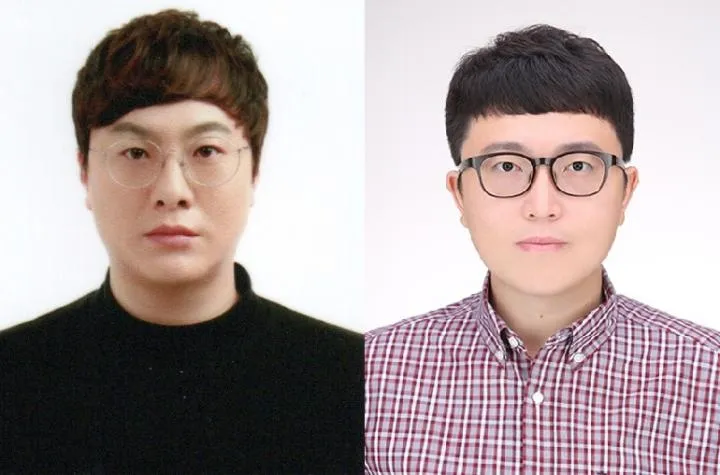
Although producing well-purified monodisperse Pe-CQDs might be necessary to produce highly efficient solar cells, no one has carefully explored the relationship between polydispersity and photovoltaic (conversion) performance. To fill in this knowledge gap, Dr Younghoon Kim and Assistant Professor Jongmin Choi from Daegu Gyeongbuk Institute of Science and Technology, Korea, recently led a team of scientists in a study that published in ACS Energy Letters. The researchers used a technique called gel permeation chromatography to 'filter' and group nanoparticles based on their size, as confirmed by several measurements of their optical properties as well as transmission electron microscopy. With this approach, they managed to obtain suspensions of Pe-CQDs with different degrees of polydispersity.

Afterwards, they used these suspensions to fabricate solar cells and demonstrate the link between polydispersity and performance. As expected, the monodisperse suspension resulted in a better solar cell thanks to its homogeneous energy landscape, which led to higher light absorption within the optimal frequency band. "With the monodisperse Pe-CQDs, our solar cells reached a power conversion efficiency of 15.3% and an open-circuit voltage of 1.27 V. These values are the highest ever reported for Pe-CQDs based on CsPbI3, the perovskite we used," highlights Dr Kim.

Overall, this study is a steppingstone in the field of solar cells based on Pe-CQDs, which still need to outperform their silicon-based counterparts to warrant commercialization. "Research on Pe-CQD solar cells began about four years ago, so further studies are needed to improve device performance and stability. Still, our approach for minimizing energetic disorder using monodisperse Pe-CQDs paves the way to further develop their potential in optoelectronic applications," concludes Dr Choi. Let us hope they eventually manage to join up all the (quantum) dots!

INFORMATION:

Reference Authors: Seyeong Lim1, Gyudong Lee2, Sanghun Han2, Jigeon Kim3, Sunhee Yun1, Jongchul Lim4, Yong-Jin Pu5, Min Jae Ko3, Taiho Park1,*, Jongmin Choi2,*, and Younghoon Kim6*
Title of original paper: Monodisperse Perovskite Colloidal Quantum Dots Enable High-Efficiency Photovoltaics
Journal: ACS Energy Letters
DOI: 10.1021/acsenergylett.1c00462
Affiliations: 1Department of Chemical Engineering, Pohang University of Science and Technology (POSTECH)
2Department of Energy Science and Engineering, Daegu Gyeongbuk Institute of Science and Technology (DGIST)
3Department of Chemical Engineering, Hanyang University
4Graduate School of Energy Science & Technology, Chungnam National University
5RIKEN Center for Emergent Matter Science (CEMS)
6Division of Energy Technology, Materials Research Institute, Daegu Gyeongbuk Institute of Science and Technology (DGIST)

*Corresponding authors' emails: taihopark@postech.ac.kr (T. P.); whdals1062@dgist.ac.kr (J. C.); younghoon.kim@dgist.ac.kr (Y. K.)

About Daegu Gyeongbuk Institute of Science and Technology (DGIST) Daegu Gyeongbuk Institute of Science and Technology (DGIST) is a well-known and respected research institute located in Daegu, Republic of Korea. Established in 2004 by the Korean Government, the main aim of DGIST is to promote national science and technology, as well as to boost the local economy. With a vision of "Changing the world through convergence", DGIST has undertaken a wide range of research in various fields of science and technology. DGIST has embraced a multidisciplinary approach to research and undertaken intensive studies in some of today's most vital fields. DGIST also has state-of-the-art-infrastructure to enable cutting-edge research in materials science, robotics, cognitive sciences, and communication engineering.

Website: https://www.dgist.ac.kr/en/html/sub01/010204.html

About the authors Younghoon Kim received his Ph.D. degree from the Department of Chemical and Biological Engineering in Korea University in 2014. He worked as a postdoctoral researcher at the Department of Chemical and Biological Engineering in Korea University (2014-2015) and at the Department of Electrical and Computer Engineering in the University of Toronto, Canada (2015-2017). He is currently a senior researcher at the Division of Energy Technology, DGIST (2017~present). Jongmin Choi is an Assistant Professor in the Department of Energy Science & Engineering at DGIST. He received his B.S. and Ph.D. degrees from the Department of Chemical Engineering in POSTECH in 2010 and 2016, respectively. After that, he worked as a postdoctoral researcher at the Department of Electrical and Computer Engineering in the University of Toronto, Canada (2016-2018).


[Attachments] See images for this press release:
Pushing the boundaries of colloidal quantum dots by making their sizes equal

ELSE PRESS RELEASES FROM THIS DATE:

Model of dielectric response promises improved understanding of innovative materials

Model of dielectric response promises improved understanding of innovative materials
2021-06-25
The contemporary materials industry raises the problem of creating a microscopic theory that allows to describe the observed physicochemical properties of a wide class of substances which are in demand in modern industry, medicine, and agriculture. A general and consistent theory will help to obtain reliable information from experimental data on the structure of matter, existing interactions and dynamic processes occurring in it, which can help in the synthesis and quality control of prospective materials. The study of the molecular structure of a substance and its intermolecular interactions is one of the most important and interesting tasks facing modern science. Of particular ...

A new concept stent that suppresses adverse effects with cells

A new concept stent that suppresses adverse effects with cells
2021-06-25
Medical materials that can be inserted into the human body have been used for decades in the field of regenerative medicine - for example, stents that can help dilate clogged blood vessels and implants that can replace teeth or bones. The prolonged use of these materials can result in serious adverse effects and loss of various functions - for example, inflammatory responses, generation of fibrous tissues around the material, and generation of blood clots that block blood vessels. Recently, a Korean research team has drawn attention for developing a technology to reduce ...

Curtin research finds 'fool's gold' not so foolish after all

2021-06-25
Curtin University research has found tiny amounts of gold can be trapped inside pyrite, commonly known as 'fool's gold', which would make it much more valuable than its name suggests. This study, published in the journal Geology in collaboration with the University of Western Australia and the China University of Geoscience, provides an in-depth analysis to better understand the mineralogical location of the trapped gold in pyrite, which may lead to more environmentally friendly gold extraction methods. Lead researcher Dr Denis Fougerouse from Curtin's School of Earth and Planetary Sciences ...

Small-scale engineering could bring big progress in medical care

Small-scale engineering could bring big progress in medical care
2021-06-25
Effective diagnostics, therapies and treatments for diseases and infections could increasingly involve re-engineering the body's internal biomechanisms at their most basic chemical and molecular foundations. Growing knowledge about the body's biological processes is increasing the possibilities for restoring human health, says Xiao Wang, an associate professor of biomedical engineering in Arizona State University's Ira A. Fulton Schools of Engineering. He and a team of researchers are exploring ways to trigger and control cell differentiation and transition to unlock properties that may change bioengineers' approach to diagnostics, ...

When pandemic hit, some people wanted more sexual activity

When pandemic hit, some people wanted more sexual activity
2021-06-25
PITTSBURGH, June 25, 2021 - It is widely assumed that Americans' sexual activity took a nosedive during the early chaotic months of the coronavirus pandemic. But a new study from the University of Pittsburgh School of Medicine challenges this popular narrative. In a research letter published in the Journal of Internal Medicine, scientists from Pitt and UPMC found that some people were having more sex during the pandemic than ever before. That group? Older men with erectile dysfunction. "People's sexual lives contribute to the psychosocial fabric of society," said senior author Benjamin Davies, M.D., director of the Urologic Oncology Program at ...

NIST method uses radio signals to image hidden and speeding objects

2021-06-25
Researchers at the National Institute of Standards and Technology (NIST) and Wavsens LLC have developed a method for using radio signals to create real-time images and videos of hidden and moving objects, which could help firefighters find escape routes or victims inside buildings filled with fire and smoke. The technique could also help track hypersonic objects such as missiles and space debris. The new method, described in Nature Communications, could provide critical information to help reduce deaths and injuries. Locating and tracking first responders indoors is a prime goal for the public safety ...

AI used to predict unknown links between viruses and mammals

AI used to predict unknown links between viruses and mammals
2021-06-25
A new University of Liverpool study could help scientists mitigate the future spread of zoonotic and livestock diseases caused by existing viruses. Researchers have used a form or artificial intelligence (AI) called machine-learning to predict more than 20,000 unknown associations between known viruses and susceptible mammalian species. The findings, which are published in Nature Communications, could be used to help target disease surveillance programmes. Thousands of viruses are known to affect mammals, with recent estimates indicating that less than 1% of mammalian viral diversity has been discovered to date. ...

Can a calculator predict your risk of dementia?

Can a calculator predict your risk of dementia?
2021-06-25
Canadian researchers at The Ottawa Hospital, the University of Ottawa, the Bruyère Research Institute and ICES have built and validated an online calculator that empowers individuals 55 and over to better understand the health of their brain and how they can reduce their risk of being diagnosed with dementia in the next five years. Their process was published today in the Journal of Epidemiology and Community Health, and the calculator is available at projectbiglife.ca. Dementia is an umbrella term for loss of memory and other thinking abilities severe enough to interfere with daily life. Every year, 76,000 new cases of dementia are diagnosed ...

COVID-linked multi-system inflammatory syndrome in children diagnosed more in Black and Latino child

2021-06-25
Multisystem Inflammatory Syndrome in Children (MIS-C) significantly affected more Black and Latino children than white children, with Black children at the highest risk, according to a new observational study of 124 pediatric patients treated at Children's National Hospital in Washington, D.C. Researchers also found cardiac complications, including systolic myocardial dysfunction and valvular regurgitation, were more common in MIS-C patients who were critically ill. Of the 124 patients, 63 were ultimately diagnosed with MIS-C and were compared with 61 patients deemed controls who presented with similar symptoms but ultimately had an alternative diagnosis. In the study, published ...

Burnout is a widespread reality in today's NHS

2021-06-25
Burnout is a widespread reality in today's NHS Current NHS workforce plans are "a smart looking car minus the engine" An editorial published by The BMJ today raises important concerns about the health and wellbeing of the NHS workforce after a parliamentary report found "burnout is a widespread reality in today's NHS." Commenting on the report, Suzie Bailey of the King's Fund says: "Excessive workloads need to be dealt with at every level of the health and care system." She suggests that ineffective workforce planning is partly to blame, citing evidence ...

LAST 30 PRESS RELEASES:

Making lighter work of calculating fluid and heat flow

Normalizing blood sugar can halve heart attack risk

Lowering blood sugar cuts heart attack risk in people with prediabetes

Study links genetic variants to risk of blinding eye disease in premature infants

Non-opioid ‘pain sponge’ therapy halts cartilage degeneration and relieves chronic pain

AI can pick up cultural values by mimicking how kids learn

China’s ecological redlines offer fast track to 30 x 30 global conservation goal

Invisible indoor threats: emerging household contaminants and their growing risks to human health

Adding antibody treatment to chemo boosts outcomes for children with rare cancer

Germline pathogenic variants among women without a history of breast cancer

Tanning beds triple melanoma risk, potentially causing broad DNA damage

Unique bond identified as key to viral infection speed

Indoor tanning makes youthful skin much older on a genetic level

Mouse model sheds new light on the causes and potential solutions to human GI problems linked to muscular dystrophy

The Journal of Nuclear Medicine ahead-of-print tip sheet: December 12, 2025

Smarter tools for peering into the microscopic world

Applications open for funding to conduct research in the Kinsey Institute archives

Global measure underestimates the severity of food insecurity

Child survivors of critical illness are missing out on timely follow up care

Risk-based vs annual breast cancer screening / the WISDOM randomized clinical trial

University of Toronto launches Electric Vehicle Innovation Ontario to accelerate advanced EV technologies and build Canada’s innovation advantage

Early relapse predicts poor outcomes in aggressive blood cancer

American College of Lifestyle Medicine applauds two CMS models aligned with lifestyle medicine practice and reimbursement

Clinical trial finds cannabis use not a barrier to quitting nicotine vaping

Supplemental nutrition assistance program policies and food insecurity

Switching immune cells to “night mode” could limit damage after a heart attack, study suggests

URI-based Global RIghts Project report spotlights continued troubling trends in worldwide inhumane treatment

Neutrophils are less aggressive at night, explaining why nighttime heart attacks cause less damage than daytime events

Menopausal hormone therapy may not pose breast cancer risk for women with BRCA mutations

Mobile health tool may improve quality of life for adolescent and young adult breast cancer survivors

[Press-News.org] Pushing the boundaries of colloidal quantum dots by making their sizes equal
Scientists demonstrate the relationship between optoelectronic performance and size uniformity in perovskite colloidal quantum dots