PRESS-NEWS.org - Press Release Distribution
PRESS RELEASES DISTRIBUTION

Oncotarget: LAPAS1 is required for S phase progression and cell proliferation
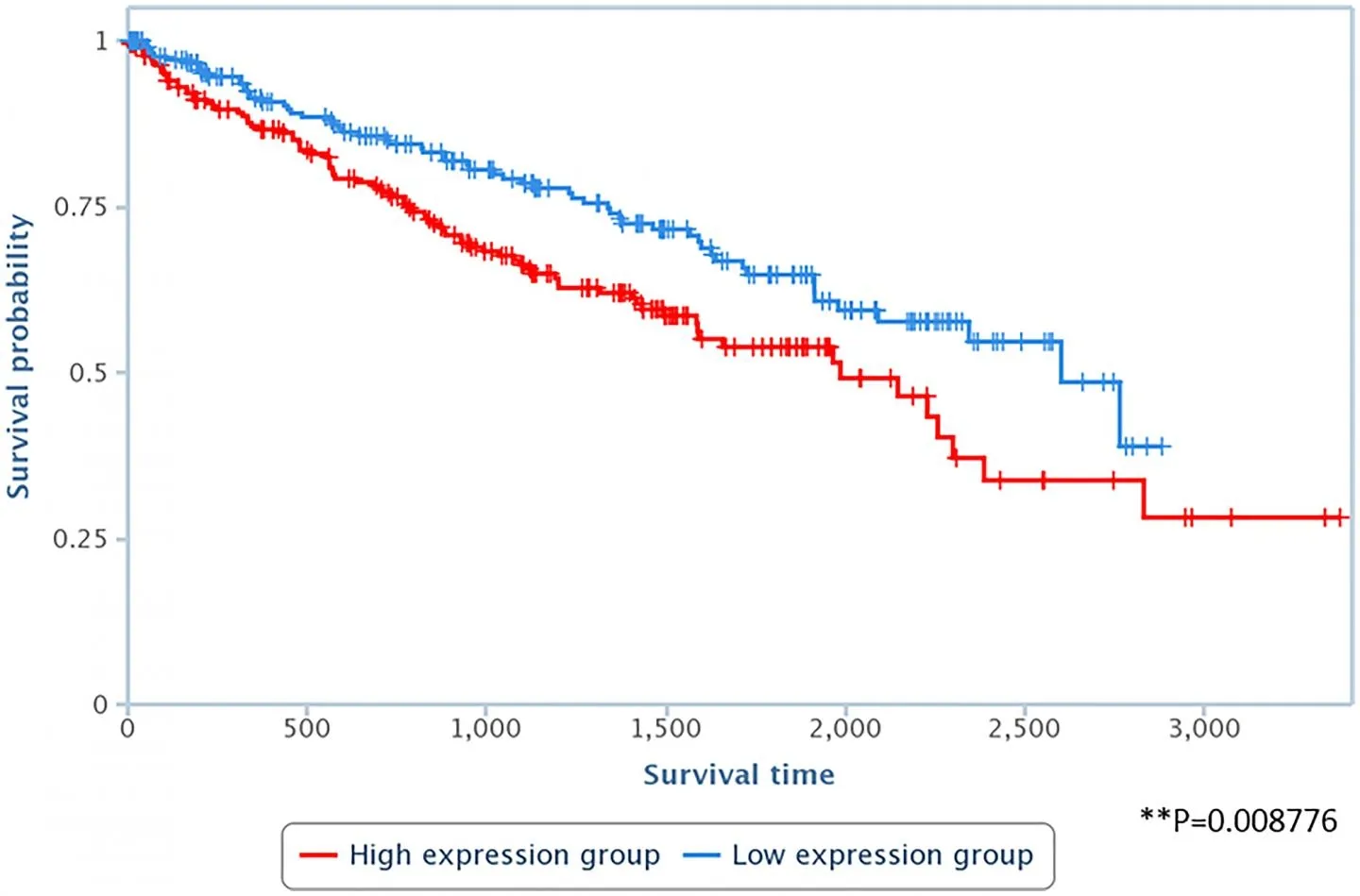
They identify LAPAS1 as a novel E2F-regulated lncRNA that has a potential role in human cancer and regulates cell-cycle progression and cell proliferation

Oncotarget: LAPAS1 is required for S phase progression and cell proliferation
2021-07-12
(Press-News.org) Oncotarget published "A novel E2F1-regulated lncRNA, LAPAS1, is required for S phase progression and cell proliferation" which reported that long non-coding RNAs are major regulators of many cellular processes, including cell cycle progression and cell proliferation.

Inhibition of LAPAS1 expression increases the percentage of S phase cells, and its silencing in synchronized cells delays their progression through S phase.

In agreement with its suggested role in cell cycle progression, prolonged inhibition of LAPAS1 attenuates proliferation of human cancer cells.

Importantly, knockdown of SPNS2 rescues the effect of LAPAS1 silencing on cell cycle and cell proliferation.

Summarily, they identify LAPAS1 as a novel E2F-regulated lncRNA that has a potential role in human cancer and regulates cell-cycle progression and cell proliferation, at least in part, via regulation of SPNS2.

They identify LAPAS1 as a novel E2F-regulated lncRNA that has a potential role in human cancer and regulates cell-cycle progression and cell proliferation

Dr. Doron Ginsberg from The Bar-Ilan University said, "The human genome expresses many thousands of long non-coding RNAs (lncRNAs), which are transcripts longer than 200 bases that lack a significant open reading frame."

Increasing evidence indicates that lncRNAs are key regulators of important biological processes including cell cycle progression, cell proliferation and apoptosis.

Specifically, some lncRNAs function in regulation of cell cycle progression via modulation of critical cell cycle players, such as the cyclins, CDKs, CDK inhibitors, pRB, and p53.

Transcription factors that regulate mRNA transcription were shown to also regulate lncRNAs expression.

Inhibition of LAPAS1 expression delays progression of cells through S phase and inhibits proliferation of human cancer cells.

Thus, the authors identify LAPAS1 as a new E2F-regulated lncRNA that has a potential role in human cancer and regulates cell proliferation and cell-cycle progression, at least in part, via regulation of SPNS2.

The Ginsberg Research Team concluded in their Oncotarget Research Output, "this study reports the identification of a novel lncRNA that affects cell cycle progression and cell proliferation and may affect cancer progression. Its initial characterization shows that it is transcriptionally regulated by E2F and it exerts its activity, at least in part, by regulating SPNS2."

INFORMATION:

DOI - https://doi.org/10.18632/oncotarget.27962

Full text - https://www.oncotarget.com/article/27962/text/

Correspondence to - Doron Ginsberg - doron.ginsberg@biu.ac.il

Keywords - lncRNA, E2F, cell cycle, cell proliferation

About Oncotarget

Oncotarget is a bi-weekly, peer-reviewed, open access biomedical journal covering research on all aspects of oncology.

To learn more about Oncotarget, please visit https://www.oncotarget.com or connect with:

SoundCloud - https://soundcloud.com/oncotarget
Facebook - https://www.facebook.com/Oncotarget/
Twitter - https://twitter.com/oncotarget
LinkedIn - https://www.linkedin.com/company/oncotarget
Pinterest - https://www.pinterest.com/oncotarget/
Reddit - https://www.reddit.com/user/Oncotarget/

Oncotarget is published by Impact Journals, LLC please visit https://www.ImpactJournals.com or connect with @ImpactJrnls


[Attachments] See images for this press release:
Oncotarget: LAPAS1 is required for S phase progression and cell proliferation

ELSE PRESS RELEASES FROM THIS DATE:

New electronic paper displays brilliant colours

New electronic paper displays brilliant colours
2021-07-12
Imagine sitting out in the sun, reading a digital screen as thin as paper, but seeing the same image quality as if you were indoors. Thanks to research from Chalmers University of Technology, Sweden, it could soon be a reality. A new type of reflective screen - sometimes described as 'electronic paper' - offers optimal colour display, while using ambient light to keep energy consumption to a minimum. Traditional digital screens use a backlight to illuminate the text or images displayed upon them. This is fine indoors, but we've all experienced the difficulties of viewing such screens in bright sunshine. Reflective screens, however, attempt to use the ambient light, mimicking the way our eyes ...

Protein appears to prevent tumor cells from spreading via blood vessels

2021-07-12
Researchers have identified a specialized protein that appears to help prevent tumor cells from entering the bloodstream and spreading to other parts of the body. "We have discovered that this protein, TRPM7, senses the pressure of fluid flowing in the circulation and stops the cells from spreading through the vascular system," said Kaustav Bera, a Johns Hopkins University PhD candidate in chemical and biomolecular engineering and a lead author of the study, which was done with colleagues at the University of Alberta and Universitat Pompeu Fabra. "We found that metastatic tumor cells have markedly reduced levels of this sensor protein, and that is why they ...

Monitoring proves better than active treatment for low-risk prostate cancer

2021-07-12
Men over 60 with low-risk prostate cancer could spend ten years with no active treatment, have a better sex life as a result, yet still be very unlikely to die from the disease, new research has found. The findings come from two new studies looking at 'active surveillance' of prostate cancer - when the disease is closely monitored but not treated - presented at the European Association of Urology congress, EAU21, today. The first uses data from Sweden's National Prostate Cancer Register, which has information on virtually every man diagnosed with the disease in that country since 1998 - 23,649 of whom went on active surveillance. ...

Care home residents are at risk of COVID-19 even after being fully vaccinated

2021-07-12
Care homes need to be vigilant for outbreaks of COVID-19, even after residents have received two doses of the vaccine, according to new research being presented at the European Congress of Clinical Microbiology & Infectious Diseases (ECCMID) held online this year. Long-term care facilities, such as care homes with elderly residents with multiple underlying conditions, are at high risk of COVID-19 outbreaks and many vaccination campaigns have initially focused on care home residents and the staff looking after them. An outbreak in a French care home, however, raises questions about how effective the vaccine is in the elderly. Martin Martinot, of ...

Outbreaks of COVID-19 in French nursing homes traced back to staff

2021-07-12
COVID-19 outbreaks in French nursing homes almost certainly started in staff - and none of measures put in place stopped the virus from taking hold, new research being presented at the European Congress of Clinical Microbiology & Infectious Diseases (ECCMID), held online this year, shows. Residents of long-term care facilities represent a small fraction of the general population but account for a disproportionate number of SARS-CoV-2-related deaths in many countries. In France, 5,203 outbreaks (of 1 case or more) were reported in nursing homes during the first wave of COVID-19. In the Auvergne-Rhône-Alpes region, there were 651 outbreaks, 3,885 residents had confirmed COVID-19 infection and 1,772 ...

Flu jab protects against some of the severe effects of COVID-19, including

2021-07-12
The flu vaccine may provide vital protection against COVID-19, new research being presented at the European Congress of Clinical Microbiology & Infectious Diseases (ECCMID), held online this year, concludes. An analysis of patient data from around the world strongly suggests that the annual flu shot reduces the risk of stroke, sepsis and DVT in patients with COVID-19. Patients with COVID-19 who had been vaccinated against flu were also less likely to visit the emergency department and be admitted to the intensive care unit (ICU). Immunising the world against COVID-19 is a daunting challenge and, although production and distribution of vaccines increases daily, some countries are not expected to vaccinate large numbers of their population ...

Hepatitis C vaccine could be rolled out within five years, says Nobel Prize winner who discovered virus

2021-07-12
A vaccine to protect against infection with hepatitis C could be in use within 5 years, says Professor Sir Michael Houghton, who won the Nobel Prize for Medicine and Physiology along with three other scientists for discovering the hepatitis C virus (HCV) in 1989. Sir Michael will discuss the development of a vaccine in a special presentation at this year's European Congress of Clinical Microbiology and Infectious Diseases (ECCMID), held online this year. Up to 2 million new HCV infections occur every year around the world, with an estimated 70 million carriers of the virus globally, most of whom are not diagnosed. The virus is estimated to cause some 400,000 deaths annually. Many infected with the virus go on to develop liver cirrhosis and liver cancer. "While the advent of ...

High-tech toilets could spread antibiotic-resistant superbugs in hospitals, Japanese study suggests

2021-07-12
Water-jet nozzles in electric toilets--commonly used in Japan and other parts of Asia--may be reservoirs for multidrug-resistant Pseudomonas aeruginosa (MDRP) in hospitals, increasing the risk of dangerous germ transmission among patients, according to new research being presented at the European Congress of Clinical Microbiology & Infectious Diseases (ECCMID) held online this year. "This is the first report of hospital transmissions associated with electric toilets and could have major implications for infection control," says Dr Itaru Nakamura from Tokyo Medical University Hospital ...

New study shows that silver foil could reduce the risk of infection in hospitals

2021-07-12
New research presented at this year's European Congress of Clinical Microbiology & Infectious Diseases (ECCMID) taking place online (9-12 July) shows that covering high-touch (the most regularly touched) surfaces in hospitals with silver-impregnated foil could significantly reduce levels of contamination by clinically important bacterial pathogens. The study by Professor Andreas Widmer and colleagues at the University Hospital Basel, Basel, Switzerland, evaluated the antimicrobial effectiveness of a polyvinyl chloride (PVC) foil containing an integrated silver-based agent containing 2% silver ions. The hospital environment has increasingly been recognised as having critical importance when formulating infection control measures ...

Obesity increases survival in advanced prostate cancer

2021-07-11
Obese patients with a form of advanced prostate cancer survive longer than overweight and normal weight patients, new research has found. The study, presented today at the European Association of Urology congress, EAU21, followed more than 1500 patients over three years. Patients classed as obese - with a BMI over 30 - had a ten percent higher survival rate than thinner patients over 36 months. Although obesity is usually associated with an increased risk of death from many cancers and some other chronic diseases, there is some evidence in a few cancers of a survival advantage for patients with high body mass index. ...

LAST 30 PRESS RELEASES:

Making lighter work of calculating fluid and heat flow

Normalizing blood sugar can halve heart attack risk

Lowering blood sugar cuts heart attack risk in people with prediabetes

Study links genetic variants to risk of blinding eye disease in premature infants

Non-opioid ‘pain sponge’ therapy halts cartilage degeneration and relieves chronic pain

AI can pick up cultural values by mimicking how kids learn

China’s ecological redlines offer fast track to 30 x 30 global conservation goal

Invisible indoor threats: emerging household contaminants and their growing risks to human health

Adding antibody treatment to chemo boosts outcomes for children with rare cancer

Germline pathogenic variants among women without a history of breast cancer

Tanning beds triple melanoma risk, potentially causing broad DNA damage

Unique bond identified as key to viral infection speed

Indoor tanning makes youthful skin much older on a genetic level

Mouse model sheds new light on the causes and potential solutions to human GI problems linked to muscular dystrophy

The Journal of Nuclear Medicine ahead-of-print tip sheet: December 12, 2025

Smarter tools for peering into the microscopic world

Applications open for funding to conduct research in the Kinsey Institute archives

Global measure underestimates the severity of food insecurity

Child survivors of critical illness are missing out on timely follow up care

Risk-based vs annual breast cancer screening / the WISDOM randomized clinical trial

University of Toronto launches Electric Vehicle Innovation Ontario to accelerate advanced EV technologies and build Canada’s innovation advantage

Early relapse predicts poor outcomes in aggressive blood cancer

American College of Lifestyle Medicine applauds two CMS models aligned with lifestyle medicine practice and reimbursement

Clinical trial finds cannabis use not a barrier to quitting nicotine vaping

Supplemental nutrition assistance program policies and food insecurity

Switching immune cells to “night mode” could limit damage after a heart attack, study suggests

URI-based Global RIghts Project report spotlights continued troubling trends in worldwide inhumane treatment

Neutrophils are less aggressive at night, explaining why nighttime heart attacks cause less damage than daytime events

Menopausal hormone therapy may not pose breast cancer risk for women with BRCA mutations

Mobile health tool may improve quality of life for adolescent and young adult breast cancer survivors

[Press-News.org] Oncotarget: LAPAS1 is required for S phase progression and cell proliferation
They identify LAPAS1 as a novel E2F-regulated lncRNA that has a potential role in human cancer and regulates cell-cycle progression and cell proliferation