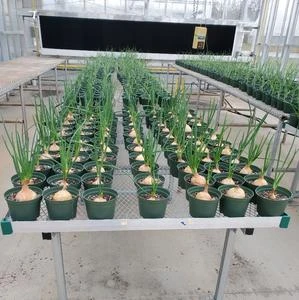
No more crying over rotting onions? Researchers gain insight into bacteria threatening Vidalia onion production
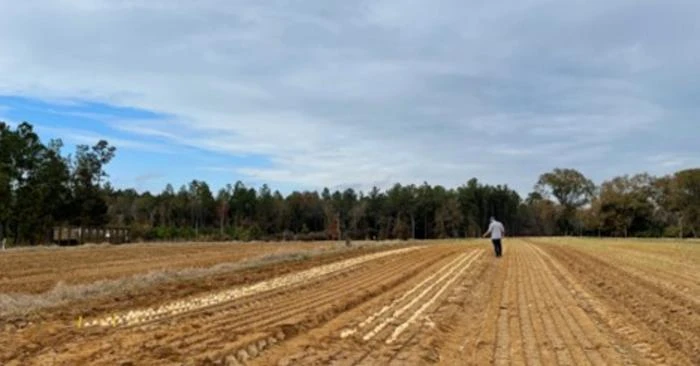
To combat this critical plant disease, Dr. Brian Kvikto and Dr. Bhabesh Dutta from the University of Georgia have developed an aggressive research program. A recent study led by Dr. Gi Yoon (Gina) Shin from Dr. Kvikto’s lab has confirmed which genes in the HiVir cluster are essential and which genes contribute partially to this disease.
Published in Molecular Plant-Microbe Interactions (MPMI), the study found that this HiVir gene cluster is common in many onion-pathogenic P. ananatis strains, and natural mutations in these essential genes render them powerless to cause infection in onions. The lab developed a clever assay to isolate the toxin from the pathogen. Dr. Shin explains that application of this toxin onto other plants besides onions also causes lesions to form. “This suggests that the toxin produced by P. ananatis could have broad-spectrum activity, potentially targeting conserved function or pathways within the plant.”
The exact mechanism by which this toxin can cause lesions on various plants is yet to be determined. Dr. Shin states, “The elucidation of the specific target of the toxin holds great promise in facilitating the discovery of pantaphos-resistant onion cultivars. This breakthrough would effectively mitigate the economic losses experienced by the onion industry.” This study provides exciting insights to get us one step closer to developing disease-resistant Vidalia onions.
For additional details, read The Genetic Requirements for HiVir-Mediated Onion Necrosis by Pantoea ananatis, a Necrotrophic Plant Pathogen, published in MPMI.
Follow the authors on Twitter
Dr. Gi Yoon (Gina) Shin: @maeyong_ee
Dr. Bhabesh Dutta: @BhabeshDutta5
Dr. Brian Kvikto @KvitkoPhD
About Molecular Plant-Microbe Interactions (MPMI)
Molecular Plant-Microbe Interactions® (MPMI) is a gold open access journal that publishes fundamental and advanced applied research on the genetics, genomics, molecular biology, biochemistry, and biophysics of pathological, symbiotic, and associative interactions of microbes, insects, nematodes, or parasitic plants with plants.
Follow us on Twitter @MPMIjournal and visit https://apsjournals.apsnet.org/journal/mpmi to learn more.
END