Biodiversity appears to strongly suppress pathogens and pests in many plant and animal systems, but this “dilution effect” can vary strikingly in magnitude
Biodiversity appears to strongly suppress pathogens and pests in many plant and animal systems, but this “dilution effect” can vary strikingly in magnitude
This study uses forest inventory data from over 25,000 plots to show that the prevalence of tree pests is jointly controlled by the diversity and phylogenetic composition of forests
#####
In your coverage, please use this URL to provide access to the freely available paper in PLOS Biology: http://journals.plos.org/plosbiology/article?id=10.1371/journal.pbio.3002473
Press-only preview: PENDING
Contact: Andrew Gougherty, andrew.gougherty@usda.gov
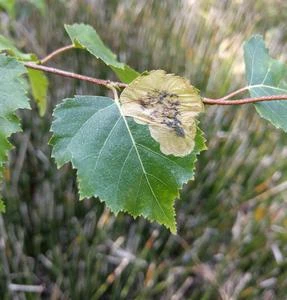
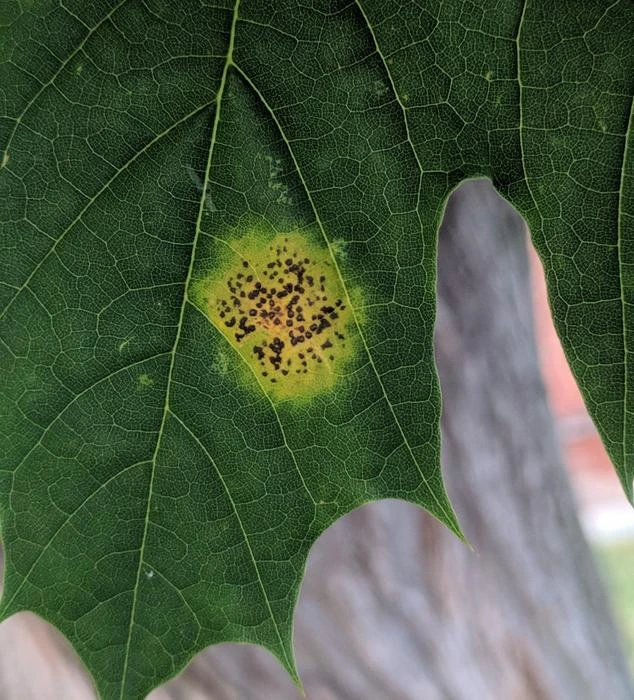
Image 1 Caption: Tar spot on maple in Frostburg, MD, USA.
Image 1 Credit: Andrew Gougherty (CC-BY 4.0, https://creativecommons.org/licenses/by/4.0/)
Image 1 URL: https://plos.io/3RYU6QV
Image 2 Caption: Leafminer on birch near Vancouver, BC, CAN.
Image 2 Credit: Andrew Gougherty (CC-BY 4.0, https://creativecommons.org/licenses/by/4.0/)
Image 2 URL: https://plos.io/3RDaLrU
Article Title: Evolutionary history of host trees amplifies the dilution effect of biodiversity on forest pests
Author Countries: United States, Canada
Funding: This project was funded by a Discovery Grant from the Natural Sciences and Engineering Research Council of Canada to TJD. The funders had no role in study design, data collection and analysis, decision to publish, or preparation of the manuscript.
Biodiversity appears to strongly suppress pathogens and pests in many plant and animal systems, but this “dilution effect” can vary strikingly in magnitude
This study uses forest inventory data from over 25,000 plots to show that the prevalence of tree pests is jointly controlled by the diversity and phylogenetic composition of forests
#####
In your coverage, please use this URL to provide access to the freely available paper in PLOS Biology: http://journals.plos.org/plosbiology/article?id=10.1371/journal.pbio.3002473
Article Title: Evolutionary history of host trees amplifies the dilution effect of biodiversity on forest pests
Author Countries: United States, Canada
Funding: This project was funded by a Discovery Grant from the Natural Sciences and Engineering Research Council of Canada to TJD. The funders had no role in study design, data collection and analysis, decision to publish, or preparation of the manuscript.
END