New study identifies how blood vessel dysfunction can worsen chronic disease
Discovery could lead to new prevention, treatment strategies for cancer, diabetes, fibrosis, many other diseases
Published 2025-01-13 · Original archive entry · Explore research explainers
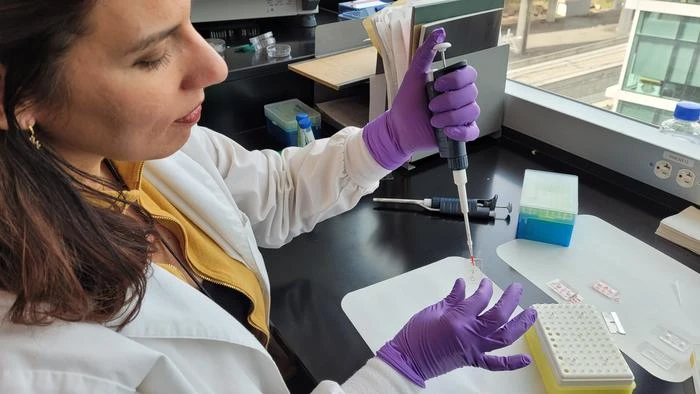
Researchers at Oregon Health & Science University have uncovered how specialized cells surrounding small blood vessels, known as perivascular cells, contribute to blood vessel dysfunction in chronic diseases such as cancer, diabetes and fibrosis. The findings, published today in Science Advances, could change how these diseases are treated.
The study, led by Luiz Bertassoni, D.D.S., Ph.D., founding director of the Knight Cancer Precision Biofabrication Hub and a professor at the OHSU Knight Cancer Institute and the OHSU School of Dentistry, shows that perivascular cells sense changes in nearby tissues and send signals that disrupt blood vessel function, worsening disease progression.
Nearly a decade ago, Bertassoni and his team developed a method to 3D print blood vessels in the lab — a breakthrough recognized as one of the top scientific discoveries of the year by Discover magazine. Since then, they’ve focused on engineering blood vessels that better mimic those in the human body to study more complex diseases.
“Historically, endothelial cells lining blood vessels have been considered the main contributors of vascular disease,” Bertassoni said. “Our findings represent a paradigm shift, showing how perivascular cells, instead, act as important sentinels. They detect changes in tissues and coordinating vascular responses. This opens the door to entirely new treatment strategies.”
Cristiane Miranda Franca, D.D.S., Ph.D., the study’s lead author, is an assistant professor in the OHSU School of Dentistry and holds appointments with the OHSU Knight Cancer Precision Biofabrication Hub and Knight Cancer Institute’s Cancer Early Detection Advanced Research Center, or CEDAR.
“The applications of this research are wide,” she said. “We’ve shown for the first time how perivascular cells trigger inflammation and signal blood vessel changes when surrounding tissues are altered.”
The study used an innovative “blood vessel on-a-chip” model developed by Christopher Chen, M.D., Ph.D., and his team from Boston University and the Wyss Institute at Harvard, who are collaborators on this project. By replicating conditions like tissue stiffening and scarring — common in aging, chronic diseases and cancer — the researchers discovered that perivascular cells drive blood vessel leakage and distortion, worsening inflammation and disease.
Learn more: OHSU Knight Cancer Institute offers the latest treatments, technologies, hundreds of research studies and clinical trials
“When we removed perivascular cells, blood vessels essentially failed to respond to tissue changes,” Franca said.
The findings shed light on the relationship between the extracellular matrix, blood vessel function and disease progression. Perivascular cells could become targets for therapies aimed at restoring normal vascular function and reducing the progression of various diseases such as fibrosis, diabetes and cancer.
Importantly, the research also holds promise for cancer prevention and early intervention. Early detection and treatment of changes in these cells could help stop tumors before they grow.
“If we intervene early, we might prevent precancerous lesions from advancing to full-blown cancer,” Bertassoni said. “This could revolutionize how we approach cancer prevention and treatment.”
In addition to Bertassoni and Franca, OHSU co-authors include Maria Elisa Lima Verde, Ph.D., Alice Correa Silva-Sousa, D.D.S., Ph.D., Amin Mansoorifar, Ph.D., Avathamsa Athirasala, M.S., Ramesh Subbiah, Ph.D., Anthony Tahayeri, B.S., Mauricio Sousa, D.D.S., M.S., Ph.D., May Anny Fraga, D.D.S., M.S., Rahul Visalakshan, Ph.D., Aaron Doe, M.S., Keith Beadle, B.S., and McKenna Finley, B.A. Co-authors also include Emilios Dimitriadis, Ph.D., with the National Institute of Biomedical Imaging and Bioengineering; Jennifer Bays, Ph.D., and Marina Uroz, Ph.D., with Boston University; and Kenneth Yamada, M.D., Ph.D., with the National Institute of Dental and Craniofacial Research of the National Institutes of Health.
In our interest of ensuring the integrity of our research and as part of our commitment to public transparency, OHSU actively regulates, tracks and manages relationships that our researchers may hold with entities outside of OHSU. In regard to this research, OHSU’s Bertassoni and Beadle are cofounders and shareholders of HuMarrow Inc. Bertassoni, Beadle and Tahayeri are inventors on a patent related to this work.
This research was supported by the National Institute of Dental & Craniofacial Research of the National Institutes of Health under Award Numbers R01DE026170, , R01DE029553, K01DE030484, CAPES/Brazil #88887.716956/2022-00 (to A.C.S.-S.), European Molecular Biology Organization (EMBO) long-term fellowship–EMBO ALTF811-2018, National Institutes of Health grant ZIADE000718, and National Institutes of Health grant ZIADE000719. The content is solely the responsibility of the authors and does not necessarily represent the official views of the funders.
END
The study, led by Luiz Bertassoni, D.D.S., Ph.D., founding director of the Knight Cancer Precision Biofabrication Hub and a professor at the OHSU Knight Cancer Institute and the OHSU School of Dentistry, shows that perivascular cells sense changes in nearby tissues and send signals that disrupt blood vessel function, worsening disease progression.
Nearly a decade ago, Bertassoni and his team developed a method to 3D print blood vessels in the lab — a breakthrough recognized as one of the top scientific discoveries of the year by Discover magazine. Since then, they’ve focused on engineering blood vessels that better mimic those in the human body to study more complex diseases.
“Historically, endothelial cells lining blood vessels have been considered the main contributors of vascular disease,” Bertassoni said. “Our findings represent a paradigm shift, showing how perivascular cells, instead, act as important sentinels. They detect changes in tissues and coordinating vascular responses. This opens the door to entirely new treatment strategies.”
Cristiane Miranda Franca, D.D.S., Ph.D., the study’s lead author, is an assistant professor in the OHSU School of Dentistry and holds appointments with the OHSU Knight Cancer Precision Biofabrication Hub and Knight Cancer Institute’s Cancer Early Detection Advanced Research Center, or CEDAR.
“The applications of this research are wide,” she said. “We’ve shown for the first time how perivascular cells trigger inflammation and signal blood vessel changes when surrounding tissues are altered.”
The study used an innovative “blood vessel on-a-chip” model developed by Christopher Chen, M.D., Ph.D., and his team from Boston University and the Wyss Institute at Harvard, who are collaborators on this project. By replicating conditions like tissue stiffening and scarring — common in aging, chronic diseases and cancer — the researchers discovered that perivascular cells drive blood vessel leakage and distortion, worsening inflammation and disease.
Learn more: OHSU Knight Cancer Institute offers the latest treatments, technologies, hundreds of research studies and clinical trials
“When we removed perivascular cells, blood vessels essentially failed to respond to tissue changes,” Franca said.
The findings shed light on the relationship between the extracellular matrix, blood vessel function and disease progression. Perivascular cells could become targets for therapies aimed at restoring normal vascular function and reducing the progression of various diseases such as fibrosis, diabetes and cancer.
Importantly, the research also holds promise for cancer prevention and early intervention. Early detection and treatment of changes in these cells could help stop tumors before they grow.
“If we intervene early, we might prevent precancerous lesions from advancing to full-blown cancer,” Bertassoni said. “This could revolutionize how we approach cancer prevention and treatment.”
In addition to Bertassoni and Franca, OHSU co-authors include Maria Elisa Lima Verde, Ph.D., Alice Correa Silva-Sousa, D.D.S., Ph.D., Amin Mansoorifar, Ph.D., Avathamsa Athirasala, M.S., Ramesh Subbiah, Ph.D., Anthony Tahayeri, B.S., Mauricio Sousa, D.D.S., M.S., Ph.D., May Anny Fraga, D.D.S., M.S., Rahul Visalakshan, Ph.D., Aaron Doe, M.S., Keith Beadle, B.S., and McKenna Finley, B.A. Co-authors also include Emilios Dimitriadis, Ph.D., with the National Institute of Biomedical Imaging and Bioengineering; Jennifer Bays, Ph.D., and Marina Uroz, Ph.D., with Boston University; and Kenneth Yamada, M.D., Ph.D., with the National Institute of Dental and Craniofacial Research of the National Institutes of Health.
In our interest of ensuring the integrity of our research and as part of our commitment to public transparency, OHSU actively regulates, tracks and manages relationships that our researchers may hold with entities outside of OHSU. In regard to this research, OHSU’s Bertassoni and Beadle are cofounders and shareholders of HuMarrow Inc. Bertassoni, Beadle and Tahayeri are inventors on a patent related to this work.
This research was supported by the National Institute of Dental & Craniofacial Research of the National Institutes of Health under Award Numbers R01DE026170, , R01DE029553, K01DE030484, CAPES/Brazil #88887.716956/2022-00 (to A.C.S.-S.), European Molecular Biology Organization (EMBO) long-term fellowship–EMBO ALTF811-2018, National Institutes of Health grant ZIADE000718, and National Institutes of Health grant ZIADE000719. The content is solely the responsibility of the authors and does not necessarily represent the official views of the funders.
END