PRESS-NEWS.org - Press Release Distribution
PRESS RELEASES DISTRIBUTION

Evolution without sex: How mites have survived for millions of years
Evolution without sex: How mites have survived for millions of years
2025-01-24
(Press-News.org)

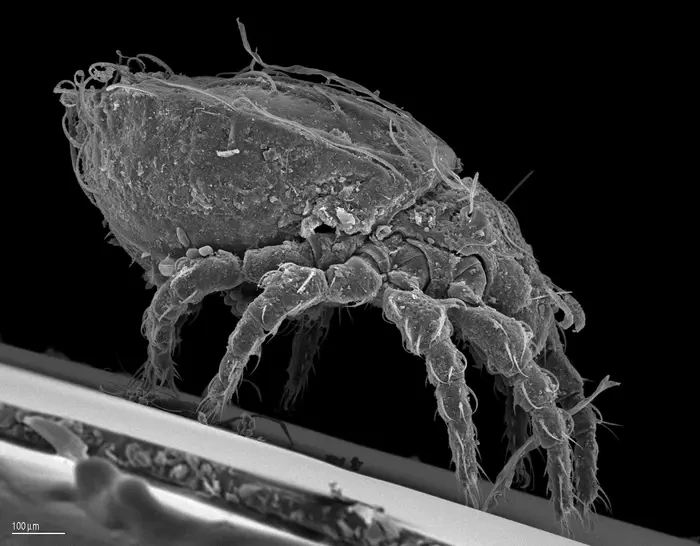
In collaboration with colleagues from international partner institutions, researchers at the University of Cologne have investigated the asexual reproduction of oribatid mites using genome sequencing techniques. They show that the key to evolution without sex in oribatid mites may lie in the independent evolution of their two chromosome copies – a phenomenon known as the ‘Meselson effect’. The research team identified various mechanisms that may contribute to the genetic diversity of the chromosome sets, potentially enabling the long-term persistence of the mite.

Like humans, oribatid mites possess two sets of chromosomes. However, the asexual oribatid mite Platynothrus peltifer reproduces parthenogenetically: Mothers produce daughters from unfertilized eggs, resulting in a population consisting entirely of females. Using single-individual sequencing, the researchers analysed the accumulated differences between the chromosome copies for the first time and evaluated their significance for the mite’s survival. The study titled ‘Chromosome-scale genome dynamics reveal signatures of independent haplotype evolution in the ancient asexual mite Platynothrus peltifer’, funded by the German Research Foundation (DFG), was published in Science Advances.

Sex is the driving force of evolution: It promotes genetic diversity and helps organisms to adapt more quickly to changing environmental conditions. Without sex, however, organisms risk genetic stagnation and extinction – at least according to prevailing evolutionary theory. Yet, the oribatid mite Platynothrus peltifer challenges this paradigm: It has existed for over 20 million years – entirely without sex. The asexual oribatid mites produce their female offspring from unfertilized eggs without males. Males are absent or extremely rare and do not contribute to the gene pool. Depending on the mechanism restoring the diploid set of chromosomes, offspring can inherit either all or some of the mother’s gene variants (alleles). They can therefore be ‘full clones’ of the mother.

In the oribatid mite, the two copies of the chromosome sets evolve independently of each other, allowing new genetic variants to emerge while also retaining important information. The team observed notable differences in gene expression – in other words, which copies of the genes are active and to what extent. These differences enable rapid responses to environmental changes and provide a selective advantage.

Another mechanism contributing to genetic diversity is horizontal gene transfer (HGT), i.e. the movement of genetic material outside of the confined barriers of sexual reproduction. “Horizontal gene transfer can be thought of as adding new tools to an existing toolbox. Some of these genes seem to help the mite to digest cell walls, thus expanding its food spectrum,” explained the study’s first author, Dr Hüsna Öztoprak from the University of Cologne’s Institute of Zoology.

Additionally, transposable elements (TE) or ‘jumping genes’, play an important role. TEs move within the genome like chapters in a book that are rearranged to change the course of the plot. The fact that the activity of these TEs differs between the two chromosome copies is particularly exciting. While they are active on one copy and thus can cause dynamic changes, they tend to remain rather inactive on the other.

The study provides new insights into the survival strategies of asexual organisms. Asexual evolution is supported by various sources of genetic diversity, to which the research team draws attention in the study. “In future research projects, we would like to find out whether there are additional mechanisms that might be important for evolution without sex,” said Dr Jens Bast, Emmy Noether group leader at the University of Cologne.

END


[Attachments] See images for this press release:
Evolution without sex: How mites have survived for millions of years

ELSE PRESS RELEASES FROM THIS DATE:

U. of I. team develops weight loss app that tracks fiber, protein content in meals

U. of I. team develops weight loss app that tracks fiber, protein content in meals
2025-01-24
URBANA, Ill. – Many people struggle to maintain a healthy weight, and choosing the optimal meals for weight loss can be challenging. A research team at the University of Illinois Urbana-Champaign has developed a weight management program that helps individuals plan meals with the assistance of a web application and support from a registered dietitian. In a new study, they discuss the app’s features, development, and implementation. “The overall goal is to develop an online weight loss program that can be used as prevention as well as treatment in a clinical setting,” said co-author Manabu Nakamura, associate professor in the Department of Food Science ...

Progress and challenges in brain implants

2025-01-24
In a paper recently published in the leading journal "The Lancet Digital Health", a scientific team led by Stanisa Raspopovic from MedUni Vienna looks at the progress and challenges in the research and development of brain implants. New achievements in the field of this technology are seen as a source of hope for many patients with neurological disorders and have been making headlines recently. As neural implants have an effect not only on a physical but also on a psychological level, researchers ...

City-level sugar-sweetened beverage taxes and changes in adult BMI

2025-01-24
About The Study: Sugar-sweetened beverage (SSB) excise taxes were associated with reduced mean body mass index (BMI) among adults in demographic subgroups, including in young adults who consumed the most SSBs, and in Berkeley, in this cohort study. Future research should examine the mechanisms of these associations to inform how SSB taxes could be more equitable for weight-related outcomes.  Corresponding Author: To contact the corresponding author, Emily F. Liu, MPH, email emily.f.liu@kp.org. To access the embargoed study: Visit our For The Media website at this link https://media.jamanetwork.com/ (doi:10.1001/jamanetworkopen.2024.56170) Editor’s ...

Duration in immigration detention and health harms

2025-01-24
About The Study: In this cross-sectional study, detained immigrants experienced a high prevalence of poor health, mental illness, and posttraumatic stress disorder (PTSD), with detention periods of 6 months or more associated with higher rates compared with those detained less than 6 months. Duration of custody is one mechanism by which immigration detention might be a catalyst for worsening health.  Corresponding Author: To contact the corresponding author, Altaf Saadi, MD, MSc, ...

COVID-19 pandemic and racial and ethnic disparities in long-term nursing home stay or death following hospital discharge

2025-01-24
About The Study: Older adults hospitalized with sepsis experienced an approximately 50% reduction in long-term nursing home stay or death over a 5-year period before the pandemic in this cross-sectional study. These results suggest that during the pandemic, all individuals, regardless of race and ethnicity, experienced increased long-term nursing home stay or death compared with before the pandemic.  Corresponding Author: To contact the corresponding author, Laurent G. Glance, MD, email laurent_glance@urmc.rochester.edu. To access the embargoed study: Visit our For The Media website at this link https://media.jamanetwork.com/ (doi:10.1001/jamanetworkopen.2024.56816) Editor’s ...

Specific types of liver immune cells are required to deal with injury

2025-01-24
Ghent, 24 January 2025 – Our livers contain many different types of immune cells. New research by the team of Prof. Charlotte Scott (VIB-UGent Center for Inflammation Research) and colleagues now reveals that a specific activation state of one of these cell types is required for tissue repair following injury. This suggests these cells may be useful as new therapeutic targets for various liver conditions. The work appears in the journal Immunity. Liver immune cells Macrophages are specialized immune cells located in every tissue ...

How human activity has shaped Brazil Nut forests’ past and future

How human activity has shaped Brazil Nut forests’ past and future
2025-01-24
The significant decline in genetic diversity in the Amazon Basin, following historical events such as European colonisation, deforestation and the extinction of megafauna such as the sloth – the main seed dispersal agents, is of particular concern for the genetic health of Brazil Nut trees (Bertholletia excelsa). As one of the most impacted keystone species in rainforests, Brazil Nut trees are essential for biodiversity and a vital income source for local economies. A crucial study led by researchers from the Max Planck Institute of Geoanthropology and the Max Planck Institute for Biology Tübingen ...

Doctors test a new way to help people quit fentanyl 

2025-01-24
During the COVID-19 pandemic, when fentanyl overdoses surged, doctors were desperate to find ways of helping their patients.   They knew that buprenorphine could help people stop using opioids, but it was much harder to start the treatment for those who used fentanyl, which lasts longer in the body. Taking buprenorphine while fentanyl is still active can push someone abruptly into withdrawal.   So, they started giving patients small doses of the drug over a series of days to slowly build up the drug in their systems until their bodies could handle a higher dose of buprenorphine.    Now, ...

Long read sequencing reveals more genetic information while cutting time and cost of rare disease diagnoses

Long read sequencing reveals more genetic information while cutting time and cost of rare disease diagnoses
2025-01-24
One in every 10 people worldwide is impacted by a rare genetic disease but about 50% of them remain undiagnosed despite rapid increases in genetic technology and testing. Even when a person does have access to testing, the process of getting a diagnosis can take about five years or more, which is sometimes too late for patients, who are often children, to start the right treatment. This is partly because current clinical testing uses a method called short-read sequencing, which cannot access information in certain regions of the genome and so may miss ...

AAAS and ASU launch mission-driven collaborative to strengthen scientific enterprise

2025-01-24
Today, the American Association for the Advancement of Science and Arizona State University announced a five-year partnership, the AAAS + ASU Collaborative. Together, the institutions will elevate and amplify strategies and practices that advance scientific excellence and enable a boldly inclusive scientific enterprise serving society.  In its first phase, the Collaborative includes a joint prize, an invitation for the ASU STEMM community to join AAAS as Elemental Members, and events in Washington, D.C., addressing policy-relevant science topics.  “Focusing science and scientific advances on the challenges we face is essential to the advancement ...

LAST 30 PRESS RELEASES:

Eye for trouble: Automated counting for chromosome issues under the microscope

The vast majority of US rivers lack any protections from human activities, new research finds

Ultrasound-responsive in situ antigen "nanocatchers" open a new paradigm for personalized tumor immunotherapy

Environmental “superbugs” in our rivers and soils: new one health review warns of growing antimicrobial resistance crisis

Triple threat in greenhouse farming: how heavy metals, microplastics, and antibiotic resistance genes unite to challenge sustainable food production

Earthworms turn manure into a powerful tool against antibiotic resistance

AI turns water into an early warning network for hidden biological pollutants

Hidden hotspots on “green” plastics: biodegradable and conventional plastics shape very different antibiotic resistance risks in river microbiomes

Engineered biochar enzyme system clears toxic phenolic acids and restores pepper seed germination in continuous cropping soils

Retail therapy fail? Online shopping linked to stress, says study

How well-meaning allies can increase stress for marginalized people

Commercially viable biomanufacturing: designer yeast turns sugar into lucrative chemical 3-HP

Control valve discovered in gut’s plumbing system

George Mason University leads phase 2 clinical trial for pill to help maintain weight loss after GLP-1s

Hop to it: research from Shedd Aquarium tracks conch movement to set new conservation guidance

Weight loss drugs and bariatric surgery improve the body’s fat ‘balance:’ study

The Age of Fishes began with mass death

TB harnesses part of immune defense system to cause infection

Important new source of oxidation in the atmosphere found

A tug-of-war explains a decades-old question about how bacteria swim

Strengthened immune defense against cancer

Engineering the development of the pancreas

The Journal of Nuclear Medicine ahead-of-print tip sheet: Jan. 9, 2026

Mount Sinai researchers help create largest immune cell atlas of bone marrow in multiple myeloma patients

Why it is so hard to get started on an unpleasant task: Scientists identify a “motivation brake”

Body composition changes after bariatric surgery or treatment with GLP-1 receptor agonists

Targeted regulation of abortion providers laws and pregnancies conceived through fertility treatment

Press registration is now open for the 2026 ACMG Annual Clinical Genetics Meeting

Understanding sex-based differences and the role of bone morphogenetic protein signaling in Alzheimer’s disease

Breakthrough in thin-film electrolytes pushes solid oxide fuel cells forward

[Press-News.org] Evolution without sex: How mites have survived for millions of years