Rice growers turn to computer for advice, predictions
Researchers in Beaumont share techno tools
Published 2010-09-22 · Original archive entry · Explore research explainers
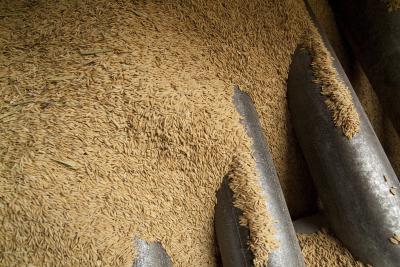
BEAUMONT - Figuring out how a rice crop was faring used to be a head-scratching exercise with predictably unpredictable results.
But now a few punches on a keyboard can yield a pretty close forecast for a rice crop and tell a farmer what changes could improve the outcome at harvest.
The program, Rice Development Advisory, stems from extensive data collected over the years by researchers at the Texas AgriLife Research Center in Beaumont. They methodically accumulated reams of data in the course of studying and creating improved varieties of rice.
As technology improved, the researchers have been able to recrank the data into computerized programs useful to farmers in decision-making.
"It's a fairly old idea," said Dr. Ted Wilson, center director. "What we are doing now is a logical extension of previous methods where information had to be entered into a computer by hand. "We do a lot of work on how crops grow and how pests develop. The problem is that if you are compiling numbers for one location, it is not too hard. But when one has several locations, it's a logistical problem to keep track."
The team of rice researchers at the Beaumont center work with rice farmers in more than 20 Texas counties and collaborate with their counterparts in many other rice-producing countries.
Combining the collected data in a usable format has been the bailiwick of Dr. Yubin Yang, AgriLife Research biological systems analyst at Beaumont. He and the team of researchers have spent years building climatic and soil databases and devising programs to accurately predict rice development. He's done the same to develop other cropping system applications, such as a post-harvest grain management program and a rice water conservation analyzer.
Farmers are increasingly using the modeling software online and researchers around the world have drawn on the components pertaining to the climate, soil and weather, Yang said. He calls the databases collectively iAIMS, Integrated Agricultural Information and Management System. The entire package, including the cropping system software, can be found at http://beaumont.tamu.edu/eTools/eTools_default.htm.
"The obvious benefit would be planning for planting, irrigation, fertilizer application and harvesting," Yang said of farmer use. He and Wilson said about 300 Texas rice farmers and researchers have used the Rice Growth Development tool so far.
Though the databases were created with Texas rice research and farmers in mind, the data can be accessed globally, the researchers said.
"A person can access the data from anywhere, but it has the most application for U.S. rice-producing states," Yang said.
Wilson said a researcher working on any U.S. crop, not just rice, might use the climatic database to see how the growth pattern will be affected, for example.
He said that in addition to using the databases for farming decisions, the information can be used to help bioenergy companies decide where to locate.
"One of the uses might be to help determine where to locate a bioenergy facility based on the function of the land, what crops are grown in the area, how far the land is from major highways and other such factors," Wilson added.
He said the researchers are continually modifying and adding features to the databases and applications as situations and needs change.
He noted collaborations with scientists from other institutions, including one focusing on how to best control fireants with parasites and other pathogens. Another area under development is the Rice Water Conservation Analyzer which will allow predictions of water use which in turn will help researchers and landowners make decisions on conserving water.
INFORMATION:
To learn more about research at the Beaumont center, see http://beaumont.tamu.edu.
But now a few punches on a keyboard can yield a pretty close forecast for a rice crop and tell a farmer what changes could improve the outcome at harvest.
The program, Rice Development Advisory, stems from extensive data collected over the years by researchers at the Texas AgriLife Research Center in Beaumont. They methodically accumulated reams of data in the course of studying and creating improved varieties of rice.
As technology improved, the researchers have been able to recrank the data into computerized programs useful to farmers in decision-making.
"It's a fairly old idea," said Dr. Ted Wilson, center director. "What we are doing now is a logical extension of previous methods where information had to be entered into a computer by hand. "We do a lot of work on how crops grow and how pests develop. The problem is that if you are compiling numbers for one location, it is not too hard. But when one has several locations, it's a logistical problem to keep track."
The team of rice researchers at the Beaumont center work with rice farmers in more than 20 Texas counties and collaborate with their counterparts in many other rice-producing countries.
Combining the collected data in a usable format has been the bailiwick of Dr. Yubin Yang, AgriLife Research biological systems analyst at Beaumont. He and the team of researchers have spent years building climatic and soil databases and devising programs to accurately predict rice development. He's done the same to develop other cropping system applications, such as a post-harvest grain management program and a rice water conservation analyzer.
Farmers are increasingly using the modeling software online and researchers around the world have drawn on the components pertaining to the climate, soil and weather, Yang said. He calls the databases collectively iAIMS, Integrated Agricultural Information and Management System. The entire package, including the cropping system software, can be found at http://beaumont.tamu.edu/eTools/eTools_default.htm.
"The obvious benefit would be planning for planting, irrigation, fertilizer application and harvesting," Yang said of farmer use. He and Wilson said about 300 Texas rice farmers and researchers have used the Rice Growth Development tool so far.
Though the databases were created with Texas rice research and farmers in mind, the data can be accessed globally, the researchers said.
"A person can access the data from anywhere, but it has the most application for U.S. rice-producing states," Yang said.
Wilson said a researcher working on any U.S. crop, not just rice, might use the climatic database to see how the growth pattern will be affected, for example.
He said that in addition to using the databases for farming decisions, the information can be used to help bioenergy companies decide where to locate.
"One of the uses might be to help determine where to locate a bioenergy facility based on the function of the land, what crops are grown in the area, how far the land is from major highways and other such factors," Wilson added.
He said the researchers are continually modifying and adding features to the databases and applications as situations and needs change.
He noted collaborations with scientists from other institutions, including one focusing on how to best control fireants with parasites and other pathogens. Another area under development is the Rice Water Conservation Analyzer which will allow predictions of water use which in turn will help researchers and landowners make decisions on conserving water.
INFORMATION:
To learn more about research at the Beaumont center, see http://beaumont.tamu.edu.