Breast milk kills HIV and blocks its oral transmission in humanized mouse
Published 2012-06-15 · Original archive entry · Explore research explainers
CHAPEL HILL – More than 15 percent of new HIV infections occur in children. Without treatment, only 65 percent of HIV-infected children will live until their first birthday, and fewer than half will make it to the age of two. Although breastfeeding is attributed to a significant number of these infections, most breastfed infants are not infected with HIV, despite prolonged and repeated exposure.
HIV researchers have been left with a conundrum: does breast milk transmit the virus or protect against it?
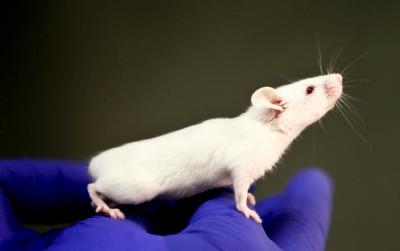
New research from the University of North Carolina School of Medicine explores this paradox in a humanized mouse model, demonstrating that breast milk has a strong virus killing effect and protects against oral transmission of HIV.
"This study provides significant insight into the amazing ability of breast milk to destroy HIV and prevent its transmission," said J. Victor Garcia, PhD, senior author on the study and professor of medicine in the UNC Center for Infectious Diseases and the UNC Center for AIDS Research. "It also provides new leads for the isolation of natural products that could be used to combat the virus."
Garcia and colleagues pioneered the humanized "BLT" mouse model, which is created by introducing human bone marrow, liver and thymus tissues into animals without an immune system of their own. Humanized BLT mice have a fully functioning human immune system and can be infected with HIV in the same manner as humans.
In the study, the researchers first determined that the oral cavity and upper digestive tract of BLT mice have the same cells that affect oral transmission of HIV in humans and then successfully transmitted the virus to the mice through these pathways. When the mice were given virus in whole breast milk from HIV-negative women, however, the virus could not be transmitted.
"These results are highly significant because they show that breast milk can completely block oral transmission of both forms of HIV that are found in the breast milk of HIV-infected mothers: virus particles and virus-infected cells," said Angela Wahl, PhD, a post-doctoral researcher in Garcia's lab and lead author on the paper. "This refutes the 'Trojan horse' hypothesis which says that HIV in cells is more stubborn against the body's own innate defenses than HIV in virus particles."
Finally, the researchers studied the effectiveness of pre-exposure prophylaxis (PrEP) with antiretroviral medication for oral transmission of HIV. Garcia and his team have previously shown that PrEP is effective against intravenous, vaginal and rectal transmission of HIV in humanized BLT mice. In this study, they gave the mice antiretroviral drugs for seven days (3 days before and 4 days after exposing them to the virus) and found 100 percent protection against virus transmission.
These latest findings provide important leads to alternative treatments that could be used to prevent transmission.
"No child should ever be infected with HIV because it is breastfed. Breastfeeding provides critical nutrition and protection from other infections, especially where clean water for infant formula is scarce," Garcia said. "Understanding how HIV is transmitted to infants and children despite the protective effects of milk will help us close this important door to the spread of AIDS."
The study appears in the June 14, 2012 issue of the online journal PLoS Pathogens.
INFORMATION:
The research was supported by funds from the National Institute of Allergy and Infectious Diseases of the National Institutes of Health and the UNC Center for AIDS Research.
HIV researchers have been left with a conundrum: does breast milk transmit the virus or protect against it?
New research from the University of North Carolina School of Medicine explores this paradox in a humanized mouse model, demonstrating that breast milk has a strong virus killing effect and protects against oral transmission of HIV.
"This study provides significant insight into the amazing ability of breast milk to destroy HIV and prevent its transmission," said J. Victor Garcia, PhD, senior author on the study and professor of medicine in the UNC Center for Infectious Diseases and the UNC Center for AIDS Research. "It also provides new leads for the isolation of natural products that could be used to combat the virus."
Garcia and colleagues pioneered the humanized "BLT" mouse model, which is created by introducing human bone marrow, liver and thymus tissues into animals without an immune system of their own. Humanized BLT mice have a fully functioning human immune system and can be infected with HIV in the same manner as humans.
In the study, the researchers first determined that the oral cavity and upper digestive tract of BLT mice have the same cells that affect oral transmission of HIV in humans and then successfully transmitted the virus to the mice through these pathways. When the mice were given virus in whole breast milk from HIV-negative women, however, the virus could not be transmitted.
"These results are highly significant because they show that breast milk can completely block oral transmission of both forms of HIV that are found in the breast milk of HIV-infected mothers: virus particles and virus-infected cells," said Angela Wahl, PhD, a post-doctoral researcher in Garcia's lab and lead author on the paper. "This refutes the 'Trojan horse' hypothesis which says that HIV in cells is more stubborn against the body's own innate defenses than HIV in virus particles."
Finally, the researchers studied the effectiveness of pre-exposure prophylaxis (PrEP) with antiretroviral medication for oral transmission of HIV. Garcia and his team have previously shown that PrEP is effective against intravenous, vaginal and rectal transmission of HIV in humanized BLT mice. In this study, they gave the mice antiretroviral drugs for seven days (3 days before and 4 days after exposing them to the virus) and found 100 percent protection against virus transmission.
These latest findings provide important leads to alternative treatments that could be used to prevent transmission.
"No child should ever be infected with HIV because it is breastfed. Breastfeeding provides critical nutrition and protection from other infections, especially where clean water for infant formula is scarce," Garcia said. "Understanding how HIV is transmitted to infants and children despite the protective effects of milk will help us close this important door to the spread of AIDS."
The study appears in the June 14, 2012 issue of the online journal PLoS Pathogens.
INFORMATION:
The research was supported by funds from the National Institute of Allergy and Infectious Diseases of the National Institutes of Health and the UNC Center for AIDS Research.