Researchers link cerebral malaria to epilepsy, behavior disorders
Study reveals true effects of malaria on African generations
Published 2010-11-17 · Original archive entry · Explore research explainers
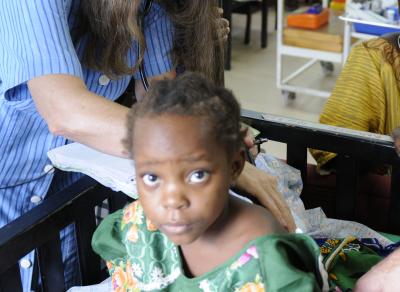
EAST LANSING, Mich. — Almost a third of cerebral malaria survivors developed epilepsy or other behavioral disorders in the most comprehensive study to date of the disease in African children, solidifying the link between malaria and neuropsychiatric disorders that affect hundreds of thousands of children.
The research – led by Gretchen Birbeck, an associate professor of neurology and ophthalmology in Michigan State University's College of Osteopathic Medicine – appears in the current edition of The Lancet Neurology.
Cerebral malaria is a severe form of malaria affecting the brain, occurring predominantly in children, with a mortality rate of 15-25 percent. It affects about one million children every year, primarily in sub-Saharan Africa.
"Our findings show that children with cerebral malaria are at risk of developing several adverse neurological outcomes including epilepsy, disruptive behavior disorders and disabilities characterized by motor, sensory or language deficits," said Birbeck, also director for the International Neurologic & Psychiatric Epidemiology Program. "Specifically, the modifiable risk factors for these disorders in children with cerebral malaria are acute seizures and extreme fevers."
Since most of the neurologic effects did not present themselves immediately, they were not evident at the time of the child's discharge from the hospital after the initial malaria illness.
"But if the findings of our study are generalized, then about 135,000 African children younger than 5 years develop epilepsy due to cerebral malaria-induced brain injury each year, and cerebral malaria may be one of the more common causes of epilepsy in malaria-endemic regions," she said.
The study looked at several hundred children during a nearly five-year period in Blantyre, Malawi; it was the first-ever prospective study of cerebral malaria survivors that included a control group. The study was funded by the National Institutes of Health and the Wellcome Trust.
The impact of the findings on African society is immeasurable, Birbeck said.
"The long-term loss of human potential from these disorders is mind-boggling," she said. "Yes, these children are surviving the malaria, but their quality of life and what they contribute to society is severely hampered. There is a huge burden of post-malaria neurological disorders."
But Birbeck said there are steps that can be taken.
"We need to be more aggressive in treating the two major risk factors: seizures and high fever," she said, adding that the next step will be to start clinical trials to identify treatments aimed at better seizure and fever control.
Previous studies of neurological consequences related to cerebral malaria have been limited by poor retention rates, lack of follow-up and assessments that were stopped when the results of neurological examinations were normal.
Also, cerebral malaria is challenging to diagnose definitively. However, researchers from MSU and the University of Liverpool in England previously had discovered that diagnosing malaria retinopathy – a set of abnormalities in the eye's retina – greatly enhances the ability to diagnose cerebral malaria. Thus, as part the study published in The Lancet Neurology, Birbeck and her team only looked at children with retinopathy-positive cerebral malaria.
Terrie Taylor, an MSU University Distinguished Professor and co-author on the paper, spends six months each year battling malaria at the Queen Elizabeth Central Hospital in Blantyre, Malawi.
"The challenge now is to devise better treatments during the cerebral malaria episode in hopes of minimizing the risk of epilepsy in years to come," she said.
Birbeck said MSU's continued and dedicated presence in Africa is what allows such research to be done.
"The long-term relationships that have been established with ministries of health, medical schools and investigators allow us to bring our expertise to the table," she said.
INFORMATION:
Michigan State University has been advancing knowledge and transforming lives through innovative teaching, research and outreach for more than 150 years. MSU is known internationally as a major public university with global reach and extraordinary impact. Its 17 degree-granting colleges attract scholars worldwide who are interested in combining education with practical problem solving.
The research – led by Gretchen Birbeck, an associate professor of neurology and ophthalmology in Michigan State University's College of Osteopathic Medicine – appears in the current edition of The Lancet Neurology.
Cerebral malaria is a severe form of malaria affecting the brain, occurring predominantly in children, with a mortality rate of 15-25 percent. It affects about one million children every year, primarily in sub-Saharan Africa.
"Our findings show that children with cerebral malaria are at risk of developing several adverse neurological outcomes including epilepsy, disruptive behavior disorders and disabilities characterized by motor, sensory or language deficits," said Birbeck, also director for the International Neurologic & Psychiatric Epidemiology Program. "Specifically, the modifiable risk factors for these disorders in children with cerebral malaria are acute seizures and extreme fevers."
Since most of the neurologic effects did not present themselves immediately, they were not evident at the time of the child's discharge from the hospital after the initial malaria illness.
"But if the findings of our study are generalized, then about 135,000 African children younger than 5 years develop epilepsy due to cerebral malaria-induced brain injury each year, and cerebral malaria may be one of the more common causes of epilepsy in malaria-endemic regions," she said.
The study looked at several hundred children during a nearly five-year period in Blantyre, Malawi; it was the first-ever prospective study of cerebral malaria survivors that included a control group. The study was funded by the National Institutes of Health and the Wellcome Trust.
The impact of the findings on African society is immeasurable, Birbeck said.
"The long-term loss of human potential from these disorders is mind-boggling," she said. "Yes, these children are surviving the malaria, but their quality of life and what they contribute to society is severely hampered. There is a huge burden of post-malaria neurological disorders."
But Birbeck said there are steps that can be taken.
"We need to be more aggressive in treating the two major risk factors: seizures and high fever," she said, adding that the next step will be to start clinical trials to identify treatments aimed at better seizure and fever control.
Previous studies of neurological consequences related to cerebral malaria have been limited by poor retention rates, lack of follow-up and assessments that were stopped when the results of neurological examinations were normal.
Also, cerebral malaria is challenging to diagnose definitively. However, researchers from MSU and the University of Liverpool in England previously had discovered that diagnosing malaria retinopathy – a set of abnormalities in the eye's retina – greatly enhances the ability to diagnose cerebral malaria. Thus, as part the study published in The Lancet Neurology, Birbeck and her team only looked at children with retinopathy-positive cerebral malaria.
Terrie Taylor, an MSU University Distinguished Professor and co-author on the paper, spends six months each year battling malaria at the Queen Elizabeth Central Hospital in Blantyre, Malawi.
"The challenge now is to devise better treatments during the cerebral malaria episode in hopes of minimizing the risk of epilepsy in years to come," she said.
Birbeck said MSU's continued and dedicated presence in Africa is what allows such research to be done.
"The long-term relationships that have been established with ministries of health, medical schools and investigators allow us to bring our expertise to the table," she said.
INFORMATION:
Michigan State University has been advancing knowledge and transforming lives through innovative teaching, research and outreach for more than 150 years. MSU is known internationally as a major public university with global reach and extraordinary impact. Its 17 degree-granting colleges attract scholars worldwide who are interested in combining education with practical problem solving.