PRESS-NEWS.org - Press Release Distribution
PRESS RELEASES DISTRIBUTION

Hand gestures improve learning in both signers and speakers

Hand gestures improve learning in both signers and speakers
2014-08-19
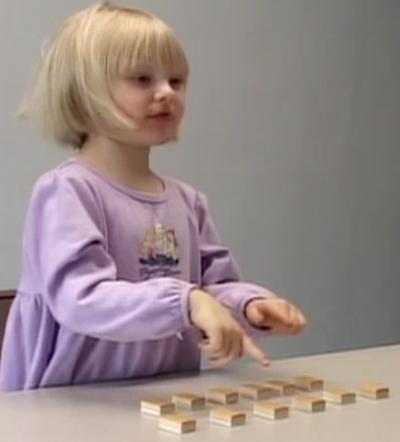
(Press-News.org) Spontaneous gesture can help children learn, whether they use a spoken language or sign language, according to a new report.

Previous research by Susan Goldin-Meadow, the Beardsley Ruml Distinguished Service Professor in the Department of Psychology, has found that gesture helps children develop their language, learning and cognitive skills. As one of the nation's leading authorities on language learning and gesture, she has also studied how using gesture helps older children improve their mathematical skills.

Goldin-Meadow's new study examines how gesturing contributes to language learning in hearing and in deaf children. She concludes that gesture is a flexible way of communicating, one that can work with language to communicate or, if necessary, can itself become language. The article is published online by Philosophical Transactions of the Royal Society B and will appear in the Sept. 19 print issue of the journal, which is a theme issue on "Language as a Multimodal Phenomenon."

"Children who can hear use gesture along with speech to communicate as they acquire spoken language, "Goldin-Meadow said. "Those gesture-plus-word combinations precede and predict the acquisition of word combinations that convey the same notions. The findings make it clear that children have an understanding of these notions before they are able to express them in speech."

In addition to children who learned spoken languages, Goldin-Meadow studied children who learned sign language from their parents. She found that they too use gestures as they use American Sign Language. These gestures predict learning, just like the gestures that accompany speech.

Finally, Goldin-Meadow looked at deaf children whose hearing losses prevented them from learning spoken language, and whose hearing parents had not presented them with conventional sign language. These children use homemade gesture systems, called homesign, to communicate. Homesign shares properties in common with natural languages but is not a full-blown language, perhaps because the children lack "a community of communication partners," Goldin-Meadow writes. Nevertheless, homesign can be the "first step toward an established sign language." In Nicaragua, individual gesture systems blossomed into a more complex, shared system when homesigners were brought together for the first time.

These findings provide insight into gesture's contribution to learning. Gesture plays a role in learning for signers even though it is in the same modality as sign. As a result, gesture cannot aid learners simply by providing a second modality. Rather, gesture adds imagery to the categorical distinctions that form the core of both spoken and sign languages.

Goldin-Meadow concludes that gesture can be the basis for a self-made language, assuming linguistic forms and functions when other vehicles are not available. But when a conventional spoken or sign language is present, gesture works along with language, helping to promote learning.

INFORMATION: END

[Attachments] See images for this press release:
Hand gestures improve learning in both signers and speakers

ELSE PRESS RELEASES FROM THIS DATE:

Solar salad, anyone?

Solar salad, anyone?
2014-08-19
TEMPE, Ariz. – An Arizona State University alumna has devised the largest catalog ever produced for stellar compositions. Called the Hypatia Catalog, after one of the first female astronomers who lived ~350 AD in Alexandria, the work is critical to understanding the properties of stars, how they form, and possible connections with orbiting planets. And what she found from her work is that the compositions of nearby stars aren't as uniform as once thought. Since it is not possible to physically sample a star to determine its composition, astronomers study of the light ...

Leukemia drug shows promise for skin, breast and other cancers

2014-08-19
MAYWOOD, Ill -- A leukemia drug called dasatinib shows promise for treating skin, breast and several other cancers, according to researchers at Loyola University Chicago Stritch School of Medicine. Dasatinib fights leukemia by checking the uncontrolled growth of cancer cells. But when used against other cancer cells, researchers found, the drug employs a different strategy: It causes the cells to clump together, thus preventing them from migrating. Without the ability to migrate, cancer cells cannot metastasize (spread to other parts of the body). Mitchell Denning, ...

Electroacupuncture attenuates neuropathic pain after brachial plexus injury

Electroacupuncture attenuates neuropathic pain after brachial plexus injury
2014-08-19
Electroacupuncture has traditionally been used to treat pain, but its effect on pain following brachial plexus injury is still unknown. In a recent study reported on the Neural Regeneration Research (Vol. 9, No. 14, 2014), rat models of an avulsion injury to the left brachial plexus root (associated with upper-limb chronic neuropathic pain) were given electroacupuncture stimulation at bilateral Quchi (LI11), Hegu (LI04), Zusanli (ST36) and Yanglingquan (GB34). After electroacupuncture therapy, chronic neuropathic pain in the rats' upper limbs was significantly attenuated. ...

Genetic key to lupus shows potential of personalized medicine

Genetic key to lupus shows potential of personalized medicine
2014-08-19
Medical researchers have used DNA sequencing to identify a gene variant responsible for causing lupus in a young patient. The development shows that for the first time, it is feasible for researchers to identify the individual causes of lupus in patients by using DNA sequencing, allowing doctors to target specific treatments to individual patients. Lupus is a chronic autoimmune disease that affects one in 700 Australians, predominantly young and middle aged women. Medical researchers at the Australian National University's Centre for Personalised Immunology, based ...

MIPT and RAS scientists made an important step towards creating medical nanorobots

MIPT and RAS scientists made an important step towards creating medical nanorobots
2014-08-19
Researchers from the Institute of General Physics of the Russian Academy of Sciences, the Institute of Bioorganic Chemistry of the Russian Academy of Sciences and MIPT have made an important step towards creating medical nanorobots. They discovered a way of enabling nano- and microparticles to produce logical calculations using a variety of biochemical reactions. Details of their research project are given in the journal Nature Nanotechnology. It is the first experimental publication by an exclusively Russian team in one of the most cited scientific magazines in many ...

Opioid users breathe easier with novel drug to treat respiratory depression

2014-08-19
Chicago – August 19, 2014 – People taking prescription opioids to treat moderate to severe pain may be able to breathe a little easier, literally. A study published in the September issue of Anesthesiology, the official medical journal of the American Society of Anesthesiologists® (ASA®), found that a new therapeutic drug, GAL-021, may reverse or prevent respiratory depression, or inadequate breathing, in patients taking opioid medication without compromising pain relief or increasing sedation. "Although opioids such as oxycodone, methadone and fentanyl are commonly ...

Taking a stand: Balancing the BENEFITS and RISKS of physical activity in children

2014-08-19
This news release is available in French. Taking a Stand: balancing the BENEFITS and RISKS of physical activity in children Today the Canadian Society of Exercise Physiology took a stand on the promotion of childhood physical activity and published their position and recommendations in the journal Applied Physiology, Nutrition, and Metabolism (APNM). This position stand provides an important overview of knowledge in the area of risk of physical activity for children and suggests both practical guidelines and a research agenda. Uniquely, this position stand addresses ...

Researchers block plant hormone

Researchers block plant hormone
2014-08-19
This news release is available in German. Researchers trying to get new information about the metabolism of plants can switch off individual genes and study the resulting changes. However, Erich Kombrink from the Max Planck Institute for Plant Breeding Research in Cologne and Markus Kaiser from the University of Duisburg-Essen adopt a different approach. They identify small molecules that block specific components of the metabolic process like brake pads and prevent the downstream reactions. In their search for these molecules, they use a biological selection ...

Exporting US coal to Asia could drop emissions 21 percent

2014-08-19
DURHAM, N.C. -- Under the right scenario, exporting U.S. coal to power plants in South Korea could lead to a 21 percent drop in greenhouse gas emissions compared to burning the fossil fuel at plants in the United States, according to a new Duke University-led study. "Despite the large amount of emissions produced by shipping the coal such a long distance, our analysis shows that the total emissions would drop because of the superior energy efficiency of South Korea's newer coal-fired power plants," said Dalia Patiño-Echeverri, assistant professor of energy systems and ...

The difficult question of Clostridium difficile

The difficult question of Clostridium difficile
2014-08-19
The bacterium Clostridium difficile causes antibiotic-related diarrhoea and is a growing problem in the hospital environment and elsewhere in the community. Understanding how the microbe colonises the human gut when other "healthy" microbes have been destroyed during a course of antibiotics might lead to new ways to control infection. An important clue was reported recently in an open access article published in the journal Acta Crystallographica Section D Biological Crystallography. [Bradshaw et al. (2014). Acta Cryst. D70, 1983-1993; doi:10.1107/S1399004714009997] Ravi ...

LAST 30 PRESS RELEASES:

Making lighter work of calculating fluid and heat flow

Normalizing blood sugar can halve heart attack risk

Lowering blood sugar cuts heart attack risk in people with prediabetes

Study links genetic variants to risk of blinding eye disease in premature infants

Non-opioid ‘pain sponge’ therapy halts cartilage degeneration and relieves chronic pain

AI can pick up cultural values by mimicking how kids learn

China’s ecological redlines offer fast track to 30 x 30 global conservation goal

Invisible indoor threats: emerging household contaminants and their growing risks to human health

Adding antibody treatment to chemo boosts outcomes for children with rare cancer

Germline pathogenic variants among women without a history of breast cancer

Tanning beds triple melanoma risk, potentially causing broad DNA damage

Unique bond identified as key to viral infection speed

Indoor tanning makes youthful skin much older on a genetic level

Mouse model sheds new light on the causes and potential solutions to human GI problems linked to muscular dystrophy

The Journal of Nuclear Medicine ahead-of-print tip sheet: December 12, 2025

Smarter tools for peering into the microscopic world

Applications open for funding to conduct research in the Kinsey Institute archives

Global measure underestimates the severity of food insecurity

Child survivors of critical illness are missing out on timely follow up care

Risk-based vs annual breast cancer screening / the WISDOM randomized clinical trial

University of Toronto launches Electric Vehicle Innovation Ontario to accelerate advanced EV technologies and build Canada’s innovation advantage

Early relapse predicts poor outcomes in aggressive blood cancer

American College of Lifestyle Medicine applauds two CMS models aligned with lifestyle medicine practice and reimbursement

Clinical trial finds cannabis use not a barrier to quitting nicotine vaping

Supplemental nutrition assistance program policies and food insecurity

Switching immune cells to “night mode” could limit damage after a heart attack, study suggests

URI-based Global RIghts Project report spotlights continued troubling trends in worldwide inhumane treatment

Neutrophils are less aggressive at night, explaining why nighttime heart attacks cause less damage than daytime events

Menopausal hormone therapy may not pose breast cancer risk for women with BRCA mutations

Mobile health tool may improve quality of life for adolescent and young adult breast cancer survivors

[Press-News.org] Hand gestures improve learning in both signers and speakers