PRESS-NEWS.org - Press Release Distribution
PRESS RELEASES DISTRIBUTION

Hermit thrush or humans: Who sets the tone?
Birdsong and human music have common principles

Hermit thrush or humans: Who sets the tone?
2014-11-04
(Press-News.org) This news release is available in German.

Many musical cultures around the world use pitch systems in which notes are related by simple integer proportions (ratios between note frequencies) corresponding to the harmonic (overtone) series. The diatonic major scale, prevalent in Western music, is a typical example. For a long time, scientists have debated the relative contribution of biology and culture in shaping these pitch systems. One way to answer this question is to study animal "song": if the vocal displays of some animals, such as birds or whales, follow some of the same principles that characterize human musical systems, this might suggest a biological basis for these musical systems.

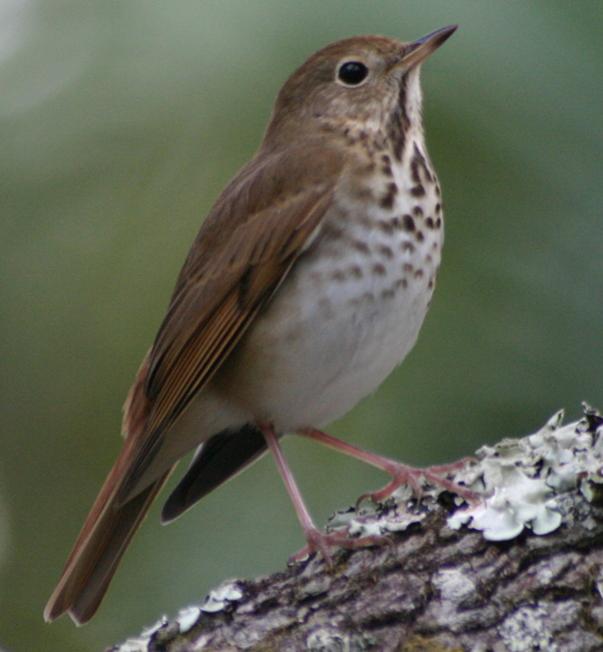
The hermit thrush is a common, medium-sized, North American songbird whose song has attracted the attention of ornithologists and musicologists for more than a century. Early 20th-century studies claimed that hermit thrush song follows the same principles found in human musical systems, but these were anecdotal reports which were not supported by a rigorous analysis. However, a new study conducted by a team of researchers from the University of Vienna, Austria, the Cornish College of the Arts, USA, and the Philipps University of Marburg, Germany, shows that hermit thrush song indeed uses notes that are generally related by simple integer proportions, like much human music. Moreover, the notes used in each song are mostly drawn from the same overtone series, meaning that they are multiples of the same underlying frequency.

To arrive at this conclusion, Emily Doolittle (Cornish College of the Arts) and Tecumseh Fitch (University of Vienna) analyzed high-quality recordings of the songs of 14 male hermit thrushes. Bruno Gingras (University of Vienna) and Dominik Endres (Philipps University of Marburg) then used two different statistical methods to demonstrate that the notes of the hermit thrush song were, in most cases, simple integer multiples of a base frequency, corresponding to an overtone series. The authors controlled for other possible explanations, such as the possibility that hermit thrushes could select notes using the resonances of their vocal tract in a manner similar to wind instruments like the alphorn. Their results thus strongly suggest that hermit thrushes actively select the pitches they sing.

Although further research is needed to explain why hermit thrushes choose to sing pitches whose relationship follows the harmonic series, one possibility, mentioned by the authors, is that female hermit thrushes may evaluate a male's singing accuracy by its ability to follow the overtone series. Another possibility is that, like humans, hermit thrushes find it easier to remember or process pitches that follow the overtone series.

Taking into account other recent studies, such as the finding that newly hatched domestic chicks show a preference for consonant intervals, this report lends support to the idea that some features of human musical systems may be based, at least in part, on biological principles that are shared with other animals such as songbirds. The current results are thus especially relevant in the context of the longstanding debate regarding the origins of human musical preferences.

INFORMATION:

Publication Emily L. Doolittle, Bruno Gingras, Dominik M. Endres, W. Tecumseh Fitch. Overtone-based pitch selection in hermit thrush song: Unexpected convergence with scale construction in human music. Proceedings of the National Academy of Sciences (PNAS). November 2014. DOI: http://www.pnas.org/cgi/doi/10.1073/pnas.1406023111

Contacts Bruno Gingras, PhD
Department of Cognitive Biology
University of Vienna
+43-1-4277-76 146
bruno.gingras@univie.ac.at
http://homepage.univie.ac.at/bruno.gingras

Tecumseh Fitch, PhD
Department of Cognitive Biology
University of Vienna
+43-1-4277-761 11
tecumseh.fitch@univie.ac.at

The University of Vienna, founded in 1365, is one of the oldest and largest universities in Europe. About 9,500 employees, 6,700 of who are academic employees, work at 15 faculties and four centres. This makes the University of Vienna Austria's largest research and education institution. About 92,000 national and international students are currently enrolled at the University of Vienna. With more than 180 degree programmes, the University offers the most diverse range of studies in Austria. The University of Vienna is also a major provider of continuing education. In 2015, the Alma Mater Rudolphina Vindobonensis celebrates its 650th Anniversary. http://www.univie.ac.at


[Attachments] See images for this press release:
Hermit thrush or humans: Who sets the tone?

ELSE PRESS RELEASES FROM THIS DATE:

Improving the taste of alcohol-free beer with aromas from the regular beer

Improving the taste of alcohol-free beer with aromas from the regular beer
2014-11-04
Consumers often complain that alcohol-free beer is tasteless, but some of the aromas it is lacking can be carried across from regular beer. Researchers from the University of Valladolid (Spain) have developed the technique and a panel of tasters has confirmed its effectiveness. The alcohol in beer acts as a solvent for a variety of aromatic compounds; therefore, when it is eliminated, as in non-alcoholic beers, the final product loses aromas and some of its taste. It is difficult to recover these compounds, but researchers from the University of Valladolid have done just ...

Autism spectrum disorder: Ten tips guidance article

2014-11-04
Washington D.C., November 4, 2014 – A Clinical Perspectives article published in the November 2014 issue of the Journal of the American Academy of Child and Adolescent Psychiatry proposes a tool to empower stakeholders, guide caregivers, and provide a rationale for advocates, when considering the systems of support offered to people with an autism spectrum disorder (ASD). Organizations such as the American Academy of Child and Adolescent Psychiatry, the European Society for Child and Adolescent Psychiatry, the International Association for Child and Adolescent Psychiatry ...

Asthma patients reduce symptoms and improve lung function with shallow breaths, more CO2

Asthma patients reduce symptoms and improve lung function with shallow breaths, more CO2
2014-11-04
Asthma patients taught to habitually resist the urge to take deep breaths when experiencing symptoms were rewarded with fewer symptoms and healthier lung function, according to a new study from Southern Methodist University, Dallas. The findings are from a large clinical trial funded with a grant from the National Institutes of Health. The results suggest asthma patients using behavioral therapy in conjunction with their daily asthma medicine can improve their lung health over the long-term, said principal investigators Thomas Ritz and Alicia E. Meuret, both SMU clinical ...

Half of elderly people are more than happy to consume new foods

2014-11-04
This news release is available in Spanish. Elderly people are regarded as traditional consumers, but the AZTI study reveals that there are more and more elderly people who are happy to accept new foods. However, these consumers insist that the new proposals should be similar to or evoke traditional products and flavours and, at the same time, be health-enhancing, have the right nutrient profile for their age, and be flavoursome. To come up with new foods adapted to the needs of the population over 65, AZTI –in collaboration with the ADIMEN group of sociologists ...

New technique may help assess how plastic pollution impacts wildlife

2014-11-04
By swabbing oil from a gland located at the end of a seabird's tail and analyzing the sample with gas chromatography-mass spectrometry, researchers have developed a way to measure wildlife's exposure to plastics. The minimally invasive technique will prove useful for detecting plastics exposure at population and species levels. Such monitoring is increasingly important as annual plastics production continues to rise—production has increased from less than 2 tons per year in the 1950s to nearly 280 million tons in 2011. "We're excited about this new method we've ...

Populations of common birds across europe are declining

2014-11-04
Across Europe, the population of common birds has declined rapidly over the last 30 years, while some of the less abundant species are stable or increasing in number. The findings, which come from a 30-year data set of 144 bird species, are worrisome because the most common species of birds provide most of the benefits for humans, for example by controlling agricultural pest species, dispersing seeds, and simply providing beautiful birdsongs. "It is becoming increasingly clear that interaction with the natural world and wildlife is central to human wellbeing, and significant ...

Few hospital websites educate pregnant women on Tdap vaccination and whooping cough prevention

2014-11-04
ANN ARBOR, Mich. — Whooping cough, a highly contagious bacterial infection, can be serious and even fatal in newborns, but less than half of birthing hospitals in Michigan included prevention information on websites, says a new University of Michigan analysis that appears in the American Journal of Infection Control. The majority of Michigan birthing hospitals (64%) had no information about Tdap vaccination to prevent whooping cough in babies; among those that did have information, it typically required searching for the term pertussis or whooping cough. "Newborns ...

Dark matter may be massive

2014-11-04
The physics community has spent three decades searching for and finding no evidence that dark matter is made of tiny exotic particles. Case Western Reserve University theoretical physicists suggest researchers consider looking for candidates more in the ordinary realm and, well, more massive. Dark matter is unseen matter, that, combined with normal matter, could create the gravity that, among other things, prevents spinning galaxies from flying apart. Physicists calculate that dark matter comprises 27 percent of the universe; normal matter 5 percent. Instead of WIMPS, ...

Study finds parent intervention is best for helping toddlers with autism

2014-11-04
TALLAHASSEE, Fla. — For the first time, toddlers with autism have demonstrated significant improvement after intensive intervention by parents rather than clinicians, according to a new Florida State University study published online in the journal Pediatrics. "We've come up with a treatment model that can teach parents to support their child's learning during everyday activities, and we've documented that the children improved their developmental level, social communication skills and autism symptoms," said Amy Wetherby, director of the Autism Institute at Florida ...

Preclinical oncology coursework could help with practitioner shortage

2014-11-04
BEER-SHEVA, Israel...November 4 2014 -- With the world facing a shortage of oncologists, Ben-Gurion University of the Negev (BGU) researchers have determined that preclinical study of oncology may increase the number of students entering the field and may make them more empathetic and concerned about ethical issues of treatment. The study was published in the journal, Academic Medicine, and led by Dr. Leeat Granek, an assistant professor and health psychologist in BGU's Department of Public Health and Prof. Samuel Ariad, head of the Oncology Department at Soroka University ...

LAST 30 PRESS RELEASES:

Where did that raindrop come from? Tracing the movement of water molecules using isotopes

Planting tree belts on wet farmland comes with an overlooked trade-off

Continuous lower limb biomechanics prediction via prior-informed lightweight marker-GMformer

Researchers discover genetic link to Barrett’s esophagus offering new hope for esophageal cancer patients

Endocrine Society announces inaugural Rare Endocrine Disease Fellows Series

New AI model improves accuracy of food contamination detection

Egalitarianism among hunter-gatherers

AI-Powered R&D Acceleration: Insilico Medicine and CMS announce multiple collaborations in central nervous system and autoimmune diseases

AI-generated arguments are persuasive, even when labeled

New study reveals floods are the biggest drivers of plastic pollution in rivers

Novel framework for real-time bedside heart rate variability analysis

Dogs and cats help spread an invasive flatworm species

Long COVID linked to Alzheimer’s disease mechanisms

Study reveals how chills develop and support the body's defense against infection

Half of the world’s coral reefs suffered major bleaching during the 2014–2017 global heatwave

AI stethoscope can help spot ‘silent epidemic’ of heart valve disease earlier than GPs, study suggests

Researchers rebuild microscopic circadian clock that can control genes

Controlled “oxidative spark”: a surprising ally in brain repair

Football-sized fossil creature may have been one of the first land animals to eat its veggies

Study finds mindfulness enables more effective endoscopies in awake patients

Young scientists from across the UK shortlisted for largest unrestricted science prize

Bison hunters abandoned long-used site 1,100 years ago to adapt to changing climate

Parents of children with medical complexity report major challenges with at-home medical devices

The nonlinear Hall effect induced by electrochemical intercalation in MoS2 thin flake devices

Moving beyond money to measure the true value of Earth science information

Engineered moths could replace mice in research into “one of the biggest threats to human health”

Can medical AI lie? Large study maps how LLMs handle health misinformation

The Lancet: People with obesity at 70% higher risk of serious infection with one in ten infectious disease deaths globally potentially linked to obesity, study suggests

Obesity linked to one in 10 infection deaths globally

Legalization of cannabis + retail sales linked to rise in its use and co-use of tobacco

[Press-News.org] Hermit thrush or humans: Who sets the tone?
Birdsong and human music have common principles