PRESS-NEWS.org - Press Release Distribution
PRESS RELEASES DISTRIBUTION

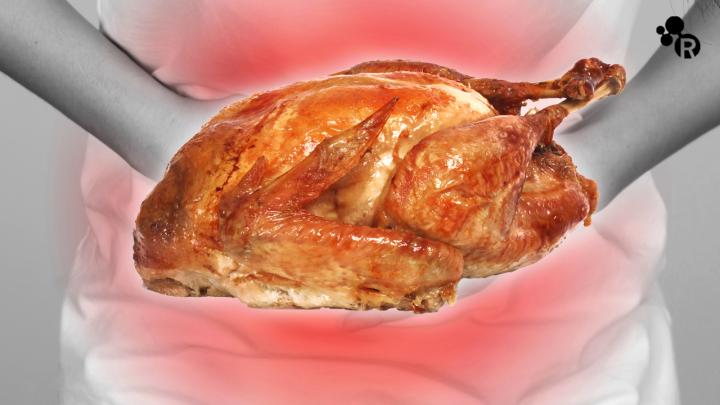
Too much turkey: What happens when you overeat? (video)

Too much turkey: What happens when you overeat? (video)
2014-11-24
(Press-News.org) WASHINGTON, Nov. 24, 2014 -- The season of giving is often also the season of over-indulging at the dinner table. As Thanksgiving approaches, Reactions takes a look down at our stomachs to find out what happens when you overeat. Put on your "eating pants" and enjoy the video here:

Subscribe to the series at Reactions YouTube, and follow us on Twitter @ACSreactions to be the first to see our latest videos.

INFORMATION:

The American Chemical Society is a nonprofit organization chartered by the U.S. Congress. With more than 161,000 members, ACS is the world's largest scientific society and a global leader in providing access to chemistry-related research through its multiple databases, peer-reviewed journals and scientific conferences. Its main offices are in Washington, D.C., and Columbus, Ohio.

To automatically receive news releases from the American Chemical Society, contact newsroom@acs.org.

Follow us: Twitter Facebook


[Attachments] See images for this press release:
Too much turkey: What happens when you overeat? (video)

ELSE PRESS RELEASES FROM THIS DATE:

Scientists do glass a solid -- with new theory on how it transitions from a liquid

2014-11-24
How does glass transition from a liquid to its familiar solid state? How does this common material transport heat and sound? And what microscopic changes occur when a glass gains rigidity as it cools? A team of researchers at NYU's Center for Soft Matter Research offers a theoretical explanation for these processes in Proceedings of the National Academy of Sciences. Our understanding of glasses as they change state is relatively limited. This is because, unlike other materials such as metals, their constituent particles--which can be as small as a billionth of a meter ...

Threats of terrorism perceived differently depending on identification within a group

2014-11-24
People who see their group as more homogenous - for instance, the more one thinks Americans are similar to each other - are less likely to be influenced by external terrorist threat alerts, according to research from NYU's Steinhardt School of Culture, Education, and Human Development. "Among people who viewed their group to be homogeneous, external threat did not translate to higher perceived threat, and they did not influence beliefs about the legitimacy of the U.S. military intervention in Iraq," said study author Rezarta Bilali, assistant professor of psychology and ...

Teens prescribed anxiety, sleep medications likelier to illegally abuse them later

2014-11-24
ANN ARBOR--The medical community may be inadvertently creating a new generation of illegal, recreational drug users by prescribing anti-anxiety or sleep medications to teenagers, say University of Michigan researchers. Teens prescribed anxiety or sleep medications are up to 12 times more likely to abuse those drugs than those who had never had a prescription, either by using someone else's prescription pills or to get high or experiment, according to a study from the U-M School of Nursing. Nearly 9 percent of the 2,745 adolescent study participants had received ...

ASU, IBM move ultrafast, low-cost DNA sequencing technology a step closer to reality

ASU, IBM move ultrafast, low-cost DNA sequencing technology a step closer to reality
2014-11-24
A team of scientists from Arizona State University's Biodesign Institute and IBM's T.J. Watson Research Center have developed a prototype DNA reader that could make whole genome profiling an everyday practice in medicine. "Our goal is to put cheap, simple and powerful DNA and protein diagnostic devices into every single doctor's office," said Stuart Lindsay, an ASU physics professor and director of Biodesign's Center for Single Molecule Biophysics. Such technology could help usher in the age of personalized medicine, where information from an individual's complete DNA ...

Scientists solve reptile mysteries with landmark study on the evolution of turtles

Scientists solve reptile mysteries with landmark study on the evolution of turtles
2014-11-24
SAN FRANCISCO (November 24, 2014) --A team of scientists, including researchers from the California Academy of Sciences, has reconstructed a detailed "tree of life" for turtles. The specifics of how turtles are related--to one another, to other reptiles, and even to dinosaurs--have been hotly debated for decades. Next generation sequencing technologies in Academy labs have generated unprecedented amounts of genetic information for a thrilling new look at turtles' evolutionary history. These high-tech lab methods revolutionize the way scientists explore species origins and ...

Educating on sickle cell risk

2014-11-24
Members of the public in sub-Saharan Africa who are carriers of the hereditary disease sickle cell disease must be educated aggressively through public health campaigns to raise awareness of the risks of parenting offspring with the disease if their partner is also a carrier, according to research published in the International Journal of Medical Engineering and Informatics. There are many physical and emotional public health components of sickle cell disease, explains William Ebomoyi of the Department of Health Studies College of Health Sciences, Chicago State University, ...

End to end 5G for super, superfast mobile

2014-11-24
A collaboration between NEC Electronics Samsung and several academic centres in China and Iran, is investigating how software-defined cellular networking might be used to give smart phone users the next generation of super-superfast broadband, 5G. They provide details in the International Journal of Communication Networks and Distributed Systems. Currently, the fourth generation of mobile phone connection technology, 4G, in as far as it has been adopted provides broadband-type connectivity for enabled devices such as smart phones, tablet computers, laptops and other gadgets ...

Fiddler on the roof?

Fiddler on the roof?
2014-11-24
WOODS HOLE, Mass.--David Johnson was standing in a salt marsh on the northern Massachusetts coast when he saw a fiddler crab, Uca pugnax, nearly 50 miles north of its supposed natural range. The migration north of this charismatic crab with the big, waving claw may be yet another sign of climate change. Johnson, then a scientist at the Marine Biological Laboratory (MBL) Ecosystems Center, has published his observations in the Journal of Crustacean Biology. The fiddler crab is an attention-getting crustacean; the males have an oversized claw that they use to attract a ...

How the hummingbird achieves its aerobatic feats

How the hummingbird achieves its aerobatic feats
2014-11-24
VIDEO: The most detailed aerodynamic simulation of hummingbird flight conducted to date demonstrates that it achieves its aerobatic abilities through a unique set of aerodynamic forces more closely aligned to those... Click here for more information. The sight of a tiny hummingbird hovering in front of a flower and then darting to another with lightning speed amazes and delights. But it also leaves watchers with a persistent question: How do they do it? Now, the most detailed, ...

The Lancet: Universal health coverage for US military veterans within reach, but many still lack coverage

2014-11-24
Over a million US military veterans lacked healthcare coverage in 2012, according to new estimates published in The Lancet. While many people believe that all veterans are covered by the Veterans Affairs health care system, less than half (8.9 million) of the 22 million veterans in the US are covered by VA health benefits, and most veterans are covered by private health insurance. Uninsured veterans are more likely to be young, single, African American, and veterans of Iraq and Afghanistan. However, the authors of this viewpoint estimate that universal health coverage ...

LAST 30 PRESS RELEASES:

Making lighter work of calculating fluid and heat flow

Normalizing blood sugar can halve heart attack risk

Lowering blood sugar cuts heart attack risk in people with prediabetes

Study links genetic variants to risk of blinding eye disease in premature infants

Non-opioid ‘pain sponge’ therapy halts cartilage degeneration and relieves chronic pain

AI can pick up cultural values by mimicking how kids learn

China’s ecological redlines offer fast track to 30 x 30 global conservation goal

Invisible indoor threats: emerging household contaminants and their growing risks to human health

Adding antibody treatment to chemo boosts outcomes for children with rare cancer

Germline pathogenic variants among women without a history of breast cancer

Tanning beds triple melanoma risk, potentially causing broad DNA damage

Unique bond identified as key to viral infection speed

Indoor tanning makes youthful skin much older on a genetic level

Mouse model sheds new light on the causes and potential solutions to human GI problems linked to muscular dystrophy

The Journal of Nuclear Medicine ahead-of-print tip sheet: December 12, 2025

Smarter tools for peering into the microscopic world

Applications open for funding to conduct research in the Kinsey Institute archives

Global measure underestimates the severity of food insecurity

Child survivors of critical illness are missing out on timely follow up care

Risk-based vs annual breast cancer screening / the WISDOM randomized clinical trial

University of Toronto launches Electric Vehicle Innovation Ontario to accelerate advanced EV technologies and build Canada’s innovation advantage

Early relapse predicts poor outcomes in aggressive blood cancer

American College of Lifestyle Medicine applauds two CMS models aligned with lifestyle medicine practice and reimbursement

Clinical trial finds cannabis use not a barrier to quitting nicotine vaping

Supplemental nutrition assistance program policies and food insecurity

Switching immune cells to “night mode” could limit damage after a heart attack, study suggests

URI-based Global RIghts Project report spotlights continued troubling trends in worldwide inhumane treatment

Neutrophils are less aggressive at night, explaining why nighttime heart attacks cause less damage than daytime events

Menopausal hormone therapy may not pose breast cancer risk for women with BRCA mutations

Mobile health tool may improve quality of life for adolescent and young adult breast cancer survivors

[Press-News.org] Too much turkey: What happens when you overeat? (video)