PRESS-NEWS.org - Press Release Distribution
PRESS RELEASES DISTRIBUTION

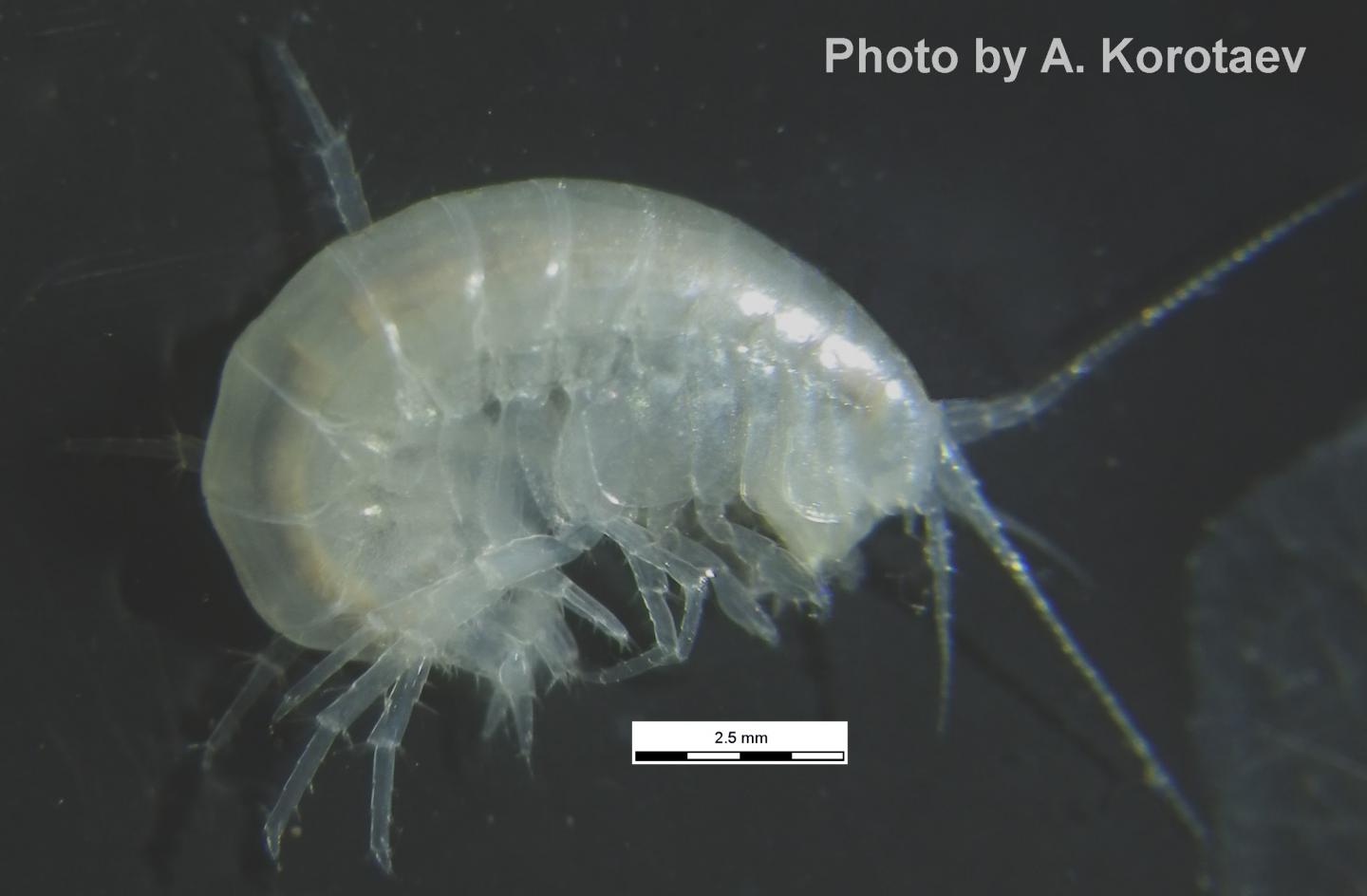
New cryptic amphipod discovered in West Caucasus caves

New cryptic amphipod discovered in West Caucasus caves
2015-05-18
(Press-News.org) An international team of scientists have discovered a new species of typhlogammarid amphipod in the limestone karstic caves of Chjalta mountain range -- the southern foothills of the Greater Caucasus Range. The study was published in the open access journal Subterranean Biology.

The new amphipod, which belongs to the genus Zenkevitchia, is the second species known from this group. This new addition to the genus is named Zenkevitchia yakovi after the famous Russian biospeleologist Prof Yakov Birstein.

Typhlogammarid amphipods are a group blind and unpigmented endemic Balkan-Transcaucasian cavernicole crustaceans, which inhabit subterranean rivers and lakes. Their modern distribution is believed to be the result of marine transgressions of the bygone eras.

Taking into consideration that the first member of Zenkevitchia was described 75 years ago this is still an understudied group of cave animals. Despite their unique morphology featuring "filtration mouth parts", today we still know nothing about the biology of this relict group of animals.

While most species can be easily differentiated on the basis of morphological analysis, Z. yakovi has no reliable morphological differences with Z. admirabilis and was discovered through sequencing of the barcode region of mitochondrial cytochrome c oxidase I (COI) -- highlighting the cryptic nature of the new species.

INFORMATION:

Original source:

Sidorov DA, Gontcharov AA, Palatov DM, Taylor SJ, Semenchenko AA (2015) Shedding light on a cryptic cavernicole: A second species of Zenkevitchia Birstein (Crustacea: Amphipoda: Typhlogammaridae) discovered via molecular techniques. Subterranean Biology 15: 37-55. doi: 10.3897/subtbiol.15.4872


[Attachments] See images for this press release:
New cryptic amphipod discovered in West Caucasus caves

ELSE PRESS RELEASES FROM THIS DATE:

Organic nanoparticles, more lethal to tumors

2015-05-18
Radiotherapy used in cancer treatment is a promising treatment method, albeit rather indiscriminate. Indeed, it affects neighbouring healthy tissues and tumours alike. Researchers have thus been exploring the possibilities of using various radio-sensitizers; these nanoscale entities focus the destructive effects of radiotherapy more specifically on tumour cells. In a study published in EPJ D, physicists have now shown that the production of low-energy electrons by radio-sensitizers made of carbon nanostructures hinges on a key physical mechanism referred to as plasmons ...

New options for spintronic devices: Switching magnetism between 1 and 0 with low voltage near room temperature

New options for spintronic devices: Switching magnetism between 1 and 0 with low voltage near room temperature
2015-05-18
This news release is available in German. Scientists from Paris and Helmholtz-Zentrum Berlin have been able to switch ferromagnetic domains on and off with low voltage in a structure made of two different ferroic materials. The switching works slightly above room temperature. Their results, which are published online in Scientific Reports, might inspire future applications in low-power spintronics, for instance for fast and efficient data storage. Information can be written as a sequence of bit digits, i.e. "0" and "1". Materials which display ferromagnetism ...

Researchers quantify proportion of different genetic mutations in individual bowel cancers

2015-05-18
Bowel cancer is often driven by mutations in one of several different genes, and a patient can have a cancer with a different genetic make-up to another patient's cancer. Identifying the molecular alterations involved in each patient's cancer enables doctors to choose drugs that best target specific alterations. However, it is also becoming clear that while some cancers may be driven by a single gene mutation, individual tumours are often composed of groups of cancer cells, with each group having different molecular alterations from the others. This is known as intra-tumour ...

Scientists discover bacterial cause behind fatal heart complications

2015-05-18
Streptococcus pneumoniae is a major human pathogen and is known to be associated with increased risk of fatal heart complications including heart failure and heart attacks. As Streptococcus pneumoniae is a respiratory pathogen that does not infect the heart, however, this association with heart problems has puzzled clinicians and researchers, particularly as even prompt use of antibiotics does not provide any protection from cardiac complications. A multidisciplinary research team, led by Professor Aras Kadioglu and Professor Cheng-Hock Toh at the University of Liverpool, ...

I knew it was you by the sound of your (whale) voice

I knew it was you by the sound of your (whale) voice
2015-05-18
WASHINGTON, D.C., May 18, 2015 -- Human beings have unique voices -- from the deep, resonating bass of James Earl Jones to the raspy melodies sung by Broadway star Carol Channing -- and we routinely recognize individuals based solely on the way they sound, for example over the telephone, on a music CD or in an animated film. The same theory that explains individual differences in human speech has recently been applied to other members of the animal kingdom, including dogs and deer. Now researchers from Syracuse University in New York are working to understand whether ...

Seals threaten Scottish cod stock recovery

2015-05-18
Predatory seals are constraining the recovery of cod stocks in Scottish West coast waters, research led at the University of Strathclyde suggests. Losses of cod, through fishing and natural causes, have remained high for many years and have caused long-term decline in the stock - in some years, fishing removed around 50% of the total weight of the stock. The study found that, although fishing has now halved, predation by seals has rapidly increased to compensate, eating up more than 40% of the total stock. Seals have, historically, been anecdotally blamed for the reduction ...

Key strategies can boost donations at crowdfunding sites, Stanford experts say

2015-05-18
Stanford computer scientists have shown how crowdfunding websites can use data science to boost cash value of donations. Their research confirms, among other findings, the importance of a timely thank you. It's common courtesy to say thanks when receiving a gift, and common sense to think that givers might be generous again if they felt good about their prior gift. Now Stanford computer scientists have shown how crowdfunding websites like Kickstarter and DonorsChoose.org can use data science to apply these folk wisdoms systematically, and on a large scale, to greatly ...

Substance abuse risk not greater in those using medical marijuana with prescribed opioids

2015-05-18
PISCATAWAY, NJ - Among people who use medical cannabis for chronic pain, those who also take prescription pain medications are not at increased risk for serious alcohol and other drug involvement, according to a study in the May issue of the Journal of Studies on Alcohol and Drugs. Although medical cannabis is being used increasingly often as an alternative to opioids for chronic pain, in many patients it is being used in conjunction with opioids. This use has raised concerns that the combination could increase the risk of patients using substances such as alcohol and ...

Shift work can affect your health

2015-05-18
New York, NY, May 18 2015 -- Shiftwork is an occupational health risk of growing significance because it is becoming more common and because of its potential influence on health outcomes, possibly increasing health differences between workers of higher vs lower socioeconomic status. A new study from the University of Wisconsin School of Medicine and Public Health determined that employees who work shifts outside of a 9-to-5 schedule are more likely to be overweight and experience sleep problems, and possibly more likely to develop metabolic disorders, such as diabetes, ...

Study validates effectiveness of genomic test for lung cancer detection

2015-05-18
(Boston) -- A new test co-developed by a Boston University School of Medicine (BUSM) researcher will allow patients suspected of having lung cancer to be subjected to fewer and less-invasive tests to determine if they have the disease. "We are seeing an increase in the number of lesions suspicious for lung cancer found on chest imaging of current and former smokers. In the past, these patients have been subjected to invasive tests when traditional bronchoscopy tests prove inconclusive. Today's announcement provides physicians and patients with an additional piece of scientifically ...

LAST 30 PRESS RELEASES:

Making lighter work of calculating fluid and heat flow

Normalizing blood sugar can halve heart attack risk

Lowering blood sugar cuts heart attack risk in people with prediabetes

Study links genetic variants to risk of blinding eye disease in premature infants

Non-opioid ‘pain sponge’ therapy halts cartilage degeneration and relieves chronic pain

AI can pick up cultural values by mimicking how kids learn

China’s ecological redlines offer fast track to 30 x 30 global conservation goal

Invisible indoor threats: emerging household contaminants and their growing risks to human health

Adding antibody treatment to chemo boosts outcomes for children with rare cancer

Germline pathogenic variants among women without a history of breast cancer

Tanning beds triple melanoma risk, potentially causing broad DNA damage

Unique bond identified as key to viral infection speed

Indoor tanning makes youthful skin much older on a genetic level

Mouse model sheds new light on the causes and potential solutions to human GI problems linked to muscular dystrophy

The Journal of Nuclear Medicine ahead-of-print tip sheet: December 12, 2025

Smarter tools for peering into the microscopic world

Applications open for funding to conduct research in the Kinsey Institute archives

Global measure underestimates the severity of food insecurity

Child survivors of critical illness are missing out on timely follow up care

Risk-based vs annual breast cancer screening / the WISDOM randomized clinical trial

University of Toronto launches Electric Vehicle Innovation Ontario to accelerate advanced EV technologies and build Canada’s innovation advantage

Early relapse predicts poor outcomes in aggressive blood cancer

American College of Lifestyle Medicine applauds two CMS models aligned with lifestyle medicine practice and reimbursement

Clinical trial finds cannabis use not a barrier to quitting nicotine vaping

Supplemental nutrition assistance program policies and food insecurity

Switching immune cells to “night mode” could limit damage after a heart attack, study suggests

URI-based Global RIghts Project report spotlights continued troubling trends in worldwide inhumane treatment

Neutrophils are less aggressive at night, explaining why nighttime heart attacks cause less damage than daytime events

Menopausal hormone therapy may not pose breast cancer risk for women with BRCA mutations

Mobile health tool may improve quality of life for adolescent and young adult breast cancer survivors

[Press-News.org] New cryptic amphipod discovered in West Caucasus caves