Shriners Hospitals for Children study reveals new link to arthritis
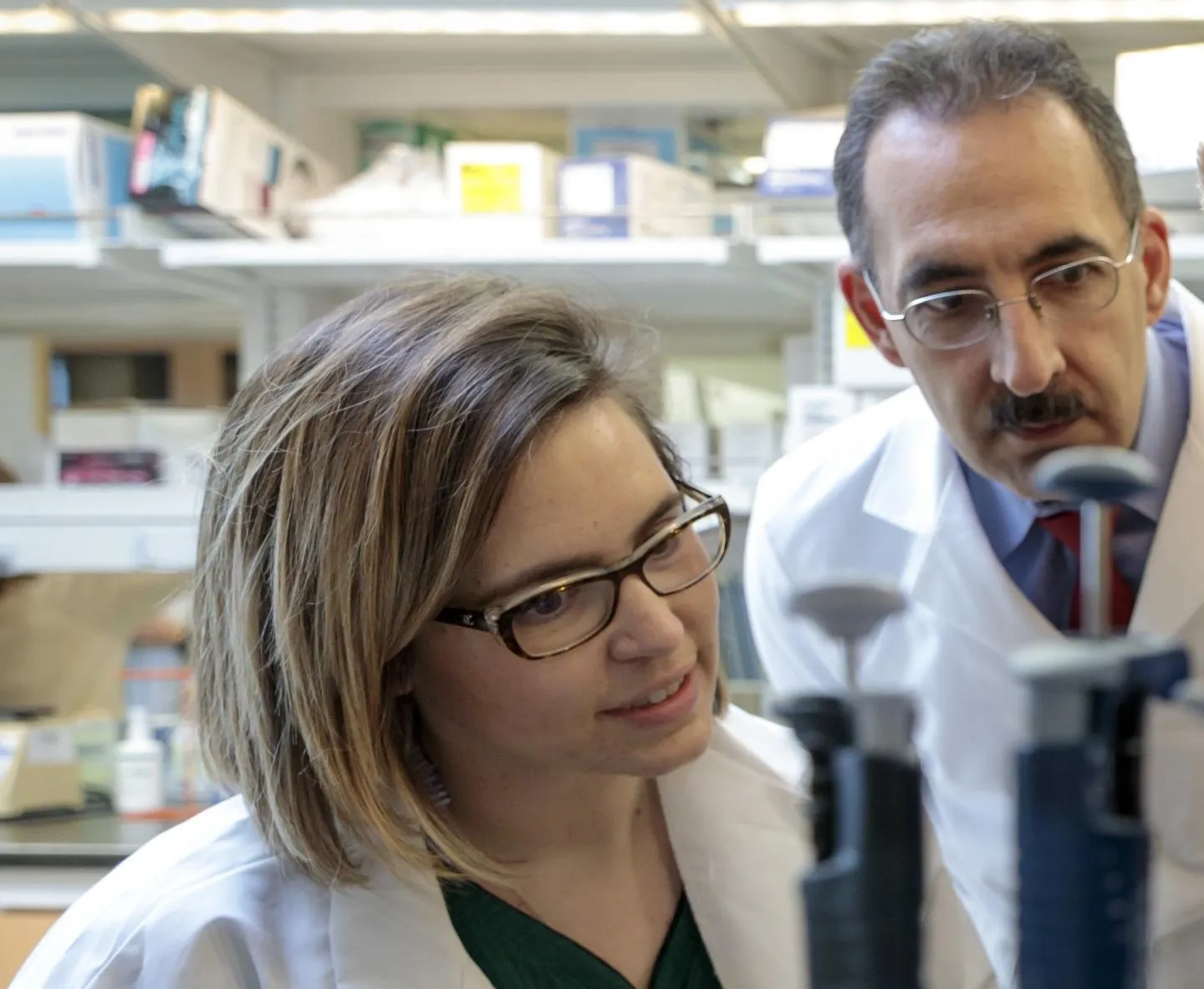
INSIDE THE RESEARCH The researchers used a unique type of mouse that has no fat cells anywhere in their bodies. Even when they were fed an unhealthy, extremely high-fat diet, these mice did not develop osteoarthritis in any of their joints. The researchers were surprised to find that even with a knee injury that normally causes rapid degeneration of the cartilage, fat-free mice were protected from getting osteoarthritis. Then, the researchers implanted a tiny piece of fat under the skin of these mice, so small it had no effect on their body weight. The mice became susceptible to osteoarthritis, even though there was no weight gain. This showed researchers that fat outside the knee joint plays a critical role in cartilage health. The study was published in the journal Proceedings of the National Academy of Sciences. It was designed and executed by the lead author Dr. Kelsey Collins, a postdoctoral fellow in Guilak's laboratory. "This study demonstrates that factors outside of the knee joint can affect cartilage health, which opens the door for a wide range of new osteoarthritis treatment targets we can investigate," Collins said. "Once we identify the factors given off by fat cells that are responsible for these effects on the joint, we hope to develop new drugs to target them." In the meantime, Guilak, who also co-directs the Washington University Center for Regenerative Medicine and is a professor of biomedical engineering and of developmental biology, said that a healthy diet and weight loss are the first lines of prevention for osteoarthritis. "Something like this could take years to develop, but we're excited about its prospects for reducing joint damage, as well as many of the other unhealthy effects of obesity," Collins said.
INFORMATION:
Collins, K.H., Lenz, K.L., Pollitt, E.N., Ferguson, D., Hutson, I., Springer, L.E., Oestreich, A.K., Tang, R., Choi, Y.R., Meyer, G.A., Teitelbaum, S.L., Pham, C.T.N., Harris, C.A., and Guilak, F. Adipose tissue is a critical regulator of osteoarthritis, Proceedings of the National Academy of Sciences USA, published online December xxx, 2020.
This work was supported by the Shriners' Hospitals for Children, the National Institute of Arthritis and Musculoskeletal and Skin Diseases, the National Institute on Aging and the Office of the Director of the National Institutes of Health (NIH). Grant numbers AR074992, DK108742, DK007120, AR50245, AG15768, AG46927, AR076820, AR073752, and OD10707. Additional funding was provided by the Arthritis Foundation and the Nancy Taylor Foundation for Chronic Diseases.
Shriners Hospitals for Children strives to transform children's lives by providing exceptional health care through high-quality, innovative research in a patient and family-centered environment. We are committed to the pursuit of seminal, cutting-edge discoveries that result in new knowledge and improve the therapeutic treatment, quality of care and provided outcomes to our patients and their families. Today's research is tomorrow's patient care.
Corporate Headquarters | 800-237-5055 | 2900 Rocky Point Dr., Tampa, FL 33607
Shriners Hospitals for Children is a 501(c)(3) tax-exempt organization - #85-8012616616C-6
Federal identification number EIN 36-2193608