Scientists reveal elusive inner workings of antioxidant enzyme with therapeutic potential
Published 2021-04-06 · Original archive entry · Explore research explainers
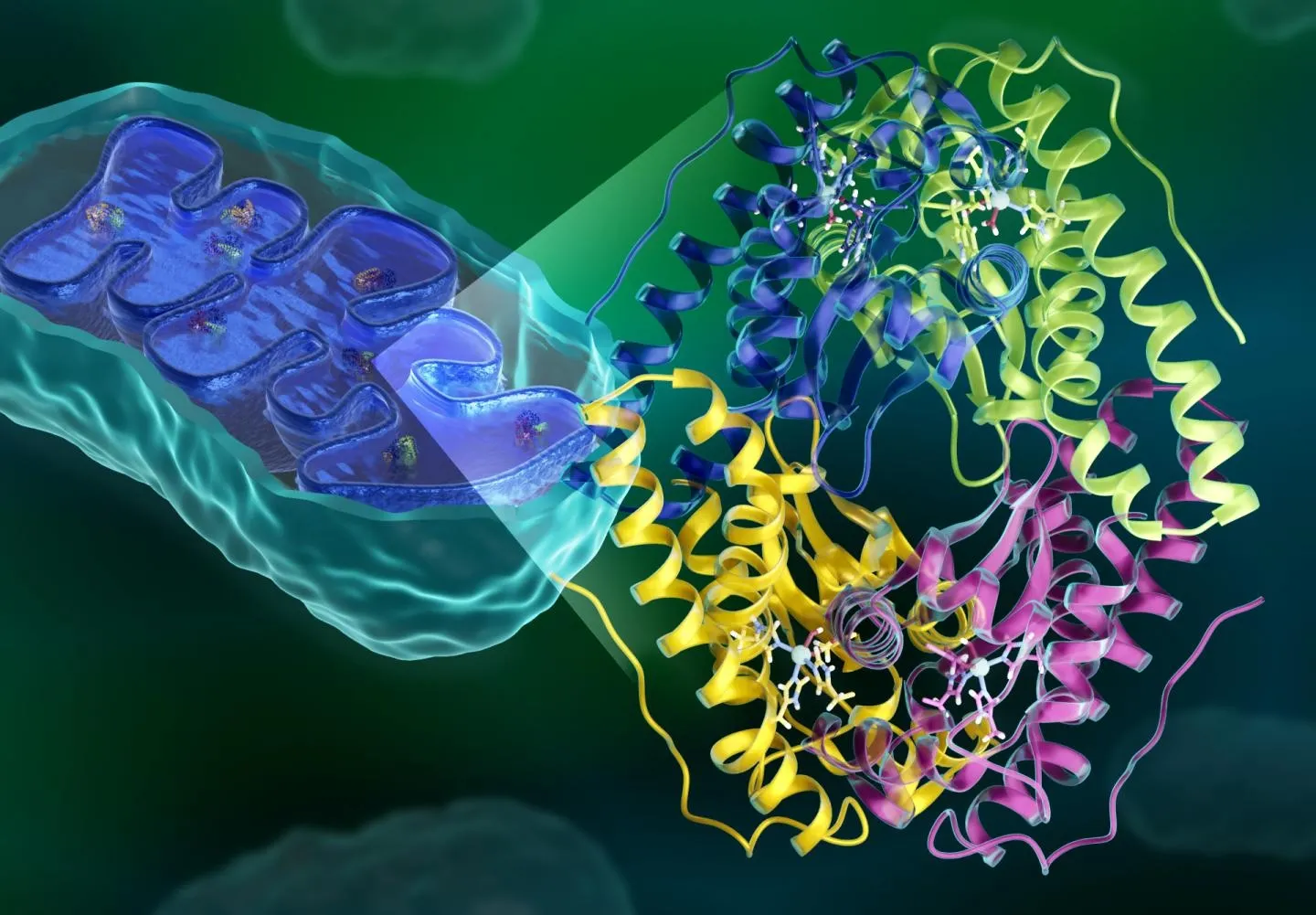
Mitochondria, known as the powerhouses within human cells, generate the energy needed for cell survival. However, as a byproduct of this process, mitochondria also produce reactive oxygen species (ROS). At high enough concentrations, ROS cause oxidative damage and can even kill cells. An overabundance of ROS has been connected to various health issues, including cancers, neurological disorders, and heart disease.
An enzyme called manganese superoxide dismutase, or MnSOD, uses a mechanism involving electron and proton transfers to lower ROS levels in mitochondria, thus preventing oxidative damage and maintaining cell health. More than a quarter of known enzymes also rely on electron and proton transfers to facilitate cellular activities that are essential for human health. However, most of their mechanisms are unclear because of the difficulties in observing how protons move.
Researchers from the University of Nebraska Medical Center (UNMC) and the Department of Energy's (DOE's) Oak Ridge National Laboratory (ORNL) have now observed the complete atomic structure of MnSOD, including its proton arrangements, with neutron scattering. The findings, published in END
An enzyme called manganese superoxide dismutase, or MnSOD, uses a mechanism involving electron and proton transfers to lower ROS levels in mitochondria, thus preventing oxidative damage and maintaining cell health. More than a quarter of known enzymes also rely on electron and proton transfers to facilitate cellular activities that are essential for human health. However, most of their mechanisms are unclear because of the difficulties in observing how protons move.
Researchers from the University of Nebraska Medical Center (UNMC) and the Department of Energy's (DOE's) Oak Ridge National Laboratory (ORNL) have now observed the complete atomic structure of MnSOD, including its proton arrangements, with neutron scattering. The findings, published in END