Earth's crust mineralogy drives hotspots for intraterrestrial life
Published 2021-04-09 · Original archive entry · Explore research explainers
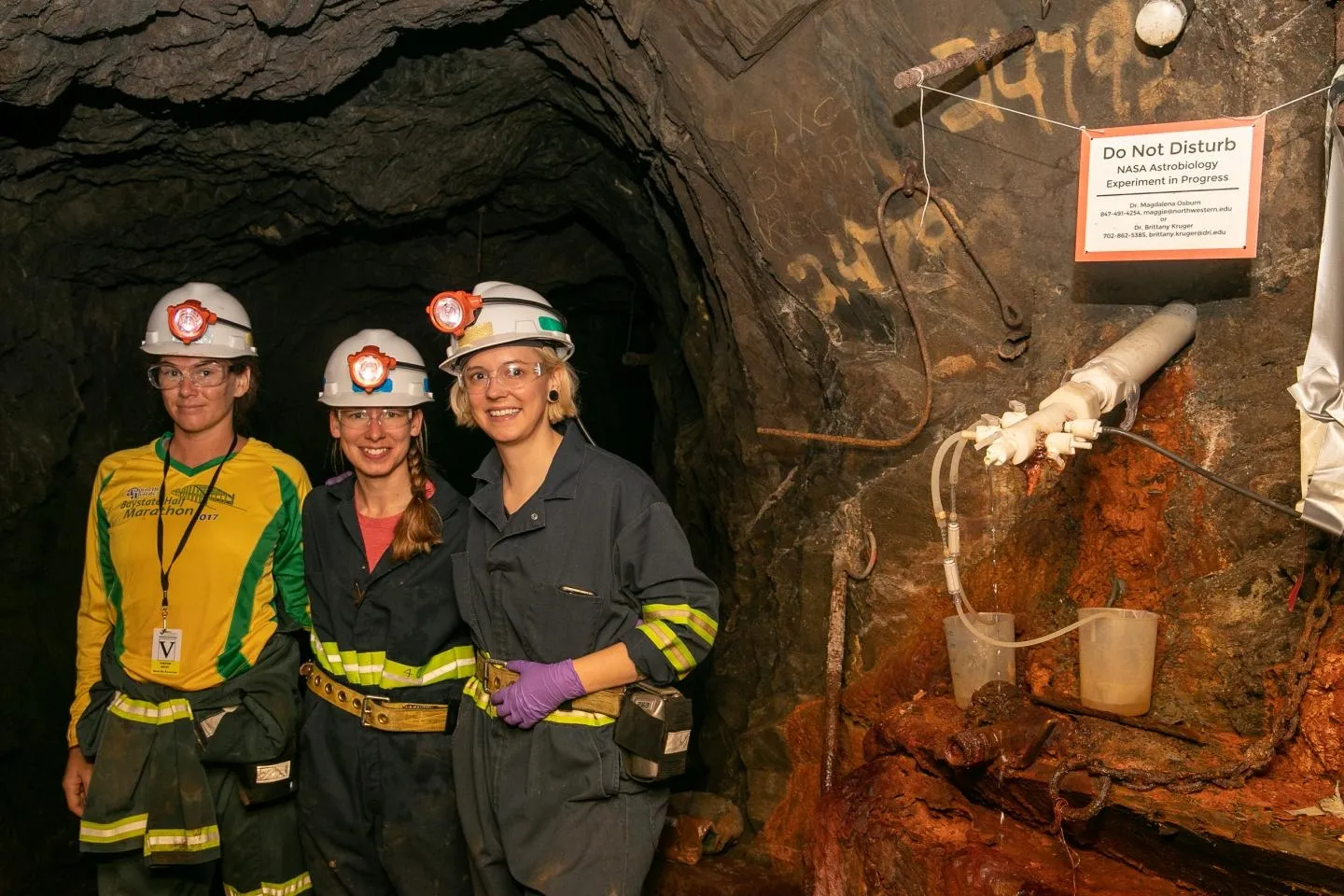
Below the verdant surface and organic rich soil, life extends kilometers into Earth's deep rocky crust. The continental deep subsurface is likely one of the largest reservoirs of bacteria and archaea on Earth, many forming biofilms - like a microbial coating of the rock surface. This microbial population survives without light or oxygen and with minimal organic carbon sources, and can get energy by eating or respiring minerals. Distributed throughout the deep subsurface, these biofilms could represent 20-80% of the total bacterial and archaeal biomass in the continental subsurface according to the most recent estimate. But are these microbial populations spread evenly on rock surfaces, or do they prefer to colonize specific minerals in the rocks?
To answer this question, researchers from Northwestern University in Evanston, Illinois, led a study to analyze the growth and distribution of microbial communities in deep continental subsurface settings. This work shows that the host rock mineral composition drives biofilm distribution, producing "hotspots" of microbial life. The study was published in END
To answer this question, researchers from Northwestern University in Evanston, Illinois, led a study to analyze the growth and distribution of microbial communities in deep continental subsurface settings. This work shows that the host rock mineral composition drives biofilm distribution, producing "hotspots" of microbial life. The study was published in END