New findings offer improved therapy of early-stage, BRCA mutation-associated breast cancer
Houston Methodist expert who led US component of trial available to address eagerly anticipated OlympiA trial results
Published 2021-06-04 · Original archive entry · Explore research explainers
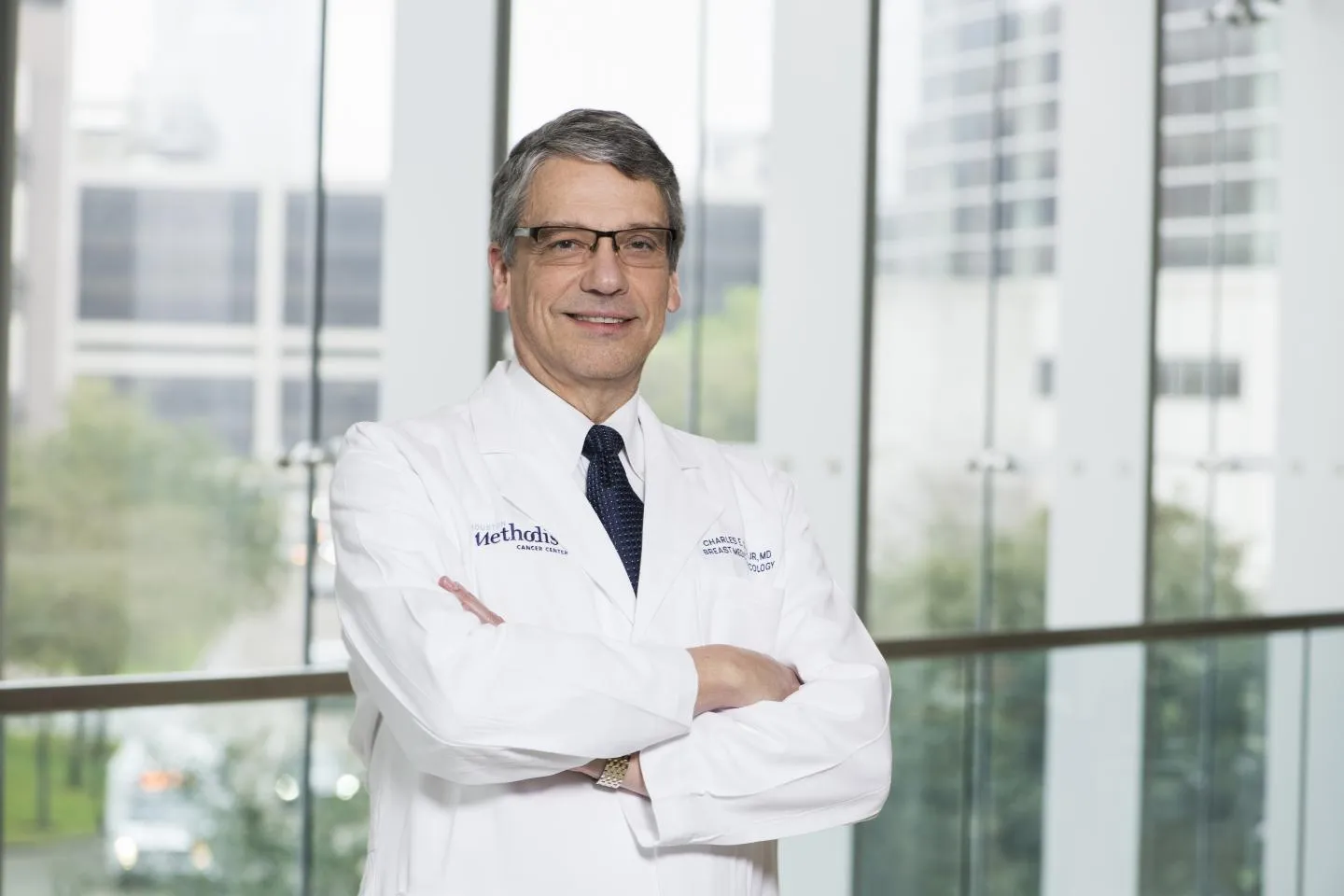
HOUSTON-(June 3, 2021) - Results were released this week on a new treatment with the potential to improve the outcomes for patients with hereditary BRCA mutations and high-risk, early-stage breast cancer. These results represent the first time a drug that blocks cancer cells from repairing their DNA (called a PARP inhibitor) has been shown to significantly reduce the risk of breast cancer returning in high-risk patients following completion of standard chemotherapy, surgery and radiation therapy.
Titled "Adjuvant Olaparib for Patients with BRCA1 or BRCA2 Mutated Breast Cancer," the paper appears in the June 3 issue of the New England Journal of Medicine and will be presented June 6 as the first abstract during the plenary session at the 2021 American Association of Clinical Oncology (ASCO) Annual Meeting. Lead author and the OlympiA trial steering committee chair Andrew Tutt, M.D., Ph.D., of The Institute of Cancer Research and King's College London was principal investigator on the portion of study conducted in patients outside the U.S. and will present the results at ASCO.
Led by top experts in BRCA-associated breast cancer from around the world, the OlympiA trial's co-chairs were END
Titled "Adjuvant Olaparib for Patients with BRCA1 or BRCA2 Mutated Breast Cancer," the paper appears in the June 3 issue of the New England Journal of Medicine and will be presented June 6 as the first abstract during the plenary session at the 2021 American Association of Clinical Oncology (ASCO) Annual Meeting. Lead author and the OlympiA trial steering committee chair Andrew Tutt, M.D., Ph.D., of The Institute of Cancer Research and King's College London was principal investigator on the portion of study conducted in patients outside the U.S. and will present the results at ASCO.
Led by top experts in BRCA-associated breast cancer from around the world, the OlympiA trial's co-chairs were END