Collaboration controls killers
St. Jude researching how effector and killer T cells can be controlled to destroy cancer cells that resist treatment
Published 2021-06-04 · Original archive entry · Explore research explainers
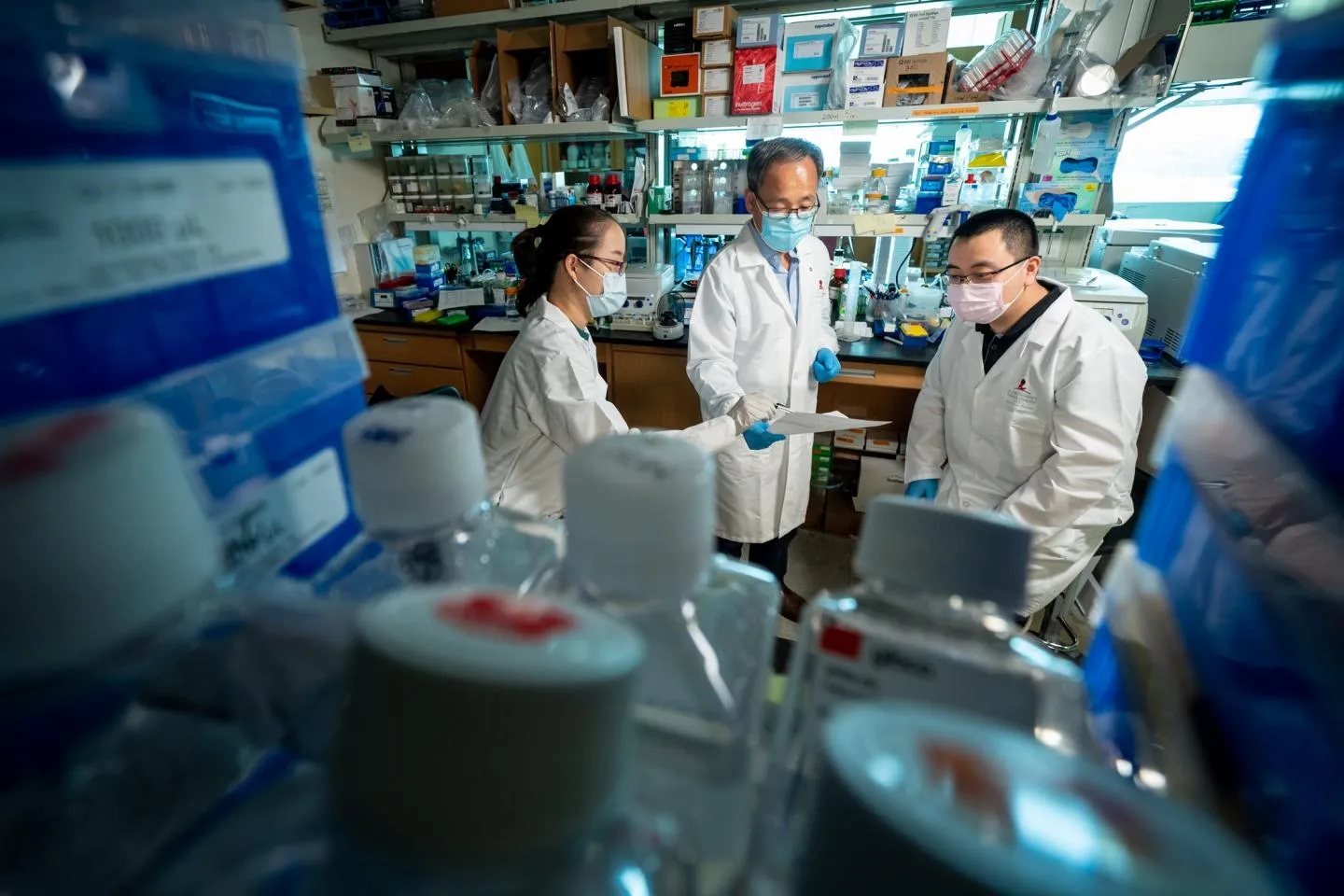
Effector and killer T cells are types of immune cells. Their job is to attack pathogens and cancers. These cells can also go after normal cells causing autoimmune diseases. But, if harnessed properly, they can destroy cancer cells that resist treatment.
Scientists at St. Jude wanted to understand how these T cells are controlled. They looked at enhancers, sequences of DNA that when bound to certain proteins determine how genes are turned on or off.
The scientists found that enhancers of a gene named Foxp3 work as a pair to keep effector and killer T cells in check. The enhancers working together is essential.
"These enhancers go together like your left and right hands," said Yong Feng, PhD, of St. Jude Immunology. "They work together in different ways to curb the effector and killer T cells, playing a critical role in how the immune system makes sure it only attacks the right target."
Scientists at St. Jude wanted to understand how these T cells are controlled. They looked at enhancers, sequences of DNA that when bound to certain proteins determine how genes are turned on or off.
The scientists found that enhancers of a gene named Foxp3 work as a pair to keep effector and killer T cells in check. The enhancers working together is essential.
"These enhancers go together like your left and right hands," said Yong Feng, PhD, of St. Jude Immunology. "They work together in different ways to curb the effector and killer T cells, playing a critical role in how the immune system makes sure it only attacks the right target."
INFORMATION:
The Journal of Experimental Medicine published this work.