Team describes science-based hiccups intervention
Users reported relief in 92% of cases, with high degrees of effectiveness and ease of use
Published 2021-06-18 · Original archive entry · Explore research explainers
SAN ANTONIO (June 18, 2021) -- Researchers from The University of Texas Health Science Center at San Antonio (UT Health San Antonio) and colleagues worldwide describe a new science-based intervention for hiccups in a research letter published June 18 in the journal JAMA Network Open.
In the publication, the scientists coined a new term for the intervention: the "forced inspiratory suction and swallow tool," or FISST. The team also reported the results of a survey of 249 users who were asked whether it is superior to hiccup home remedies such as breathing into a paper bag.
The need
"Hiccups are occasionally annoying for some people, but for others they significantly impact quality of life," said Ali Seifi, MD, associate professor of neurosurgery in UT Health San Antonio's Joe R. and Teresa Lozano Long School of Medicine. "This includes many patients with brain and stroke injury, and cancer patients. We had a couple of cancer patients in this study. Some chemotherapies cause hiccups."
Simple tool
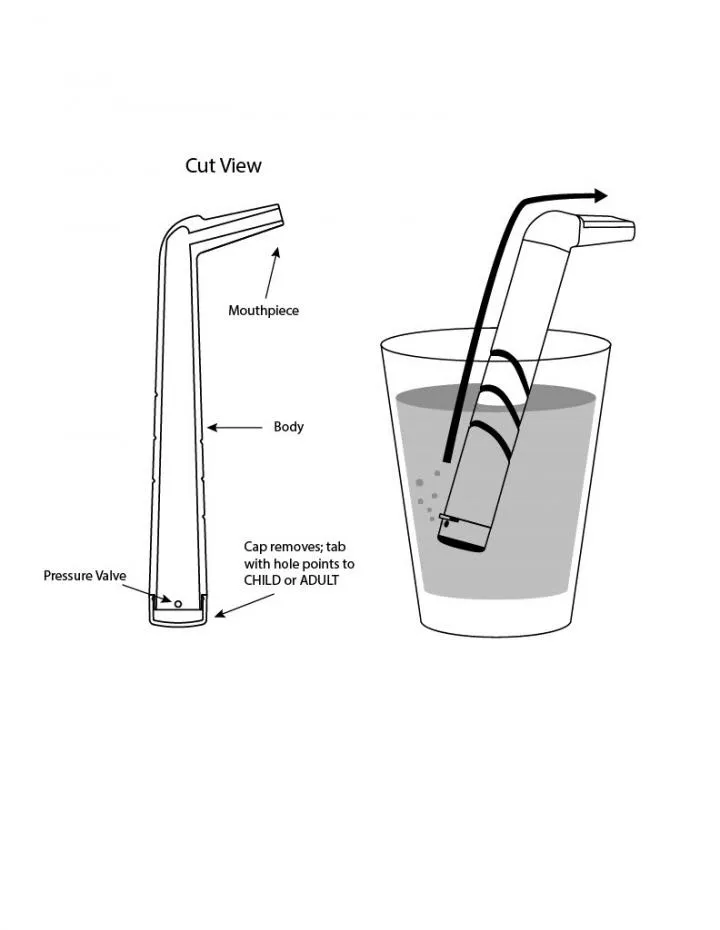
FISST is a rigid drinking tube with an inlet valve that requires forceful suction to draw water from a cup into the mouth. The suction and swallow simultaneously stimulate two nerves, the phrenic and vagus nerves, to relieve hiccups.
Forceful suction induces the diaphragm, a sheaf of muscle that inflates the lungs during breathing, to contract. The suction and swallow also prompt the epiglottis, a flap that covers the windpipe during swallowing, to close. This ends the hiccup spasms.
User feedback
FISST stopped hiccups in nearly 92% of cases, users self-reported. In terms of satisfaction, 226 of 249 participants (90.8%) affirmatively answered questions about whether they found the tool easy to use.
On a different measure, subjective effectiveness, 183 of 203 participants (90.1%) indicated that FISST was effective when they used it. Fewer participants answered this question, possibly because it was last in the survey, Dr. Seifi said.
The tool, END
In the publication, the scientists coined a new term for the intervention: the "forced inspiratory suction and swallow tool," or FISST. The team also reported the results of a survey of 249 users who were asked whether it is superior to hiccup home remedies such as breathing into a paper bag.
The need
"Hiccups are occasionally annoying for some people, but for others they significantly impact quality of life," said Ali Seifi, MD, associate professor of neurosurgery in UT Health San Antonio's Joe R. and Teresa Lozano Long School of Medicine. "This includes many patients with brain and stroke injury, and cancer patients. We had a couple of cancer patients in this study. Some chemotherapies cause hiccups."
Simple tool
FISST is a rigid drinking tube with an inlet valve that requires forceful suction to draw water from a cup into the mouth. The suction and swallow simultaneously stimulate two nerves, the phrenic and vagus nerves, to relieve hiccups.
Forceful suction induces the diaphragm, a sheaf of muscle that inflates the lungs during breathing, to contract. The suction and swallow also prompt the epiglottis, a flap that covers the windpipe during swallowing, to close. This ends the hiccup spasms.
User feedback
FISST stopped hiccups in nearly 92% of cases, users self-reported. In terms of satisfaction, 226 of 249 participants (90.8%) affirmatively answered questions about whether they found the tool easy to use.
On a different measure, subjective effectiveness, 183 of 203 participants (90.1%) indicated that FISST was effective when they used it. Fewer participants answered this question, possibly because it was last in the survey, Dr. Seifi said.
The tool, END