PRESS-NEWS.org - Press Release Distribution
PRESS RELEASES DISTRIBUTION

New study sheds light on evolution of photosynthesis
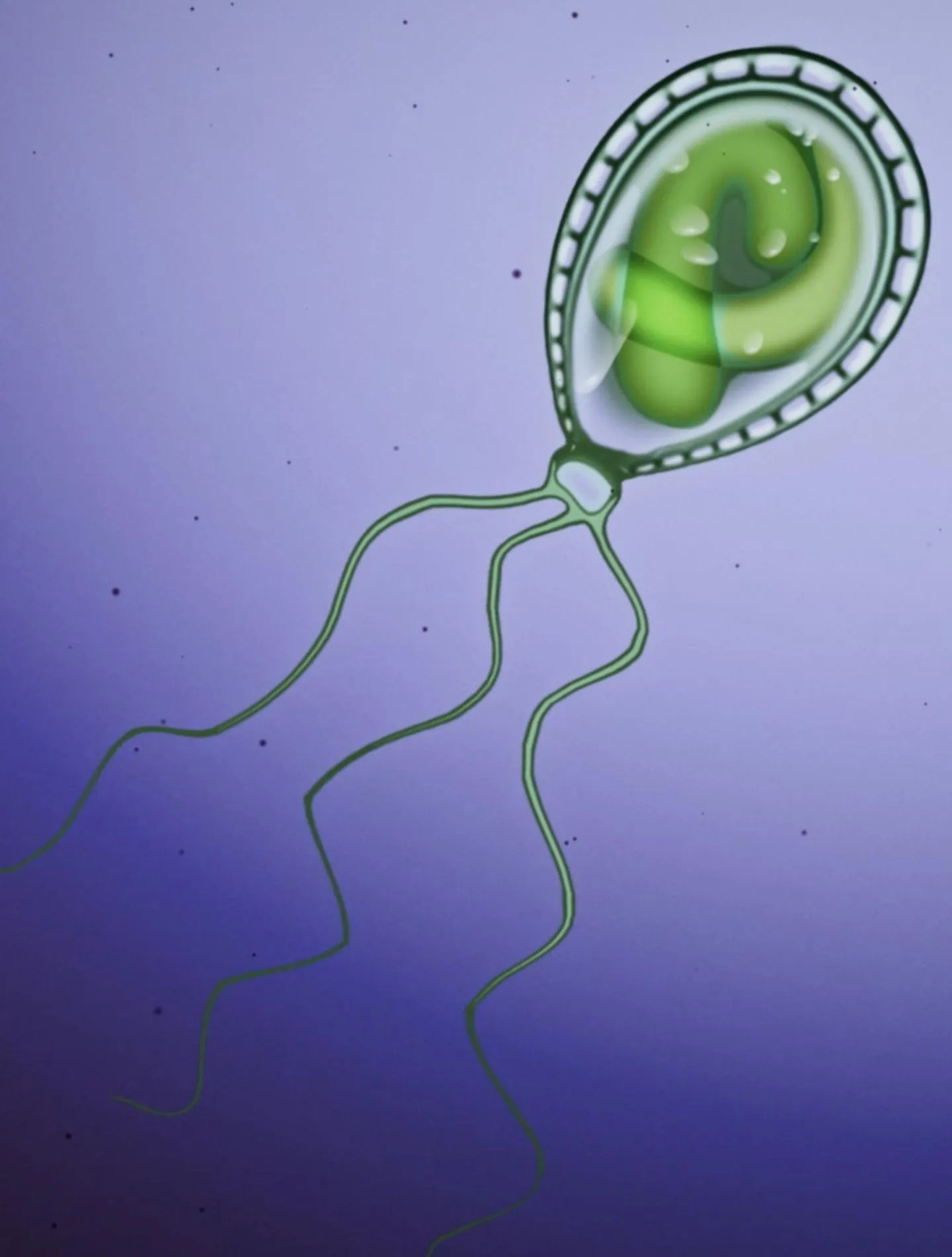
New study sheds light on evolution of photosynthesis
2021-06-28
(Press-News.org) New Brunswick, N.J. (June 28, 2021) - A Rutgers-led study sheds new light on the evolution of photosynthesis in plants and algae, which could help to improve crop production.

The paper appears in the journal New Phytologist.

The scientists reviewed research on the photosynthetic amoeba Paulinella, which is a model to explore a fundamental question about eukaryote evolution: why was there a single origin of algae and plants? That is, why did photosynthesis by primary plastid endosymbiosis not originate multiple times in the tree of life?

Photosynthesis is the process by which plants and other organisms use sunlight to synthesize foods from carbon dioxide and water, which generates oxygen as a byproduct.

Endosymbiosis is a relationship between two organisms wherein one cell resides inside the other. This interaction, when stable and beneficial for the "host" cell, can result in massive genetic innovation. Despite its critical evolutionary role, there is limited knowledge about how endosymbiosis is initially established.

Primary plastid endosymbiosis, which evolved about 1.5 billion years ago, is the process in which a eukaryote -- which are organisms such as plants and algae whose cells have a membrane-bound nucleus and tiny organs called organelles -- engulfs a prokaryote, which are organisms such as bacteria that lack a membrane-enclosed nucleus. The plastid is a membrane-bound organelle within the cells of plants and algae.

"It turns out that photosynthesis results in enormous risks because it produces harmful chemicals and heat as byproducts that can damage the host cell," said senior author Debashish Bhattacharya, a Distinguished Professor in the Department of Biochemistry and Microbiology at Rutgers University-New Brunswick. "Therefore, creating a novel organelle is a highly complex process that makes it fleetingly rare in evolution. Paulinella, which is the only known case of an independent plastid primary endosymbiosis other than in algae and plants, offers many clues to this process that helps explain why it is so rare."

The origin of photosynthesis in algae and plants changed our planet by providing a major source of oxygen and supporting many ecosystems, due to their primary production, of fixed carbon (sugars and lipids). Understanding how this critical process happened will help us potentially engineer it in synthetic systems as well as to improve crop production.

"Because Paulinella is an independent origin of photosynthesis, it provides key clues to how this process occurs and what costs it imposes on the host cell," said lead author Timothy G. Stephens, a postdoctoral researcher at Rutgers. "The genome of Paulinella contains many independently evolved genes involved in photosynthesis and dealing with the associated stresses that can potentially be engineered in algae and plants could help to improve their ability to withstand stresses such as high light levels or salt stress."

INFORMATION:

The findings are explained in two videos: https://www.youtube.com/watch?v=Pbosfj1oV6I https://www.youtube.com/watch?v=nJ9ApL9Mq6w&t=3s

The study included researchers from the Carnegie Institution.

Broadcast interviews: Rutgers University has broadcast-quality TV and radio studios available for remote live or taped interviews with Rutgers experts. For more information, contact John Cramer at john.cramer@rutgers.edu

ABOUT RUTGERS--NEW BRUNSWICK Rutgers University-New Brunswick is where Rutgers, the State University of New Jersey, began more than 250 years ago. Ranked among the world's top 60 universities, Rutgers's flagship is a leading public research institution and a member of the prestigious Association of American Universities. It has an internationally acclaimed faculty, 12 degree-granting schools and the Big Ten Conference's most diverse student body.


[Attachments] See images for this press release:
New study sheds light on evolution of photosynthesis

ELSE PRESS RELEASES FROM THIS DATE:

The most curious babies become the most curious toddlers

The most curious babies become the most curious toddlers
2021-06-28
A first-of-its-kind longitudinal study of infant curiosity found that months-old babies most captivated by magic tricks became the most curious toddlers, suggesting a pre-verbal baby's level of interest in surprising aspects of the world remains constant over time and could predict their future cognitive ability. "Something about a baby's curiosity about magic tricks is predicting how curious they become as preschoolers," said Lisa Feigenson, co-director of the Johns Hopkins University Laboratory for Child Development. "What the data suggest is that some three-year-olds have a leg up or seem particularly well positioned to learn a lot about the world." The findings appear today in Proceedings of the National Academy of Sciences. Until this study, little was known about curiosity ...

COVID-19's socio-economic fallout threatens global coffee industry

COVID-19s socio-economic fallout threatens global coffee industry
2021-06-28
New Brunswick, N.J. (June 28, 2021) - COVID-19's socio-economic effects will likely cause another severe production crisis in the coffee industry, according to a Rutgers University-led study. The study, which appears in the journal Proceedings of the National Academy of Sciences, included researchers from the University of Arizona, University of Hawaii at Hilo, CIRAD, Santa Clara University, Purdue University West Lafayette and University of Exeter. "Any major impacts in the global coffee industry will have serious implications for millions of people across the globe, including the coffee retail ...

Shock find brings extinct mouse back from the dead

Shock find brings extinct mouse back from the dead
2021-06-28
An Australian mammal thought to have been wiped out over 150 years ago can now be crossed off our list of extinct animals, following a new study. Researchers compared DNA samples fromeight extinct Australian rodents, as well as 42 of their living relatives, to look at the decline of native species since the arrival of Europeans in Australia. The study showed the extinctGould's mouse was indistinguishable from the Shark Bay mouse, still found on several small islands off the coast of Western Australia. According to lead author Dr Emily Roycroft ...

Research identifies new ways to try and prevent lethal blood clots

Research identifies new ways to try and prevent lethal blood clots
2021-06-28
Scientists have made a breakthrough in understanding the process that leads to a blood clot forming in the lungs - a condition that kills more than two thousand people in the UK each year. The clot forms a pulmonary embolism or blockage, cutting off blood flow to major blood vessels in the lungs. In many cases, the blockage is caused by fragments that have broken away from a blood clot elsewhere in the body, such as a deep vein thrombosis in one of the legs. The fragments are transported to the lungs via the blood stream. In a paper published today (28 June) in the scientific ...

Gut microbe secreted molecule linked to formation of new nerve cells in adult brain

Gut microbe secreted molecule linked to formation of new nerve cells in adult brain
2021-06-28
The billions of microbes living in your gut could play a key role in supporting the formation of new nerve cells in the adult brain, with the potential to possibly prevent memory loss in old age and help to repair and renew nerve cells after injury, an international research team spanning Singapore, UK, Australia, Canada, US, and Sweden has discovered. The international investigating team led by Principal Investigator Professor Sven Pettersson, National Neuroscience Institute of Singapore, and Visiting Professor at Lee Kong Chian School of Medicine, Nanyang Technological University, Singapore (NTU Singapore), and Sunway University, Malaysia, found that gut microbes that metabolise tryptophan - an essential amino acid - secrete small molecules called ...

Acidic pH enhances butyrate production from pectin by faecal microbiota

2021-06-28
Researchers from Tallinn University of Technology, Grete Raba, Signe Adamberg, and Kaarel Adamberg showed that an acidic environment enhances the production of butyric acid from apple pectin by faecal bacterial consortia - microbiota. Pectin is a dietary fibre abundant in apples, berries, fruits, and vegetables. Pectin is used in jellies and desserts. As human digestive enzymes are not able to degrade pectin, it is metabolized by the microbes of the large intestine. The main conclusions of the research, published in FEMS Microbiology Letters, was the importance of environmental acidity (pH) on the composition and metabolism of colon bacteria. The colonic pH is, however, strongly related to one's diet. Fibre-rich diets that contain plenty of whole-grain ...

Connective tissue protein fights bacterial infection

2021-06-28
A connective tissue protein known to support the framework of organs also encourages immune responses that fight bacterial infections, while restraining responses that can be deadly in the condition called sepsis, a new study finds. Led by researchers from NYU Grossman School of Medicine, the work revolves around the extracellular matrix (ECM) of connective tissues, once thought of as an inert framework that shapes bodily compartments, but increasingly recognized as a signaling partner with nearby cells in normal function, and a contributor to disease when signals go awry. Among the key players in the ECM are fibroblasts, the cells that make tough structural matrix proteins ...

How lead (maybe) caused the downfall of ancient Rome (video)

How lead (maybe) caused the downfall of ancient Rome (video)
2021-06-28
WASHINGTON, June 28, 2021 -- Ancient Rome's emperors did some pretty bizarre stuff -- bursting into uncontrollable fits of laughter, appointing a horse as a priest, dressing in animal skins and attacking people ... the list goes on. Why were they acting that way? Well, it might have been lead poisoning. In this week's episode, we unwrap the possibility that lead caused the Roman Empire's collapse: https://youtu.be/4k7CvSiomlA. INFORMATION: Reactions is a video series produced by the American Chemical Society and PBS Digital Studios. Subscribe to Reactions at http://bit.ly/ACSReactions and follow us on Twitter @ACSReactions. The American Chemical Society (ACS) is ...

Scientists discover at the Dead Sea a mineral previously only known in meteorites

Scientists discover at the Dead Sea a mineral previously only known in meteorites
2021-06-28
Allabogdanite was first reported in the early 2000s from the Onello - a small iron meteorite recovered from the gold placer at the Bolshoi Dolguchan River in Eastern Yakutia. Chemically, the mineral belongs to phosphides - the compounds containing phosphorus in a negative oxidation state. It was named in honour of the crystallographer Alla Bogdanova. Since that, allabogdanite was identified in several iron meteorites. The recent discovery at the Dead Sea is the first confirmation of the mineral on Earth. Allabogdanite was detected in the course of a systematic study of terrestrial phosphides from the Dead Sea region. 'Our research included the experiments on phase transitions of terrestrial allabogdanite at high pressure and high temperature at the DESY synchrotron ...

Finding support for India during its COVID-19 surge

2021-06-28
India and Pakistan have fought four wars in the past few decades, but when India faced an oxygen shortage in its hospitals during its recent COVID-19 surge, Pakistan offered to help. On Twitter, hashtags like #IndiaNeedsOxygen and #PakistanStandsWithIndia trended. Finding these positive tweets, however, was not as easy as simply browsing the supportive hashtags or looking at the most popular posts. Negative tweets often hijack the supportive hashtags for trolling or fighting with other users. And Twitter's algorithm isn't tuned to surface the most positive tweets during a crisis. Ashique KhudaBukhsh of Carnegie Mellon University's Language Technologies ...

LAST 30 PRESS RELEASES:

Let’s get on pancreatic cancer’s nerves

Intermittent fasting cut Crohn’s disease activity by 40% and halved inflammation in randomized clinical trial

New study in JNCCN unlocks important information about how to treat recurring prostate cancer

Simple at-home tests for detecting cat, dog viruses

New gut-brain discovery offers hope for treating ALS and dementia

Cognitive speed training linked to lower dementia incidence up to 20 years later

Businesses can either lead transformative change or risk extinction: IPBES

Opening a new window on the brainstem, AI algorithm enables tracking of its vital white matter pathways

Dr. Paul Donlin-Asp of the University of Edinburgh to dissect the molecular functions and regulation of local SYNGAP1 protein synthesis with support from CURE SYNGAP1 (fka SynGAP Research Fund)

Seeing the whole from a part: Revealing hidden turbulent structures from limited observations and equations

Unveiling polymeric interactions critical for future drug nanocarriers

New resource supports trauma survivors, health professionals  

Evidence of a subsurface lava tube on Venus

New trial aims to transform how we track our daily diet

People are more helpful when in poor environments

How big can a planet be? With very large gas giants, it can be hard to tell

New method measures energy dissipation in the smallest devices

More than 1,000 institutions worldwide now partner with MDPI on open access

Chronic alcohol use reshapes gene expression in key human brain regions linked to relapse vulnerability and neural damage

Have associations between historical redlining and breast cancer survival changed over time?

Brief, intensive exercise helps patients with panic disorder more than standard care

How to “green” operating rooms: new guideline advises reduce, reuse, recycle, and rethink

What makes healthy boundaries – and how to implement them – according to a psychotherapist

UK’s growing synthetic opioid problem: Nitazene deaths could be underestimated by a third

How rice plants tell head from toe during early growth

Scientists design solar-responsive biochar that accelerates environmental cleanup

Construction of a localized immune niche via supramolecular hydrogel vaccine to elicit durable and enhanced immunity against infectious diseases

Deep learning-based discovery of tetrahydrocarbazoles as broad-spectrum antitumor agents and click-activated strategy for targeted cancer therapy

DHL-11, a novel prieurianin-type limonoid isolated from Munronia henryi, targeting IMPDH2 to inhibit triple-negative breast cancer

Discovery of SARS-CoV-2 PLpro inhibitors and RIPK1 inhibitors with synergistic antiviral efficacy in a mouse COVID-19 model

[Press-News.org] New study sheds light on evolution of photosynthesis