PRESS-NEWS.org - Press Release Distribution
PRESS RELEASES DISTRIBUTION

Can phrases like ‘isn’t it?’ or ‘right?’ compromise classroom learning? New study answers
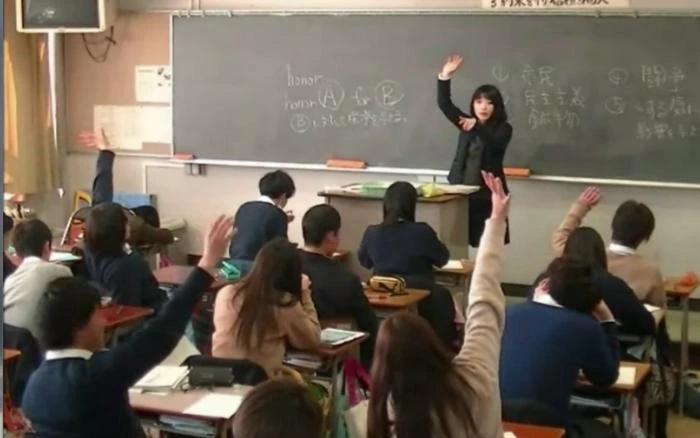
A researcher in Japan noted that the use of interrogative tags such as ‘isn’t it?’ and ‘right?’ by the teachers can limit student involvement and learning

Can phrases like ‘isn’t it?’ or ‘right?’ compromise classroom learning? New study answers
2023-05-31
(Press-News.org)

Classroom education, in an ideal sense, must engage all students in a constructive discussion with the teacher, making it the latter’s responsibility to utilize different inclusive strategies. To bring the attention of distracted students back to the classroom discussion, teachers often have to use different methods to remind them that they are an equal and important part of this shared activity. This task can be tricky since most teachers attend to multiple students in a classroom. What strategies do teachers use to draw the attention of all the students to the common thread of a classroom discussion?

In a study that was recently published in Classroom Discourse, Dr. Mika Ishino of Doshisha University explored this question by analyzing the video recordings of classroom interactions between teachers and students in Japan. Dr. Ishino specifically examined how teachers employed the epistemic stance marker ‘ne’ during the classroom discussions, to make the interaction more inclusive with all the students. An epistemic stance marker is a word that modifies the tone of a sentence, to increase the interpersonal interaction between the speaker and the listener. “‘ne’ is roughly equivalent to English interrogative tags ‘you know’, ‘isn’t it’, and ‘right?’. It mainly marks the sharedness of the referent information between the speaker and the hearer,” explains Professor Ishino.

The study found that the epistemic stance marker ‘ne’ is commonly used in the third-turn during teacher-student interactions. In the first turn, the teacher asks a question to the class as a whole. In the second turn, one student usually answers the question. For the third-turn, the teacher then repeats the answer and adds ‘ne’ to open the interaction and include the rest of the students in this exchange.

“When the teachers produced their third-turn repeat in response to an individual student’s reply, they marked the repeated item with the Japanese epistemic stance marker, ‘ne’ or ‘na’, and shifted their gaze from the respondent individual to other students or ‘public space’ such as the blackboard”, Dr. Ishino observes. She further adds, “In doing so, the teachers treated the rest of the students as the party who also had access to the questioning item in the same manner as the respondent student.”

By using the third-turn repeat ‘ne’, teachers modify the nature of the interaction such that all students in the class, including the distracted, are given equal status in the discussion. Once this happens, the teacher moves on to the next question. However, Dr. Ishino found that this practice can have a negative impact on student involvement and learning. When the teachers use the third-turn repeat as a consistent strategy without checking if all the students are in sync, they potentially curtail the chance of any follow-up questions that the students can ask. “If there is a possibility that some students were not on the same page with the respondent student or did not know the answer to the questioning items, the inclusive third-turn repeat is designed to limit the students’ responses to a silent agreement,” Dr. Ishino concludes.

The study reveals that in an interaction with multiple students, it is crucial for teachers to ensure that no student is more privileged than others. Furthermore, the use of third-term repeats like ‘ne’ may be a helpful way to encourage inclusive learnings during classroom discussions. However, it can have serious negative consequences on student involvement and learning in the long term.


About Dr. Mika Ishino from Doshisha University, Japan
Dr. Mika Ishino is an associate professor in the Faculty of Global and Regional Studies, Department of Global and Regional Studies at Doshisha University. Her academic interests include applied linguistics, language teacher education, and conversation analysis. She has previously worked at public high schools in Japan as an English teacher. Her research interest mainly lies in how teachers accomplish the pedagogical goals in their classroom institutional settings. She has also been the recipient of the ‘Best Paper Award’ by the Japan Society of Educational Sociology.

Funding information
The Japan Society supported this work for the Promotion of Science under Grant number: 19K13305.

Media contact:
Organization for Research Initiatives & Development
Doshisha University
Kyotanabe, Kyoto 610-0394, JAPAN
E-mail:jt-ura@mail.doshisha.ac.jp

END


[Attachments] See images for this press release:
Can phrases like ‘isn’t it?’ or ‘right?’ compromise classroom learning? New study answers Can phrases like ‘isn’t it?’ or ‘right?’ compromise classroom learning? New study answers 2 Can phrases like ‘isn’t it?’ or ‘right?’ compromise classroom learning? New study answers 3

ELSE PRESS RELEASES FROM THIS DATE:

Reduced emissions during the pandemic led to increased climate warming

Reduced emissions during the pandemic led to increased climate warming
2023-05-31
The Covid pandemic shutdowns in South Asia greatly reduced the concentration of short-lived cooling particles in the air, while the concentration of long-lived greenhouse gases was barely affected. Researchers were thus able to see how reduced emissions of air pollution leads to cleaner air but also stronger climate warming. It is well known that emissions of sulfur and nitrogen oxides and other air pollutants lead to the formation of aerosols (particles) in the air that can offset, or mask, the full climate warming caused by greenhouse gases such as carbon dioxide and methane. But there has been a lack of knowledge about this ‘masking effect’. ...

1 in 5 teachers feel carrying gun to class would make schools safer; More than half think armed teachers would make students less safe

2023-05-31
U.S. teachers are divided on whether arming themselves would make schools safer, with one in five saying they would be interested in carrying a gun to school, according to a nationally representative survey conducted by the RAND Corporation. The survey found that 54% of teachers believe teachers carrying firearms would make schools less safe, 20% believe teacher-carry would make schools safer, and 26% feel it would make schools neither more nor less safe. Yet even more concerning to teachers than guns is bullying, which teachers listed as their top safety concern. The survey, conducted in October and November 2022, focused on how K-12 teachers view safety ...

Four ways to advance equity and justice goals in climate action planning

2023-05-31
Municipal climate action plans often identify equity and justice as goals, but engagement with these concepts is mostly rhetorical. A new study from the University of Waterloo details how planners can bridge the gap and challenge the current state of climate change and social inequity.    The study asserts that developing participatory approaches to public consultation and community engagement that actively and intentionally involve vulnerable populations who are most affected by climate change is critical. Expanding the sphere of knowledge we ...

Biological cleanup discovered for certain “forever chemicals”

Biological cleanup discovered for certain “forever chemicals”
2023-05-31
University of California, Riverside, chemical and environmental engineering scientists have identified two species of bacteria found in soil that break down a class of stubborn “forever chemicals,” giving hope for low-cost biological cleanup of industrial pollutants.  These bacteria destroy a subgroup of per- and poly-fluoroalkyl substances, or PFAS, that have one or more chlorine atoms within their chemical structure, Yujie Men, an assistant professor in the Bourns College of Engineering, and her UCR colleagues, reported in the journal Natural Water. Unhealthful forever chemicals persist in the environment ...

Cancer survivors who quit smoking have 36% lower cardiovascular risk than continuers

2023-05-31
Sophia Antipolis, 31 May 2023:  Cancer patients who continue smoking after their diagnosis have a nearly doubled risk of heart attack, stroke or death due to cardiovascular disease compared with non-smokers, according to research published on World No Tobacco Day in European Heart Journal, a journal of the European Society of Cardiology (ESC).1 According to the World Health Organization, there were more than 50.5 million cancer survivors worldwide in 2020.2 Study author Dr. Hyeok-Hee Lee of Yonsei University College ...

More depressed patients than previously estimated could have increased activation of their immune system

2023-05-31
New research from the Institute of Psychiatry, Psychology & Neuroscience (IoPPN) at King’s College London has used an assessment of gene expression involved in the immune response to show that there could be more patients with MDD with activated immune systems than research has previously estimated.    By identifying the molecular mechanisms involved in this association, the research could pave the way to better identify those patients with an immune component to their depression which would potentially help to provide more personalised approaches to treatment ...

Shedding light on the complex flow dynamics within the small intestine

Shedding light on the complex flow dynamics within the small intestine
2023-05-31
Science is well aware of the important role that gut bacteria and their interactions with the gastrointestinal tract play in our overall health. Villi, tiny finger-like structures that line the inside of the small intestine (SI), are known to interact with the gut bacteria and trigger a protective immune response. Despite researching into the molecular mechanisms underlying these interactions, however, not much is known about the dynamics of liquid flow around the villi. While computer simulations have aided such observations, ...

UK cardiology societies issue joint policy statement to stamp out bullying, harassment, and discrimination in the specialty

2023-05-31
The British Junior Cardiologists’ Association (BJCA) and the British Cardiovascular Society (BCS) have issued a joint position statement in a bid to stamp out bullying, harassment, discrimination and other “unacceptable” and “unprofessional” behaviours in the specialty. The statement, published online in the journal Heart, urges every cardiology team member to call out these behaviours to drive culture change. Endorsed by 19 organisations affiliated with the BCS, the statement represents a specialty-wide response to the issue. It comes in the wake of evidence suggesting ...

Predominance of young Asian men among large UK case series of laughing gas users

2023-05-31
The largest clinical case series to date of recreational users of nitrous oxide, popularly known as laughing gas, has found a predominance of young men of Asian ethnicity among those with neurological side effects who were seen at hospitals in 3 major cities in England. This may indicate genetic susceptibility to the nerve damage caused by exposure to the gas, or other, as yet unidentified, social factors, suggest the researchers by way of an explanation for the finding, published online in the Journal of Neurology, Neurosurgery & Psychiatry.  Nitrous oxide is widely used as an anaesthetic in people and animals, ...

Ketamine nasal spray may prove safe and effective treatment for refractory migraine

2023-05-31
Ketamine taken in the form of a nasal spray may prove a safe and effective treatment for refractory chronic migraine, suggests a single centre study, published in the open access journal Regional Anesthesia & Pain Medicine.  It’s a more convenient alternative to intravenous infusion—the usual method of administration for these patients—but the potential for overuse means that it should be reserved for those in whom other treatment approaches have failed, caution the researchers. Several clinical trials have shown ...

LAST 30 PRESS RELEASES:

Evidence behind intermittent fasting for weight loss fails to match hype

How AI tools like DeepSeek are transforming emotional and mental health care of Chinese youth

Study finds link between sugary drinks and anxiety in young people

Scientists show how to predict world’s deadly scorpion hotspots

ASU researchers to lead AAAS panel on water insecurity in the United States

ASU professor Anne Stone to present at AAAS Conference in Phoenix on ancient origins of modern disease

Proposals for exploring viruses and skin as the next experimental quantum frontiers share US$30,000 science award

ASU researchers showcase scalable tech solutions for older adults living alone with cognitive decline at AAAS 2026

Scientists identify smooth regional trends in fruit fly survival strategies

Antipathy toward snakes? Your parents likely talked you into that at an early age

Sylvester Cancer Tip Sheet for Feb. 2026

Online exposure to medical misinformation concentrated among older adults

Telehealth improves access to genetic services for adult survivors of childhood cancers

Outdated mortality benchmarks risk missing early signs of famine and delay recognizing mass starvation

Newly discovered bacterium converts carbon dioxide into chemicals using electricity

Flipping and reversing mini-proteins could improve disease treatment

Scientists reveal major hidden source of atmospheric nitrogen pollution in fragile lake basin

Biochar emerges as a powerful tool for soil carbon neutrality and climate mitigation

Tiny cell messengers show big promise for safer protein and gene delivery

AMS releases statement regarding the decision to rescind EPA’s 2009 Endangerment Finding

Parents’ alcohol and drug use influences their children’s consumption, research shows

Modular assembly of chiral nitrogen-bridged rings achieved by palladium-catalyzed diastereoselective and enantioselective cascade cyclization reactions

Promoting civic engagement

AMS Science Preview: Hurricane slowdown, school snow days

Deforestation in the Amazon raises the surface temperature by 3 °C during the dry season

Model more accurately maps the impact of frost on corn crops

How did humans develop sharp vision? Lab-grown retinas show likely answer

Sour grapes? Taste, experience of sour foods depends on individual consumer

At AAAS, professor Krystal Tsosie argues the future of science must be Indigenous-led

From the lab to the living room: Decoding Parkinson’s patients movements in the real world

[Press-News.org] Can phrases like ‘isn’t it?’ or ‘right?’ compromise classroom learning? New study answers
A researcher in Japan noted that the use of interrogative tags such as ‘isn’t it?’ and ‘right?’ by the teachers can limit student involvement and learning