A marine mystery: Discovering the link between climate change and sea sponge loss
Published 2023-06-15 · Original archive entry · Explore research explainers
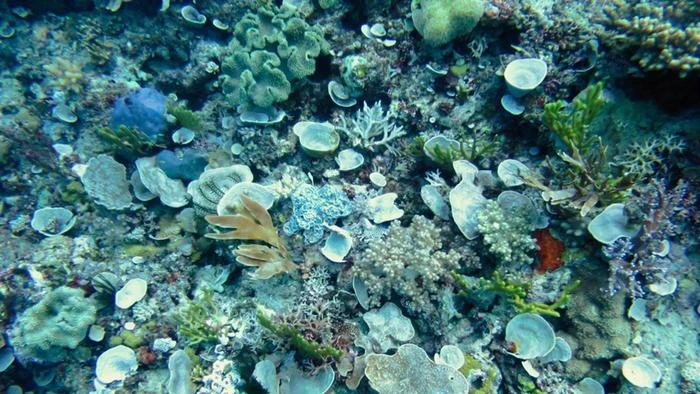
Sea sponges are essential to marine ecosystems. They play critical roles in the ocean, as they provide shelter and food to a plethora of marine creatures, recycle nutrients by filtering thousands of litres of sea water daily, and are hosts to microbes that may be the key to some of the most pressing medical challenges we face today.
Now, scientists from UNSW have discovered that when a tropical sea sponge is exposed to warmer temperatures, it loses an important microbe, which could explain why the sponge tissue dies. The latest study, published today in ISME Communications, has revealed that by exposing sea sponges to a temperature increase of 3°C, one essential microbe abandons the sponge, potentially causing tissue poisoning.
The collaboration between researchers from UNSW, Heidi Luter from the Australian Institute of Marine Science and James Bell from the Victoria University of Wellington, has added an important piece to the puzzle on the impact of climate change on sponge populations around the world.
“We've already seen marine heatwaves wipe out sponges in the Mediterranean and impact sponges in New Zealand,” says Dr Emmanuelle Botte, from the School of BEES and lead author on the study.
“We are seeing that some sponge species are not as resistant as we first thought to climate change. This research reveals that the breakdown of the symbiosis between the host and its microbes could create a chemical imbalance in the sponge and cause its decay.”
Living in symbiosis with microbes
Sea sponges – ancient sea-dwelling creatures – are often mistaken for plants, but they are stationary animals, and are in fact some of the oldest on Earth.
“Sponges date back 545 million years,” says Dr Botte. “They live in symbiosis with microbes, which fulfil vital roles for the sponge: they recycle nutrients, produce energy and defend the sponge against predators and diseases. Some microbes even detoxify the sponge’s body. They are a bit like the liver and kidneys of the sponge.”
This essential relationship between sponges and the microbes is well documented. And research has also shown that some sponge species and their associated microbes are particularly vulnerable to warmer water temperatures.
“We conducted this study because we knew that some sponges were sensitive to future climate conditions, but we wanted to know why,” says Dr Botte.
“Just like you and I, sponges need a healthy microbiome to survive. We suspected that changes in the microbes and, more importantly, what they do in sponges, might explain why some sponge species struggle in warmer waters.”
A shift in the microbial makeup of the sponge
“You can find sponges everywhere on the seafloor – from the tropics to the poles,” says Dr Botte. This study focused on a sponge species commonly found on the Great Barrier Reef and in the West Indo – Pacific ocean – Stylissa flabelliformis.
The team analysed the microbial makeup of this sponge, known for its sensitivity to a temperature increase from 28.5°C and 31.5°C conditions.
“Under these same conditions, we saw that there were major differences in the type of microbes found in a healthy sponge in the cooler temperatures, and in a necrotic, or dying, sponge in the warmer waters,” says Dr Botte.
One change in particular stood out. “A group of microbes known as archaea represented 10% of all the microbes in the healthy sponge. And we could not see it at all in the necrotic sponge.
“We found that this microbe was the only one that could detoxify the ammonia produced by the sponge. And without this microbe, toxic ammonia would have accumulated in the tissue.”
It appears that the symbiosis between the Stylissa flabelliformis and its microbes is not flexible enough to adapt to the high temperatures that are predicted to become averages by the end of the century.
Importantly, the potential impact of warming waters on sponges and marine microbes is not a distant prospect. “We used conditions that represent not just the future averages, but today’s extremes, as we have already seen temperatures 1.5°C-3°C above normal for weeks in Australia,” says Dr Botte.
A goldmine for medicinal molecules
“In addition to providing food and shelter for other organisms, sponges are important for drug discovery,” says Dr Botte.
“In the oceans, the vast majority of the molecules that have antitumor or antipathogen properties are produced by marine invertebrates, and in particular, by the microbes living in symbiosis with sponges,” says Dr Botte. “These symbioses are key for healthy oceans and a goldmine for molecules of pharmaceutical and commercial interest.”
The research team behind this latest work wants to emphasise the risk that climate changes poses to microbial diversity on Earth. “Climate change does not only impact the big charismatic animals. There is a risk of eroding the biodiversity of unassuming animals and the microbes they host, which are key for healthy oceans and more generally life on our planet.”
END
Now, scientists from UNSW have discovered that when a tropical sea sponge is exposed to warmer temperatures, it loses an important microbe, which could explain why the sponge tissue dies. The latest study, published today in ISME Communications, has revealed that by exposing sea sponges to a temperature increase of 3°C, one essential microbe abandons the sponge, potentially causing tissue poisoning.
The collaboration between researchers from UNSW, Heidi Luter from the Australian Institute of Marine Science and James Bell from the Victoria University of Wellington, has added an important piece to the puzzle on the impact of climate change on sponge populations around the world.
“We've already seen marine heatwaves wipe out sponges in the Mediterranean and impact sponges in New Zealand,” says Dr Emmanuelle Botte, from the School of BEES and lead author on the study.
“We are seeing that some sponge species are not as resistant as we first thought to climate change. This research reveals that the breakdown of the symbiosis between the host and its microbes could create a chemical imbalance in the sponge and cause its decay.”
Living in symbiosis with microbes
Sea sponges – ancient sea-dwelling creatures – are often mistaken for plants, but they are stationary animals, and are in fact some of the oldest on Earth.
“Sponges date back 545 million years,” says Dr Botte. “They live in symbiosis with microbes, which fulfil vital roles for the sponge: they recycle nutrients, produce energy and defend the sponge against predators and diseases. Some microbes even detoxify the sponge’s body. They are a bit like the liver and kidneys of the sponge.”
This essential relationship between sponges and the microbes is well documented. And research has also shown that some sponge species and their associated microbes are particularly vulnerable to warmer water temperatures.
“We conducted this study because we knew that some sponges were sensitive to future climate conditions, but we wanted to know why,” says Dr Botte.
“Just like you and I, sponges need a healthy microbiome to survive. We suspected that changes in the microbes and, more importantly, what they do in sponges, might explain why some sponge species struggle in warmer waters.”
A shift in the microbial makeup of the sponge
“You can find sponges everywhere on the seafloor – from the tropics to the poles,” says Dr Botte. This study focused on a sponge species commonly found on the Great Barrier Reef and in the West Indo – Pacific ocean – Stylissa flabelliformis.
The team analysed the microbial makeup of this sponge, known for its sensitivity to a temperature increase from 28.5°C and 31.5°C conditions.
“Under these same conditions, we saw that there were major differences in the type of microbes found in a healthy sponge in the cooler temperatures, and in a necrotic, or dying, sponge in the warmer waters,” says Dr Botte.
One change in particular stood out. “A group of microbes known as archaea represented 10% of all the microbes in the healthy sponge. And we could not see it at all in the necrotic sponge.
“We found that this microbe was the only one that could detoxify the ammonia produced by the sponge. And without this microbe, toxic ammonia would have accumulated in the tissue.”
It appears that the symbiosis between the Stylissa flabelliformis and its microbes is not flexible enough to adapt to the high temperatures that are predicted to become averages by the end of the century.
Importantly, the potential impact of warming waters on sponges and marine microbes is not a distant prospect. “We used conditions that represent not just the future averages, but today’s extremes, as we have already seen temperatures 1.5°C-3°C above normal for weeks in Australia,” says Dr Botte.
A goldmine for medicinal molecules
“In addition to providing food and shelter for other organisms, sponges are important for drug discovery,” says Dr Botte.
“In the oceans, the vast majority of the molecules that have antitumor or antipathogen properties are produced by marine invertebrates, and in particular, by the microbes living in symbiosis with sponges,” says Dr Botte. “These symbioses are key for healthy oceans and a goldmine for molecules of pharmaceutical and commercial interest.”
The research team behind this latest work wants to emphasise the risk that climate changes poses to microbial diversity on Earth. “Climate change does not only impact the big charismatic animals. There is a risk of eroding the biodiversity of unassuming animals and the microbes they host, which are key for healthy oceans and more generally life on our planet.”
END