PRESS-NEWS.org - Press Release Distribution
PRESS RELEASES DISTRIBUTION

Immune systems develop ‘silver bullet’ defences against common bacteria

Immune systems develop ‘silver bullet’ defences against common bacteria
2023-07-20
(Press-News.org) Immune systems develop specific genes to combat common bacteria such as those found in food, new research shows.

Previous theories have suggested that antimicrobial peptides – a kind of natural antibiotics – have a general role in killing a range of bacteria.

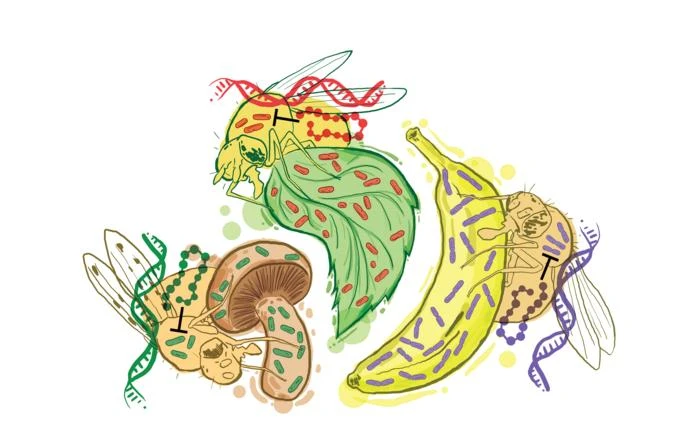
However, the new study, published in Science, examined how the immune systems of fruit flies are shaped by the bacteria in their food and environment.

The researchers, from the Swiss Federal Institute of Technology and the University of Exeter, found two peptides that each control a single bacterial species commonly encountered by the flies.

“We know that an animal’s food and environment determine the bacteria it encounters,” said Dr Mark Hanson, from the Centre for Ecology and Conservation on Exeter’s Penryn Campus in Cornwall.

“This in turn shapes its ‘microbiome’ – the collection of microbes that live in and on its body – and our study shows how immune systems evolve in response to this, to control common bacteria that could otherwise cause harm.

“In immune terms, it proves the saying ‘you are what you eat’ – the flies’ immune systems contain peptides with remarkably specific functions for controlling common bacteria.”

One such bacterium – Acetobacter, found in the fruits that flies eat (and in fruits humans eat) – can harm flies if it escapes the gut and reaches the bloodstream.

But the study shows various fly species have a specific peptide (Diptericin B) to control Acetobacter.

“This peptide is the silver bullet that kills this specific bacterium,” Dr Hanson explained.

“Without it, flies are extremely vulnerable because Acetobacter is so common in rotten fruit.”

The study also finds evidence of “convergent evolution” – when separate species evolve similar responses to challenges in their environment.

In this case, fly species in the study diverged from a common ancestor about 100 million years ago, yet they both evolved a Diptericin B peptide to control Acetobacter.

Meanwhile, closely related fly species that do not feed on fruit have lost their Diptericin B peptides over time, because Acetobacter is no longer common in their environment.

Dr Hanson said this evolutionary process might help to explain human susceptibility to certain infections.

“The way our bodies fight infections is really complex. But this sort of research helps us to view our immune system in a new light,” he said.

“I hope it gets us to ask why our immune system is made the way it is. That can help us fight infections, including infections that resist antibiotics.

“Studies like this produce fundamental observations about life, and in turn these can have crucial applications in the world around us.”

The research was funded by the Swiss National Science Foundation and Novartis Foundation.

The paper is entitled: “Ecology-relevant bacteria drive the evolution of host antimicrobial peptides in Drosophila.”

END

[Attachments] See images for this press release:
Immune systems develop ‘silver bullet’ defences against common bacteria Immune systems develop ‘silver bullet’ defences against common bacteria 2 Immune systems develop ‘silver bullet’ defences against common bacteria 3

ELSE PRESS RELEASES FROM THIS DATE:

These bones were made for walking

2023-07-20
NEW YORK, NY--Perhaps the most profound advance in primate evolution occurred about 6 million years ago when our ancestors started walking on two legs. The gradual shift to bipedal locomotion is thought to have made primates more adaptable to diverse environments and freed their hands to make use of tools, which in turn accelerated cognitive development. With those changes, the stage was set for modern humans. The genetic changes that made possible the transition from knuckle-based scampering in great apes to upright walking in humans have now been uncovered in a new study by researchers ...

Observing the long-postulated intermediate of catalytic amination reactions

Observing the long-postulated intermediate of catalytic amination reactions
2023-07-20
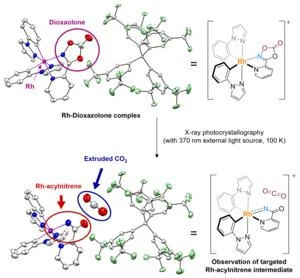
Led by Director CHANG Sukbok, scientists from the Center for Catalytic Hydrocarbon Functionalizations within the Institute for Basic Science (IBS) have made a breakthrough in understanding the structure and reactivity of a key intermediate in catalytic reactions. This intermediate, known as a transition metal-nitrenoid, plays a crucial role in converting hydrocarbons into amides, which are important in pharmaceuticals and materials science. In chemical reactions, intermediates are substances that are formed and consumed during the transformation of reactants into products. Hence, understanding these intermediates ...

Living together: Microbial communities are more than the sum of their parts

Living together: Microbial communities are more than the sum of their parts
2023-07-20
Microbial communities are widely used biotechnology suppliers for processes like manufacturing biofuels and new foods, or helping crops grow better. To engineer successful communities, scientists need to predict whether microorganisms can live and work together. One popular predictive rule states that if a pair of microbes will coexist, they will also coexist in a bigger community of microbes. A study published in Science now found that this simple rule will not always work. Just like plants and animals, microorganisms live in complex ecological communities consisting of multiple species that ...

Greenland has greener history than previously thought, says USU Geoscientist

Greenland has greener history than previously thought, says USU Geoscientist
2023-07-20
LOGAN, UTAH, USA -- New analysis of samples collected from underneath Greenland’s ice sheet reveal the Arctic island was much greener as recently as 416,000 years ago. The findings overturn previous views that Greenland’s continental glacier, which covers about 80 percent of the 836,3000-square-mile land mass, has persisted for the last two and a half million years. “We’re discovering the ice sheet is much more sensitive to climate change than we previously thought,” says Utah State University geoscientist ...

New advancements in assay development research

New advancements in assay development research
2023-07-20
Oak Brook, IL – The July 2023 issue of SLAS Discovery, the open access journal focused on research progressing drug discovery, is now available. Volume 28, Issue 5, contains one short communication and four full-length articles covering assay quality metrics, fluorescence resonance energy transfer (FRET) and small molecule glycomimetics and other high-throughput screening-related research. Full-length articles Mathematical relationships between control group variability and assay quality metrics Authored by early ...

The present and future of computing get a boost from new research

2023-07-20
The world's computing needs have grown exponentially in recent years due to an explosion of technology. To meet the needs for the next technological leap, the scientific community is working to improve current processing capabilities and simultaneously develop entirely new computing methods. Two new papers from the research group of Jean Anne Incorvia, a professor in the Cockrell School of Engineering’s Chandra Family of Electrical and Computer Engineering, aim to contribute to both of these scientific needs. Together, they offer improvements ...

The largest study of its kind shows a need for improvement in esophageal cancer screenings

2023-07-20
A new study published in Gastroenterology aims to improve the effectiveness of screening and surveillance practices for early cancer detection in Barrett’s esophagus (BE). BE is the only identifiable precursor lesion for esophageal adenocarcinoma (EAC), a lethal cancer with increased incidence and mortality rates over the last several decades. The research, led by faculty at the University of Colorado (CU) Cancer Center, analyzed a large international database of over 20,000 newly diagnosed BE patients in Nordic countries to provide a more accurate look at how many patients have normal ...

Damon Runyon Cancer Research Foundation awards $3.6 million to top clinical investigators

2023-07-20
The Damon Runyon Cancer Research Foundation has named six new Damon Runyon Clinical Investigators. The recipients of this prestigious award are outstanding, early-career physician-scientists conducting patient-oriented cancer research at major research centers under the mentorship of the nation's leading scientists and clinicians.   The Clinical Investigator Award program was designed to increase the number of physicians capable of moving seamlessly between the laboratory and the patient’s ...

Rice researchers earn prestigious Defense Department grants

Rice researchers earn prestigious Defense Department grants
2023-07-20
HOUSTON – (July 20, 2023) – Rice University professors Qimiao Si and Jeffrey Tabor, are recipients of prestigious Vannevar Bush Faculty Fellowships from the United States Department of Defense. Si, a theoretical quantum physicist, and Tabor, a bioengineer and synthetic biologist, are among 10 members of the 2023 class of Bush fellows named by the department’s Basic Research Office. The highly competitive, five-year fellowships are among the federal government’s most prestigious individual research honors. Bush fellowships are awarded annually and include $3 million to pursue ...

Discovery may lead to terahertz technology for quantum sensing

Discovery may lead to terahertz technology for quantum sensing
2023-07-20
HOUSTON – (July 20, 2023) – Visible light is a mere fraction of the electromagnetic spectrum, and the manipulation of light waves at frequencies beyond human vision has enabled such technologies as cell phones and CT scans. Rice University researchers have a plan for leveraging a previously unused portion of the spectrum. “There is a notable gap in mid- and far-infrared light, roughly the frequencies of 5-15 terahertz and wavelengths ranging from 20-60 micrometers, for which ...

LAST 30 PRESS RELEASES:

New discovery sheds light on evolutionary crossroads of vertebrates   

Aortic hemiarch reconstruction safely matches complex aortic arch reconstruction for acute dissection in older adults

Destination Earth digital twin to improve AI climate and weather predictions

Late-breaking study finds comparable long-term survival between two leading multi-arterial CABG strategies

Lymph node examination should be expanded to accurately assess cancer spread in patients with lung cancer

Study examines prediction of surgical risk in growing population of adults with congenital heart disease

Novel radiation therapy QA method: Monte Carlo simulation meets deep learning for fast, accurate epid transmission dose generation

A 100-fold leap into the unknown: a new search for muonium conversion into antimuonium

A new approach to chiral α-amino acid synthesis - photo-driven nitrogen heterocyclic carbene catalyzed highly enantioselective radical α-amino esterification

Physics-defying discovery sheds new light on how cells move

Institute for Data Science in Oncology announces new focus-area lead for advancing data science to reduce public cancer burden

Mapping the urban breath

Waste neem seeds become high-performance heat batteries for clean energy storage

Scientists map the “physical genome” of biochar to guide next generation carbon materials

Mobile ‘endoscopy on wheels’ brings lifesaving GI care to rural South Africa

Taming tumor chaos: Brown University Health researchers uncover key to improving glioblastoma treatment

Researchers enable microorganisms to build molecules with light

Laws to keep guns away from distressed individuals reduce suicides

Study shows how local business benefits from city services

RNA therapy may be a solution for infant hydrocephalus

Global Virus Network statement on Nipah virus outbreak

A new molecular atlas of tau enables precision diagnostics and drug targeting across neurodegenerative diseases

Trends in US live births by race and ethnicity, 2016-2024

Sex and all-cause mortality in the US, 1999 to 2019

Nasal vaccine combats bird flu infection in rodents

Sepsis study IDs simple ways to save lives in Africa

“Go Red. Shop with Heart.” to save women’s lives and support heart health this February

Korea University College of Medicine successfully concludes the 2025 Lee Jong-Wook Fellowship on Infectious Disease Specialists Program

Girls are happiest at school – for good reasons

Researchers from the University of Maryland School of Medicine discover genetic ancestry is a critical component of assessing head and neck cancerous tumors

[Press-News.org] Immune systems develop ‘silver bullet’ defences against common bacteria