Pause in recent coral recovery on much of Great Barrier Reef
In-water monitoring by AIMS shows hard coral cover across the Great Barrier Reef remains at similar levels to that recorded in 2022, with small decreases in the Northern, Central and Southern regions
Published 2023-08-08 · Original archive entry · Explore research explainers
In-water monitoring by the Australian Institute of Marine Science (AIMS) shows hard coral cover across the Great Barrier Reef remains at similar levels to that recorded in 2022, with small decreases in the Northern, Central and Southern regions.
Published today (Wednesday 9 August), AIMS’ Annual Summary Report on Coral Reef Condition for 2022/23 found that while some reefs continued to recover, their increased hard coral cover was offset by coral loss on other reefs. Most reefs underwent little change in coral cover.
This follows last year’s report, which saw the Northern and Central regions recording their highest amount of coral cover since AIMS began monitoring 37 years ago.
The pauses in recovery in the Northern and Central regions were due in part to the 2022 mass coral bleaching event. Low numbers of coral-eating crown-of-thorns starfish and a cyclone in January 2022 also contributed to coral loss in the Northern region. Continued crown-of-thorns starfish outbreaks and coral disease kept coral cover similar to last year’s levels in the Southern region, with bleaching playing less of a role.
AIMS Research Program Director Dr David Wachenfeld said that while continued recovery on some reefs was good news, the pause in recovery showed that even relatively milder mass bleaching events had consequences for the Reef.
“The 2022 coral bleaching event was not as severe as the 2016 or 2017 events but caused enough mortality to pause recent regional gains in hard coral cover. The heat stress during the bleaching event also likely had sub-lethal effects, including reductions in coral growth and reproduction,” Dr Wachenfeld said.
“Conditions were relatively mild over the 2023 summer with low levels of coral bleaching and no cyclones crossing the Reef. However, we are only one large scale disturbance away from a rapid reversal of recent recovery.
“The Reef remains a wonderful, complex and beautiful system, but it is at increased risk with climate change driving more frequent and severe bleaching events, putting increasing pressure on the ecosystem’s resilience.”
The Report found the following in average hard coral coverage for 2022/23:
Northern region (north of Cooktown) - 35.7%, down from 36.5% last year; Central region (Cooktown to Proserpine) – 30.8%, down from 32.6%; Southern region (south of Proserpine) – 33.8%, down from 33.9%. Reef slopes on the perimeters of 111 reefs were surveyed between August 2022 and May 2023 for the report under the AIMS Long Term Monitoring Program (LTMP) – a 37-year-long dataset which is the largest, longest and most comprehensive information source on the status of the Great Barrier Reef.
AIMS Long-Term Monitoring Program leader Dr Mike Emslie said recovery over the last few years has been driven primarily, but not exclusively, by fast-growing branching and plate corals, or Acropora. These important habitat builders are also vulnerable to disturbances such as cyclones, crown-of-thorns starfish and coral bleaching.
“Acropora are highly abundant, responsible for most of the ups and downs in hard coral cover, and have been going through a rapid growth phase in recent years. But other corals on the Reef have also contributed to this recovery,” he said.
Dr Emslie noted the increased frequency of mass coral bleaching events on the Great Barrier Reef with four occurring since 2016.
“The 2022 bleaching event was the first ever recorded during a La Niña year, which are usually characterised by cooler temperatures,” he said.
“If there were no disturbances, we would expect the recent increases in coral cover to continue this year. However, this pause indicates that a mass bleaching event, even if less severe, with low mortality, is still enough to put the brakes on this coral recovery.
“This means the Reef is still at risk of decline from more frequent disturbances. AIMS is working to understand the effect of this climatic instability through monitoring and research.”
Dr Wachenfeld added: “The best hope for the future of the Great Barrier Reef and all coral reefs globally requires reduction in greenhouse gas emissions to stabilise temperatures, best practice management of local pressures, and the development of interventions to help boost climate tolerance and resilience for coral reefs.”
BACKGROUND
The LTMP quantifies long term trends in the status of coral communities across the Great Barrier Reef.
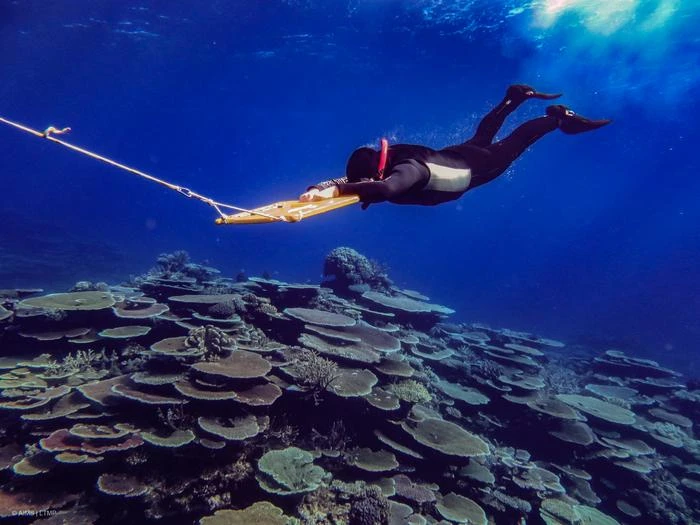
Researchers use hard coral cover as one indicator of the condition of each reef, although there are many others. Percentage hard coral cover is estimated by trained scientists during manta tow surveys and is a metric which allows AIMS scientists to provide an overview of the Great Barrier Reef’s status and keep policy makers, managers and other scientists informed in a timely manner.
Manta tow surveys are an efficient way to survey large areas of reef. It is a standard method to assess percent hard coral cover, estimates of crown-of-thorns starfish, levels of coral bleaching, and fish and shark populations.
The LTMP also does detailed surveys on fixed sites on 73 reefs across the Great Barrier Reef. These data provide deeper insights into the corals, fishes and crown of thorns starfish at these sites, their abundance, their age and more detailed information about coral disease and bleaching. 3D images are taken of these reefs to assess reef complexity and their changing structures.
The AIMS monitoring team spent 120 days at sea during this survey period. They travelled 1016km around the perimeter of the 111 reefs they surveyed.
The AIMS LTMP team begin their new survey season in late August. Surveys will continue through the summer and conclude around May 2024.
The LTMP contributes to the Reef 2050 Integrated Monitoring and Reporting Program.
END
Published today (Wednesday 9 August), AIMS’ Annual Summary Report on Coral Reef Condition for 2022/23 found that while some reefs continued to recover, their increased hard coral cover was offset by coral loss on other reefs. Most reefs underwent little change in coral cover.
This follows last year’s report, which saw the Northern and Central regions recording their highest amount of coral cover since AIMS began monitoring 37 years ago.
The pauses in recovery in the Northern and Central regions were due in part to the 2022 mass coral bleaching event. Low numbers of coral-eating crown-of-thorns starfish and a cyclone in January 2022 also contributed to coral loss in the Northern region. Continued crown-of-thorns starfish outbreaks and coral disease kept coral cover similar to last year’s levels in the Southern region, with bleaching playing less of a role.
AIMS Research Program Director Dr David Wachenfeld said that while continued recovery on some reefs was good news, the pause in recovery showed that even relatively milder mass bleaching events had consequences for the Reef.
“The 2022 coral bleaching event was not as severe as the 2016 or 2017 events but caused enough mortality to pause recent regional gains in hard coral cover. The heat stress during the bleaching event also likely had sub-lethal effects, including reductions in coral growth and reproduction,” Dr Wachenfeld said.
“Conditions were relatively mild over the 2023 summer with low levels of coral bleaching and no cyclones crossing the Reef. However, we are only one large scale disturbance away from a rapid reversal of recent recovery.
“The Reef remains a wonderful, complex and beautiful system, but it is at increased risk with climate change driving more frequent and severe bleaching events, putting increasing pressure on the ecosystem’s resilience.”
The Report found the following in average hard coral coverage for 2022/23:
Northern region (north of Cooktown) - 35.7%, down from 36.5% last year; Central region (Cooktown to Proserpine) – 30.8%, down from 32.6%; Southern region (south of Proserpine) – 33.8%, down from 33.9%. Reef slopes on the perimeters of 111 reefs were surveyed between August 2022 and May 2023 for the report under the AIMS Long Term Monitoring Program (LTMP) – a 37-year-long dataset which is the largest, longest and most comprehensive information source on the status of the Great Barrier Reef.
AIMS Long-Term Monitoring Program leader Dr Mike Emslie said recovery over the last few years has been driven primarily, but not exclusively, by fast-growing branching and plate corals, or Acropora. These important habitat builders are also vulnerable to disturbances such as cyclones, crown-of-thorns starfish and coral bleaching.
“Acropora are highly abundant, responsible for most of the ups and downs in hard coral cover, and have been going through a rapid growth phase in recent years. But other corals on the Reef have also contributed to this recovery,” he said.
Dr Emslie noted the increased frequency of mass coral bleaching events on the Great Barrier Reef with four occurring since 2016.
“The 2022 bleaching event was the first ever recorded during a La Niña year, which are usually characterised by cooler temperatures,” he said.
“If there were no disturbances, we would expect the recent increases in coral cover to continue this year. However, this pause indicates that a mass bleaching event, even if less severe, with low mortality, is still enough to put the brakes on this coral recovery.
“This means the Reef is still at risk of decline from more frequent disturbances. AIMS is working to understand the effect of this climatic instability through monitoring and research.”
Dr Wachenfeld added: “The best hope for the future of the Great Barrier Reef and all coral reefs globally requires reduction in greenhouse gas emissions to stabilise temperatures, best practice management of local pressures, and the development of interventions to help boost climate tolerance and resilience for coral reefs.”
BACKGROUND
The LTMP quantifies long term trends in the status of coral communities across the Great Barrier Reef.
Researchers use hard coral cover as one indicator of the condition of each reef, although there are many others. Percentage hard coral cover is estimated by trained scientists during manta tow surveys and is a metric which allows AIMS scientists to provide an overview of the Great Barrier Reef’s status and keep policy makers, managers and other scientists informed in a timely manner.
Manta tow surveys are an efficient way to survey large areas of reef. It is a standard method to assess percent hard coral cover, estimates of crown-of-thorns starfish, levels of coral bleaching, and fish and shark populations.
The LTMP also does detailed surveys on fixed sites on 73 reefs across the Great Barrier Reef. These data provide deeper insights into the corals, fishes and crown of thorns starfish at these sites, their abundance, their age and more detailed information about coral disease and bleaching. 3D images are taken of these reefs to assess reef complexity and their changing structures.
The AIMS monitoring team spent 120 days at sea during this survey period. They travelled 1016km around the perimeter of the 111 reefs they surveyed.
The AIMS LTMP team begin their new survey season in late August. Surveys will continue through the summer and conclude around May 2024.
The LTMP contributes to the Reef 2050 Integrated Monitoring and Reporting Program.
END
Attachments