(Press-News.org) Since 2009, the number of veterans experiencing homelessness across the United States has shrunk by more than 50%, according to a 2022 Department of Housing report.
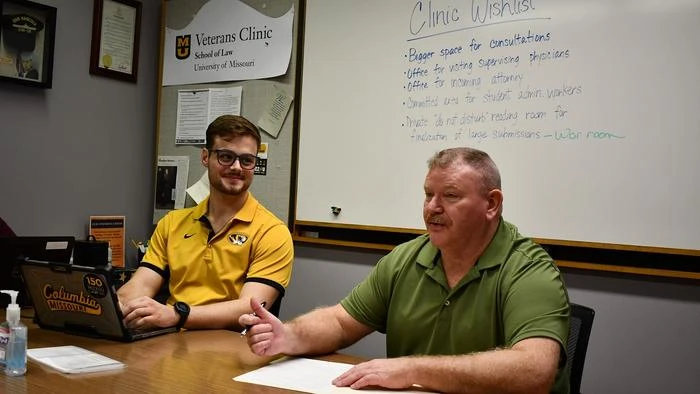
With the support of a $150,000 grant from the Department of Veterans Affairs (VA), the University of Missouri School of Law Veterans Clinic is aiming to continue this trend here at home with a new program designed to further empower veterans in taking steps out of homelessness.
The Veterans Outreach Program will help attorneys connect with veterans experiencing homelessness with the goal of offering them the legal assistance they need to access compensation from the VA for service-connected disabilities and health care. The clinic will also help veterans with applications for changing their discharge status.
“Those are the two primary things we will do because they’re essential to lifting veterans out of being homeless,” said Brent Filbert, director of the Veterans Clinic. “Homeless veterans are often experiencing mental health issues, and that's what prevents them from getting VA access, which can relate to how they were discharged. For example, a veteran who was in Afghanistan or Iraq who was in combat may come back with mental health issues, traumatic brain injury or physical trauma. Or they may have a discharge that prevents them from getting disability compensation or health care, and we work to get that rectified.”
In part, the funding from the VA will support the hiring of a program manager, who will be tasked with streamlining the process of finding homeless veterans and veterans at risk of homelessness and setting them up with legal services. Tigers for Troops also will support the program.
The School of Law Veterans Clinic, which was founded in 2014 by longtime law professor Angela Drake, is staffed by MU law students who serve real-life clients under the supervision of licensed attorneys specializing in veterans law. In this clinical experience, students learn skills vital to building a successful legal career, including preparing disability compensation appeals, writing amicus briefs and working closely with clients.
“I think most students really appreciate the opportunity to have that hands-on experience,” said Drake. “The students come in and they get two or three clients and they're told what they need to do for their clients. Then we meet with them weekly to make sure they don't run down rabbit trails, but they do the actual research. The clinic simulates the practical experience of being in a real law firm.”
It can take several years for discharge upgrades to be granted and claims appeals to be accurately decided by the VA, processes that often require legal representation for the veteran to succeed. Today, half of the clinic’s clients are veterans from the Vietnam era, Drake said.
For veterans in Missouri, this clinic represents a chance at navigating what Drake terms “the hamster wheel of appeals,” which, when done successfully, can change the direction of a veteran’s life.
END
Housing heroes: New program to support veterans experiencing homelessness
A $150,000 grant from the Department of Veterans Affairs will fund the Homeless Veterans Outreach Program, a new initiative from the University of Missouri School of Law Veterans Clinic.
2023-08-31
ELSE PRESS RELEASES FROM THIS DATE:
Mapping the coronavirus spike protein could provide insight into vaccine development
2023-08-31
Although the COVID-19 pandemic was the first time most of humanity learned of the now infamous disease, the family of coronaviruses was first identified in the mid-1960s. In a new study, molecular biologist Steven Van Doren, a scientist in the University of Missouri College of Agriculture, Food and Natural Resources, has uncovered unexpected actions of a key player in how the coronavirus infects its target — a discovery that could guide further vaccine development.
Funded by a National Science Foundation (NSF) grant, Van Doren and his team studied the fusion peptide, an important feature of the spike protein that serves to bind the virus with ...
Dectin-1 stimulation promotes distinct inflammatory signature in HIV and aging
2023-08-31
“To our knowledge, our study is the first to evaluate the specific function of Dectin-1 in the setting of aging and HIV-infection.”
BUFFALO, NY- August 31, 2023 – A new research paper was published on the cover of Aging (listed by MEDLINE/PubMed as "Aging (Albany NY)" and "Aging-US" by Web of Science) Volume 15, Issue 16, entitled, “Dectin-1 stimulation promotes a distinct inflammatory signature in the setting of HIV-infection and aging.”
Dectin-1 is an innate immune receptor that recognizes and binds β-1, 3/1, 6 glucans on fungi. In this new study, researchers Archit Kumar, Jiawei Wang, Allen Esterly, Chris ...
Excess ceramide and disrupted iron metabolism in neuronal mitochondria found to be the cause for MEPAN syndrome
2023-08-31
A recent study published in Nature Metabolism has revealed the pathogenic mechanism underlying a rare pediatric neurodegenerative disorder known as mitochondrial enoyl reductase protein-associated neurodegeneration (MEPAN) syndrome. The study was led by Dr. Hugo J. Bellen, distinguished service professor at Baylor College of Medicine, and Chair of Neurogenetics at the Jan and Dan Duncan Neurological Research Institute at Texas Children’s Hospital (Duncan NRI), and Dr. Debdeep Dutta, a postdoctoral fellow in the Bellen lab. The Duncan NRI team found that in patients and animal models of this disorder, a large number of neurons ...
A new approach to stop cancer growth?
2023-08-31
CLEVELAND– Case Western Reserve University biochemical researchers have identified a new function of a key protein that leads to cancer–a finding they believe could lead to more effective treatments for a range of cancers and other diseases.
The protein is LSD1 (lysine-specific histone demethylase 1A), which functions as a type of traffic cop inside human cells. It controls gene activity during embryonic development and regulating gene expression throughout life.
Scientists have also identified in recent years that the overexpression of LSD1—in this instance, producing too many proteins—can ...
Study: ‘Suicidal’ mechanism discovered in ion channel receptors enables the sensing of heat and pain
2023-08-31
BUFFALO, N.Y. – The ability to accurately detect heat and pain is critical to human survival, but scientists have struggled to understand on a molecular level exactly how our bodies sense these potential risks.
Now, University at Buffalo researchers have unraveled the complex biological phenomena that drive these critical functions. Their research, published in the Proceedings of the National Academy of Sciences on Aug. 28, has uncovered a previously unknown and completely unexpected “suicidal” reaction in ion channel receptors that explains the complicated mechanisms that underlie sensitivity to temperature and pain.
The ...
Scientists unpick how lung cells induce immune response to influenza
2023-08-31
Researchers from Trinity College Dublin have discovered some new and surprising ways that viral RNA and influenza virus are detected by human lung cells, which has potential implications for treating people affected by such viruses.
Influenza viruses remain a major threat to human health and can cause severe symptoms in young, elderly, and immuno-compromised populations, leading to annual epidemics which endanger between 3 and 5 million people of severe illness and cause 290,000 to 650,000 deaths worldwide.
These viruses primarily target respiratory epithelial cells ...
Expanding the impact of CAR T cell therapy: An immunotherapy strategy against all blood cancers
2023-08-31
PHILADELPHIA – A broad new strategy could hold hope for treating virtually all blood cancers with CAR T cell therapy, which is currently approved for five subtypes of blood cancer. Scientists in the Perelman School of Medicine at the University of Pennsylvania have demonstrated the potential efficacy of this approach in preclinical tests.
In the study, published today in Science Translational Medicine, the researchers used engineered CAR T cells to target CD45—a surface marker found on nearly all blood cells, including nearly all blood cancer cells. Because CD45 is found on healthy blood cells too, the research team used CRISPR base-editing to develop a method ...
New project to make data curation accessible
2023-08-31
JooYoung Seo, assistant professor in the School of Information Sciences at the University of Illinois Urbana-Champaign, has been awarded a $649,921 Early Career Development grant from the Institute of Museum and Library Services (IMLS grant RE-254891-OLS-23), under the Laura Bush 21st Century Librarian Program, which supports “developing a diverse workforce of librarians to better meet the changing learning and information needs of the American public by enhancing the training and professional development of librarians, developing faculty and library leaders, and recruiting and ...
A step closer to digitizing the sense of smell: Monell Center, Osmo model describes odors better than human panelists
2023-08-31
PHILADELPHIA (August 31, 2023) – A main crux of neuroscience is learning how our senses translate light into sight, sound into hearing, food into taste, and texture into touch. Smell is where these sensory relationships get more complex and perplexing.
To address this question, a research team co-led by the Monell Chemical Senses Center and start-up Osmo, a Cambridge, Mass.-based company spun out of machine learning research done at Google Research, Google DeepMind (formerly known as Google Brain), are investigating how airborne chemicals connect to odor perception in the brain. To this end they discovered that a machine-learning ...
New odor map helps match perceptions of smells with their chemical structure
2023-08-31
Brian K. Lee and colleagues have developed a Principal Odor Map (POM) that models the connections between an odorant’s chemical structure with its perceptual property of smell. The map performed as well as some highly trained human “sniffers” in describing odor quality, and could be used for predicting odor intensity and perceptual similarity between odorants. The map moves researchers closer to being able to match molecular properties of odorants to their perceptual properties, a challenge that has proved difficult for olfactory science. (For other senses, neuroscientists have been able to map light wavelengths ...
LAST 30 PRESS RELEASES:
Study finds most people trust doctors more than AI but see its potential for cancer diagnosis
School reopening during COVID-19 pandemic associated with improvement in children’s mental health
Research alert: Old molecules show promise for fighting resistant strains of COVID-19 virus
Journal of Nuclear Medicine Technology supplement highlights advances in theranostics and opportunities for growth
New paper rocks earthquake science with a clever computational trick
ASH 2025: Milder chemo works for rare, aggressive lymphoma
Olfaction written in bones: New insights into the evolution of the sense of smell in mammals
Engineering simulations rewrite the timeline of the evolution of hearing in mammals
New research links health impacts related to 'forever chemicals' to billions in economic losses
Unified EEG imaging improves mapping for epilepsy surgery
$80 million in donations propels UCI MIND toward world-class center focused on dementia
Illinois research uncovers harvest and nutrient strategies to boost bioenergy profits
How did Bronze Age plague spread? A sheep might solve the mystery
Mental health professionals urged to do their own evaluations of AI-based tools
Insufficient sleep associated with decreased life expectancy
Intellicule receives NIH grant to develop biomolecular modeling software
Mount Sinai study finds childhood leukemia aggressiveness depends on timing of genetic mutation
RSS Research Award for new lidar technology for cloud research
Novel AI technique able to distinguish between progressive brain tumours and radiation necrosis, York University study finds
Why are abstinent smokers more sensitive to pain?
Alexander Khalessi, MD, MBA, appointed Chief Innovation Officer
Optical chip pioneers physical-layer public-key encryption with partial coherence
How your brain understands language may be more like AI than we ever imagined
Missed signals: Virginia’s septic strategies overlook critical timing, study warns
Delayed toxicities after CAR T cell therapy for multiple myeloma are connected and potentially preventable
Scientists find cellular key to helping plants survive in saltwater
Medical cannabis program reduces opioid use
Immunotherapy works for sepsis thanks to smart patient selection
Cardiovascular events 1 year after RSV infection in adults
US medical prices and health insurance premiums, 1999-2024
[Press-News.org] Housing heroes: New program to support veterans experiencing homelessnessA $150,000 grant from the Department of Veterans Affairs will fund the Homeless Veterans Outreach Program, a new initiative from the University of Missouri School of Law Veterans Clinic.