(Press-News.org) The aim of the B-GOOD project (Giving Beekeeping Guidance By Computational-Assisted Decision Making) was to pave the way towards healthy and sustainable beekeeping within the European Union by following a collaborative and interdisciplinary approach. By merging data from within and around beehives, as well as wider socioeconomic conditions and by developing and testing innovative tools to perform risk assessments, B-GOOD provided guidance for beekeepers and helped them make better and more informed decisions.
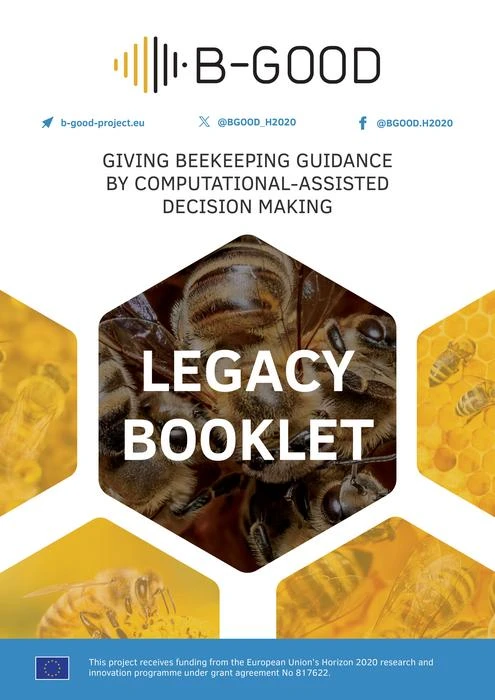
The communication of scientific information and the transformation of scientific results into practical recommendations are integral to the project’s success. To do so, B-GOOD has published a special Legacy booklet dedicated to the project’s main achievements and key research. Their visual impact promotes memorability, making complex concepts more digestible and they demonstrate real-world applications more easily.
The first part summarises the key findings of each work package, thus offering a glimpse into what B-GOOD has achieved throughout the project’s duration. In the spirit of delivering practice-relevant research outputs, the second part of the new booklet contains a section for its key published research papers, focusing on the publications’ main outcomes with practical value. It contains 15 graphical abstracts produced thus far, providing concise recommendations on the benefits to the stakeholder when the generated knowledge is implemented.
Professor Dirk de Graaf, B-GOOD’s coordinator, says “Over the past four and a half years, the B-GOOD project has given us the opportunity to develop a new perspective for the beekeeping sector in Europe. The use of advanced technologies was herewith not avoided. While this new perspective initially looked very futuristic and perhaps even daring, it has now become really concrete and we notice a growing enthusiasm among the actors in the beekeeping sector. The legacy of B-GOOD cannot be underestimated. I am proud that I was able to be part of this.”
Access the legacy booklet here.
END
Developing a new perspective for the EU beekeeping sector: B-GOOD legacy booklet
The EU Horizon 2020 project B-GOOD has published a special Legacy booklet to showcase its main achievements and key research for the past four and a half years.
2023-11-22
ELSE PRESS RELEASES FROM THIS DATE:
How do temperature extremes influence the distribution of species?
2023-11-22
As the planet gets hotter, animal and plant species around the world will be faced with new, potentially unpredictable living conditions, which could alter ecosystems in unprecedented ways. A new study from McGill University researchers, in collaboration with researchers in Spain, Mexico, Portugal, Denmark, Australia, South Africa and other universities in Canada, investigates the importance of temperature in determining where animal species are currently found to better understand how a warming climate ...
New remote sensing dataset improves global land change tracking
2023-11-22
Tracking unprecedented changes in land use over the past century, global land cover maps provide key insights into the impact of human settlement on the environment. Researchers from Sun Yat-sen University created a large-scale remote sensing annotation dataset to support Earth observation research and provide new insight into the dynamic monitoring of global land cover.
In their study, published Oct 16 in the Journal of Remote Sensing, the team examined how global land use/landcover (LULC) has undergone dramatic changes with the advancement of industrialization and urbanization, including deforestation and flooding.
“We ...
A Special Collection collaboration between SLAS and SBI2
2023-11-22
Oak Brook, IL – The latest issue of SLAS Discovery is a joint Special Collection between SLAS and the Society of Biomolecular Imaging and Informatics (SBI2) to celebrate the 10th Annual SBI2 High-Content Imaging and Informatics meeting. This collaboration features a curated special collection of articles that highlight the significant impact of high-content imaging in basic and translational research. Volume 28, Issue 7 features one perspective, four original research articles and one short communication.
Perspective
Evolution and Impact of High Content Imaging
This ...
A new diagnostic tool to identify and treat pathological social withdrawal, Hikikomori
2023-11-22
Fukuoka, Japan—Researchers at Kyushu University have developed a new tool to help clinicians and researchers assess individuals for pathological social withdrawal, known as Hikikomori. The tool, called Hikikomori Diagnostic Evaluation, or HiDE, can be a practical guide on collecting information on this globally growing pathology.
Hikikomori is a condition characterized by sustained physical isolation or social withdrawal for a period exceeding six months. It was first defined in Japan in 1998, ...
Survival of the fittest? New study shows how cancer cells use cell competition to evade the body’s defenses
2023-11-22
Living cells compete with each other and try to adapt to the local environment. Cells that are unable to do so are eliminated eventually. This cellular competition is crucial as the surrounding normal epithelial cells use it to identify and eliminate mutant cancer cells. Studies have reported that when activating mutants of “Ras” proteins are expressed in mammalian epithelial cells, they are pushed toward the lumen, excreted along with other bodily waste, and eliminated by competition. Epithelial cells containing Ras mutants have been reported to be removed in this manner in several organs, including the small intestine, stomach, pancreas, and lungs. ...
Danish researchers puncture 100-year-old theory of odd little 'water balloons'
2023-11-22
Quinoa and many other extremely resilient plants are covered with strange balloon-like 'bladders' that for 127 years were believed to be responsible for protecting them from drought and salt. Research results from the University of Copenhagen reveal this not to be the case. These so-called bladder cells serve a completely different though important function. The finding makes it likely that even more resilient quinoa plants will now be able to be bred, which could lead to the much wider cultivation of this sustainable ...
Novel MRI reveals brain changes in long-COVID patients
2023-11-22
CHICAGO – People with long COVID exhibit patterns of changes in the brain that are different from fully recovered COVID-19 patients, according to research being presented next week at the annual meeting of the Radiological Society of North America (RSNA).
“To the best of our knowledge, this is the first study comparing patients with long COVID to both a group without history of COVID-19 and a group that went through a COVID-19 infection but is subjectively unimpaired,” said one of the study’s lead authors, Alexander Rau, M.D., resident in the Departments of Neuroradiology and Diagnostic and ...
AI identifies non-smokers at high risk for lung cancer
2023-11-22
CHICAGO – Using a routine chest X-ray image, an artificial intelligence (AI) tool can identify non-smokers who are at high risk for lung cancer, according to a study being presented next week at the annual meeting of the Radiological Society of North America (RSNA).
Lung cancer is the most common cause of cancer death. The American Cancer Society estimates about 238,340 new cases of lung cancer in the United States this year and 127,070 lung cancer deaths. Approximately 10-20% of lung cancers occur in “never-smokers” – people who have never smoked cigarettes ...
This sea worm’s butt swims away, and now scientists know how
2023-11-22
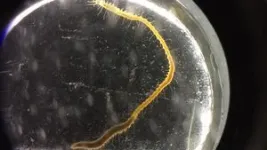
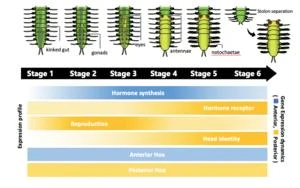
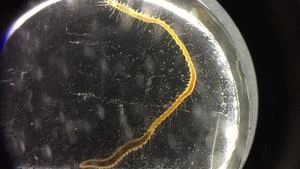
A research team, led by Professor Toru Miura from the University of Tokyo, shows how the expression of developmental genes in the Japanese green syllid worms, Megasyllis nipponica, helps form their swimming reproductive unit called stolon.
Life always finds ways to surprise us. The presence of a unique reproductive mechanism of some annelid worms or segmented worms is one such surprise. In a process called stolonization, the posterior body part with gonads of the syllid worm detaches from its original body. The detached part is called the stolon, and it is full of gametes (eggs or sperms). The stolon swims around by itself and spawns when it ...
New study on experience of adopted people as they become parents
2023-11-22
Becoming a parent is a key turning point for adopted people
Parenting is always challenging, but for adopted people becoming a mum or dad can be extra demanding, as well as extra special – according to research from the University of East Anglia.
A new study is the first in to investigate the lived experiences of adopted people in the UK as they become parents.
It finds that they are affected by issues that link back to their adoption and to difficult experiences in their past – related to loss, rejection, abuse and neglect.
Because of these ...
LAST 30 PRESS RELEASES:
ASU researchers to lead AAAS panel on water insecurity in the United States
ASU professor Anne Stone to present at AAAS Conference in Phoenix on ancient origins of modern disease
Proposals for exploring viruses and skin as the next experimental quantum frontiers share US$30,000 science award
ASU researchers showcase scalable tech solutions for older adults living alone with cognitive decline at AAAS 2026
Scientists identify smooth regional trends in fruit fly survival strategies
Antipathy toward snakes? Your parents likely talked you into that at an early age
Sylvester Cancer Tip Sheet for Feb. 2026
Online exposure to medical misinformation concentrated among older adults
Telehealth improves access to genetic services for adult survivors of childhood cancers
Outdated mortality benchmarks risk missing early signs of famine and delay recognizing mass starvation
Newly discovered bacterium converts carbon dioxide into chemicals using electricity
Flipping and reversing mini-proteins could improve disease treatment
Scientists reveal major hidden source of atmospheric nitrogen pollution in fragile lake basin
Biochar emerges as a powerful tool for soil carbon neutrality and climate mitigation
Tiny cell messengers show big promise for safer protein and gene delivery
AMS releases statement regarding the decision to rescind EPA’s 2009 Endangerment Finding
Parents’ alcohol and drug use influences their children’s consumption, research shows
Modular assembly of chiral nitrogen-bridged rings achieved by palladium-catalyzed diastereoselective and enantioselective cascade cyclization reactions
Promoting civic engagement
AMS Science Preview: Hurricane slowdown, school snow days
Deforestation in the Amazon raises the surface temperature by 3 °C during the dry season
Model more accurately maps the impact of frost on corn crops
How did humans develop sharp vision? Lab-grown retinas show likely answer
Sour grapes? Taste, experience of sour foods depends on individual consumer
At AAAS, professor Krystal Tsosie argues the future of science must be Indigenous-led
From the lab to the living room: Decoding Parkinson’s patients movements in the real world
Research advances in porous materials, as highlighted in the 2025 Nobel Prize in Chemistry
Sally C. Morton, executive vice president of ASU Knowledge Enterprise, presents a bold and practical framework for moving research from discovery to real-world impact
Biochemical parameters in patients with diabetic nephropathy versus individuals with diabetes alone, non-diabetic nephropathy, and healthy controls
Muscular strength and mortality in women ages 63 to 99
[Press-News.org] Developing a new perspective for the EU beekeeping sector: B-GOOD legacy bookletThe EU Horizon 2020 project B-GOOD has published a special Legacy booklet to showcase its main achievements and key research for the past four and a half years.