In an era of climate change, clean water and reliable water storage for floods and droughts is a possibility!
Evaluating water storage stability in simulated long-term aquifer storage system over a year. Ensure stable water quality in a simulated aquifer storage system linked to a physical sedimentation process
Published 2024-09-26 · Original archive entry · Explore research explainers
In recent years, the world has seen a recurrence of extreme floods and droughts due to climate change. In response to this, aquifer storage technology is being used for actual water supply in countries such as the United States, the Netherlands, and Australia. In South Korea, it rains intensively in the summer and extreme rainfall occurs, causing increasing difficulties in water supply in rural areas and island areas other than urban areas. In this situation, aquifer storage technology is attracting attention as a way to stably store and supply water.
Dr. Seongpil Jeong and Kyungjin Cho of the Center for Water Cycle Research at the Korea Institute of Science and Technology (KIST) have developed an aquifer storage technique that could improve the potential for stable water storage.
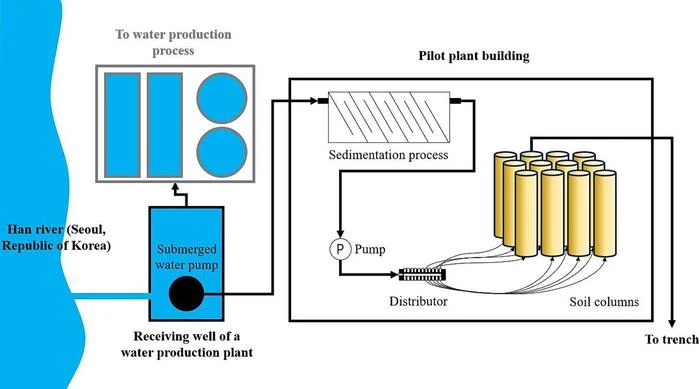
The injection of surface water into aquifers without proper treatment can be limited by pore clogging caused by microorganisms that feed on organic matter, such as assimilable organic carbon, present in the injected water. The KIST research team had previously shown that assimilable organic carbon in artificial raw water can be reduced by microorganisms under simulated aquifer storage conditions. In this study, the researchers used real river water rather than artificial water to simulate the periodic injection and recovery process of aquifer storage.
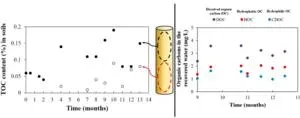
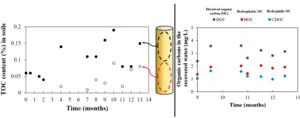
The experiment lasted for about 13 months, with river water being injected into a sandy layer in the ground at two-week intervals and the water being withdrawn again two weeks later to observe changes in organic matter and microorganisms over the course of the experiment. The experiment showed that despite seasonal changes in river water, organic matter concentrations in soil organic matter and stored water remained stable, suggesting that a simple physical sedimentation process without chemical treatment maintained stable water quality for a year without pore clogging.
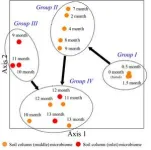
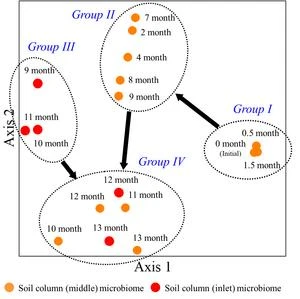
To understand why water quality remains stable in aquifer storage systems, the team investigated changes in the microbiome. They found that the microbiome, which can feed on organic matter present in real river water, changes seasonally. This suggests that the microbes in the aquifer storage system reduced organic matter, preventing pore clogging and contributing to stable water quality.
The experimental techniques used in this study can be used to test domestic aquifer storage sites and propose pretreatment processes for influent conditions, and it is believed that continued analysis of organic matter and microorganisms will be necessary for the stable operation of aquifer storage systems in the future. In addition, water quality assessment of the recovered water and appropriate pretreatment processes are needed to ensure that the system is stable.
"This research contributes to the stable operation of aquifer storage technology, which is being utilized as a large-scale water storage technology to address the problem of water supply imbalance," said Dr. Seongpil Jeong and Kyungjin Cho from KIST. "The study of long-term organic matter and microbiome changes in a pilot-scale aquifer simulation system is the first of its kind globally and has potential for future expansion."
###
KIST was established in 1966 as the first government-funded research institute in Korea. KIST now strives to solve national and social challenges and secure growth engines through leading and innovative research. For more information, please visit KIST’s website at https://eng.kist.re.kr/
This research was supported by the Ministry of Science and ICT (Minister Yoo Sang-im) under the KIST Institutional Program and Climate Change Impact Minimization Technology Development Project (2020M3H5A1080712). The results of this research were published in the latest issue of the international journal, Chemical Engineering Journal (IF 13.3, JCR field 3.1%).
END
Dr. Seongpil Jeong and Kyungjin Cho of the Center for Water Cycle Research at the Korea Institute of Science and Technology (KIST) have developed an aquifer storage technique that could improve the potential for stable water storage.
The injection of surface water into aquifers without proper treatment can be limited by pore clogging caused by microorganisms that feed on organic matter, such as assimilable organic carbon, present in the injected water. The KIST research team had previously shown that assimilable organic carbon in artificial raw water can be reduced by microorganisms under simulated aquifer storage conditions. In this study, the researchers used real river water rather than artificial water to simulate the periodic injection and recovery process of aquifer storage.
The experiment lasted for about 13 months, with river water being injected into a sandy layer in the ground at two-week intervals and the water being withdrawn again two weeks later to observe changes in organic matter and microorganisms over the course of the experiment. The experiment showed that despite seasonal changes in river water, organic matter concentrations in soil organic matter and stored water remained stable, suggesting that a simple physical sedimentation process without chemical treatment maintained stable water quality for a year without pore clogging.
To understand why water quality remains stable in aquifer storage systems, the team investigated changes in the microbiome. They found that the microbiome, which can feed on organic matter present in real river water, changes seasonally. This suggests that the microbes in the aquifer storage system reduced organic matter, preventing pore clogging and contributing to stable water quality.
The experimental techniques used in this study can be used to test domestic aquifer storage sites and propose pretreatment processes for influent conditions, and it is believed that continued analysis of organic matter and microorganisms will be necessary for the stable operation of aquifer storage systems in the future. In addition, water quality assessment of the recovered water and appropriate pretreatment processes are needed to ensure that the system is stable.
"This research contributes to the stable operation of aquifer storage technology, which is being utilized as a large-scale water storage technology to address the problem of water supply imbalance," said Dr. Seongpil Jeong and Kyungjin Cho from KIST. "The study of long-term organic matter and microbiome changes in a pilot-scale aquifer simulation system is the first of its kind globally and has potential for future expansion."
###
KIST was established in 1966 as the first government-funded research institute in Korea. KIST now strives to solve national and social challenges and secure growth engines through leading and innovative research. For more information, please visit KIST’s website at https://eng.kist.re.kr/
This research was supported by the Ministry of Science and ICT (Minister Yoo Sang-im) under the KIST Institutional Program and Climate Change Impact Minimization Technology Development Project (2020M3H5A1080712). The results of this research were published in the latest issue of the international journal, Chemical Engineering Journal (IF 13.3, JCR field 3.1%).
END
Attachments