ASPB welcomes Hong Ma as Society President
Ma is currently a Professor of Biology and the Huck Chair in Plant Reproductive Development and Evolution at the Pennsylvania State University
Published 2024-10-09 · Original archive entry · Explore research explainers
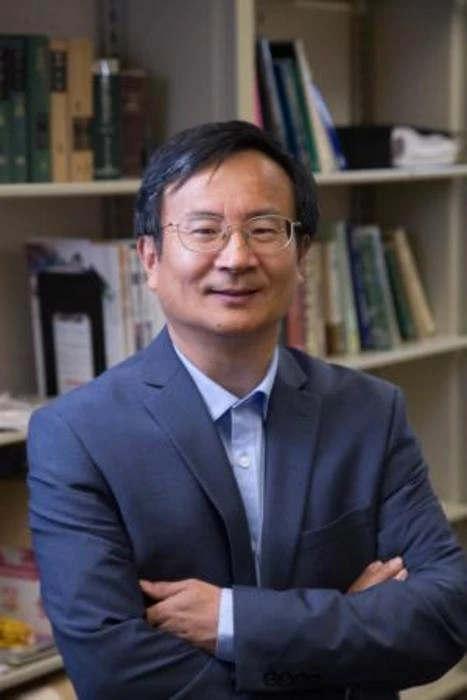
ASPB is delighted to welcome its new President, Hong Ma, who was elected in 2023 as President-elect and served in this role starting October 1, 2023. He stepped into his role as ASPB President on October 1, 2024 following the end of now-Past President Leeann Thornton’s term.
“A top priority is to support and train young plant biologists toward becoming members of a community with greater diversity, to amplify the voices of diverse members of our society, and to promote diversity and representation in society leadership and society activities,” said Ma on his goals for the society.
Ma is currently a Professor of Biology and the Huck Chair in Plant Reproductive Development and Evolution at the Pennsylvania State University. Ma holds a BA in Biology and Biochemistry from Temple University. He earned a PhD from the Massachusetts Institute of Technology in 1988 and received his postdoctoral training at the California Institute of Technology.
Ma has been an ASPB member since 2000. He has served as an Associate Editor for Plant Physiology, a member of the ASPB Publications Committee, and a reviewer for manuscripts. In addition, he has authored a number of papers published in both Plant Physiology and The Plant Cell.
Ma’s interest in plants started before college in the countryside with exposure to major crops like rice and soybean and many other cultivated or wild plants. He was trained in molecular biology through PhD studies in yeast at MIT. Advances in plant molecular biology, especially the emergence of Arabidopsis as a model system for plant biology, motivated Ma to seek postdoctoral training under the guidance of Elliot Meyerowitz, with the identification and analyses of floral homeotic and heterotrimeric G protein genes.
Ma’s lab at Penn State includes undergraduate students, graduate students, post-doctoral scientists, and others and studies the molecular genetic basis of plant reproductive development, particularly anther/pollen development and meiosis. Through analyses using molecular genetics in combination with transcriptomics, proteomics and bioinformatics, members of his lab have recently identified a novel regulator of proper splicing of specific exons in key floral homeotic genes. In addition, the lab aims to understand phylogenetic relationships and evolution of angiosperms, particularly for members of families with species that are important for agriculture and horticulture, including maize, rice, wheat and other grasses, soybean and other legumes, members of the Asteraceae, Orchidaceae, and Cucurbitaceae, as well as Arabidopsis and cabbage in Brassicaceae, tomato, potato, and pepper in Solanaceae, and apple, peach, and strawberry in Rosaceae. Members of his group have explored the evolutionary patterns and relevant molecular basis for crucial plant traits such nitrogen-fixing root nodulation, C4 photosynthesis, floral symmetry, and tendril formation.
“ASPB just celebrated its 100th anniversary. Having served as the President-elect for almost a year, I treasure more than ever working with ASPB members, including other ASPB leaders, to promote diversity, equity, and inclusion, to advance the career development of young members, and to further strengthen ASPB as it enters its second 100 years of supporting its members and the broader plant biology community,” said Ma.
About ASPB
ASPB is a professional scientific society, headquartered in Rockville, MD, that is devoted to the advancement of the plant sciences worldwide. With a membership of some 3,000 plant scientists from throughout the United States and around the world, the Society publishes two of the most widely cited plant science journals, The Plant Cell and Plant Physiology, and co-publishes the Open Access journal Plant Direct. ASPB also hosts the annual Plant Biology conference; supports plant science outreach, engagement, and advocacy; and powers the Plantae digital ecosystem for plant scientists. For more information about ASPB, please visit https://aspb.org/. Also follow ASPB on Facebook at facebook.com/myASPB, on Twitter @ASPB, and on LinkedIn at https://www.linkedin.com/company/98656.
END
“A top priority is to support and train young plant biologists toward becoming members of a community with greater diversity, to amplify the voices of diverse members of our society, and to promote diversity and representation in society leadership and society activities,” said Ma on his goals for the society.
Ma is currently a Professor of Biology and the Huck Chair in Plant Reproductive Development and Evolution at the Pennsylvania State University. Ma holds a BA in Biology and Biochemistry from Temple University. He earned a PhD from the Massachusetts Institute of Technology in 1988 and received his postdoctoral training at the California Institute of Technology.
Ma has been an ASPB member since 2000. He has served as an Associate Editor for Plant Physiology, a member of the ASPB Publications Committee, and a reviewer for manuscripts. In addition, he has authored a number of papers published in both Plant Physiology and The Plant Cell.
Ma’s interest in plants started before college in the countryside with exposure to major crops like rice and soybean and many other cultivated or wild plants. He was trained in molecular biology through PhD studies in yeast at MIT. Advances in plant molecular biology, especially the emergence of Arabidopsis as a model system for plant biology, motivated Ma to seek postdoctoral training under the guidance of Elliot Meyerowitz, with the identification and analyses of floral homeotic and heterotrimeric G protein genes.
Ma’s lab at Penn State includes undergraduate students, graduate students, post-doctoral scientists, and others and studies the molecular genetic basis of plant reproductive development, particularly anther/pollen development and meiosis. Through analyses using molecular genetics in combination with transcriptomics, proteomics and bioinformatics, members of his lab have recently identified a novel regulator of proper splicing of specific exons in key floral homeotic genes. In addition, the lab aims to understand phylogenetic relationships and evolution of angiosperms, particularly for members of families with species that are important for agriculture and horticulture, including maize, rice, wheat and other grasses, soybean and other legumes, members of the Asteraceae, Orchidaceae, and Cucurbitaceae, as well as Arabidopsis and cabbage in Brassicaceae, tomato, potato, and pepper in Solanaceae, and apple, peach, and strawberry in Rosaceae. Members of his group have explored the evolutionary patterns and relevant molecular basis for crucial plant traits such nitrogen-fixing root nodulation, C4 photosynthesis, floral symmetry, and tendril formation.
“ASPB just celebrated its 100th anniversary. Having served as the President-elect for almost a year, I treasure more than ever working with ASPB members, including other ASPB leaders, to promote diversity, equity, and inclusion, to advance the career development of young members, and to further strengthen ASPB as it enters its second 100 years of supporting its members and the broader plant biology community,” said Ma.
About ASPB
ASPB is a professional scientific society, headquartered in Rockville, MD, that is devoted to the advancement of the plant sciences worldwide. With a membership of some 3,000 plant scientists from throughout the United States and around the world, the Society publishes two of the most widely cited plant science journals, The Plant Cell and Plant Physiology, and co-publishes the Open Access journal Plant Direct. ASPB also hosts the annual Plant Biology conference; supports plant science outreach, engagement, and advocacy; and powers the Plantae digital ecosystem for plant scientists. For more information about ASPB, please visit https://aspb.org/. Also follow ASPB on Facebook at facebook.com/myASPB, on Twitter @ASPB, and on LinkedIn at https://www.linkedin.com/company/98656.
END
Attachments