PRESS-NEWS.org - Press Release Distribution
PRESS RELEASES DISTRIBUTION

Metabolomics-driven approaches for identifying therapeutic targets in drug discovery
Metabolomics-driven approaches for identifying therapeutic targets in drug discovery
2025-01-14
(Press-News.org)

This review is led by Professor. Tengfei Xu (Research Center for Clinical Pharmacy, College of Pharmaceutical Sciences, Zhejiang University) and Professor. Su Zeng (Research Center for Clinical Pharmacy, College of Pharmaceutical Sciences, Zhejiang University). The author emphasizes metabolomics’ critical role in advancing our understanding of disease mechanisms and accelerating targeted drug development, while acknowledging current challenges in the field.

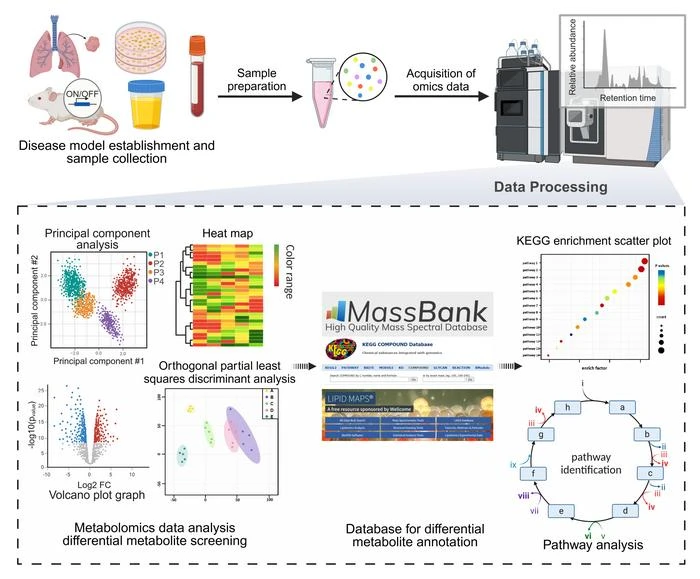
Metabolomics, as a powerful tool, can captures phenotypic changes induced by exogenous compounds, offering a valuable approach for target identification beyond the traditional protein-level focus. With the deepen research, various metabolomics-based methods emerged for better discovery, including dose-response metabolomics, stable isotope-resolved metabolomics, and high-throughput metabolomics. These methods focus on the dose-dependent and spatiotemporal metabolite–drug interactions, emphasized for their ability to identify key enzymes and metabolic pathways affected by drugs. Emerging techniques, such as single-cell metabolomics, artificial intelligence, and mass spectrometry imaging, are also explored for their potential to enhance target discovery. With clear and detailed flow charts, the author describe in detail how these methods are used for target discovery.

“However, it has to be acknowledged that there are still many challenges in this field,” said Professor. Tengfei Xu, College of Pharmaceutical Sciences, Zhejiang University. Several limitations, including limited coverage of metabolites, lack of annotations for specific compounds, and potential degradation of active metabolites, obscure critical metabolites and pathways, hindering a comprehensive understanding of biological mechanisms. Therefore, strategy like multi-omics and technology like artificial intelligence were introduced in hopes of solving the current dilemma. The author summarized many articles to illustrate this process, while they believe that how to parse more metabolite information from complex spectrogram data is the real key. 

This review summarizes the commonly used target-finding methods and emerging technologies of metabolomics, and explains the technical barriers and analytical problems that coexist with them and need to be solved, paving the way for future related studies.


See the article: https://doi.org/10.1002/mco2.792

END


[Attachments] See images for this press release:
Metabolomics-driven approaches for identifying therapeutic targets in drug discovery

ELSE PRESS RELEASES FROM THIS DATE:

Applications of ultrafast nano-spectroscopy and nano-imaging

Applications of ultrafast nano-spectroscopy and nano-imaging
2025-01-14
Optical microscopy has long been a fundamental tool for scientific discovery. Yet, traditional far-field techniques are limited by diffraction, restricting their resolution to hundreds of nanometers, which can be inadequate for capturing phenomena in quantum and solid-state materials. With the emergence of tip-based microscopy capable of achieving atomic-scale spatial resolution, near-field optical nano-spectroscopy and nano-imaging have evolved into versatile tools for characterizing the optical properties of materials at the nanoscale. When further combined with ultrafast pump-probe ...

Study links PFAS contamination of drinking water to a range of rare cancers

2025-01-14
Communities exposed to drinking water contaminated with manufactured chemicals known as per- and polyfluoroalkyl substances (PFAS) experience up to a 33% higher incidence of certain cancers, according to new research from the Keck School of Medicine of USC. The study, funded by the National Institutes of Health and just published in the Journal of Exposure Science and Environmental Epidemiology, is the first to examine cancer and PFAS contamination of drinking water in the U.S. PFAS, which are used in consumer products such as furniture and food packaging, have been found in about 45% of drinking water supplies across the United States. ...

Scientists explain how a compound from sea sponge exerts its biological effects

2025-01-14
Girolline, a compound extracted from the sea sponge Pseudaxinyssa cantharella, has been investigated for possible antitumor effects and also found to have anti-malarial effects. Now, thanks to work by scientists from the RIKEN Center for Sustainable Resource Science, researchers have a better idea of how it works. In addition to its possible medicinal properties, the current findings suggest that the compound could also be useful as a chemical probe for research in areas such as aging and mitochondrial health. GIrolline is one of a number of compounds with biological functions that were isolated from Pseudaxinyssa ...

Why older women are embracing the open road

2025-01-14
Older Australian women are challenging traditional views of aging, embarking on solo road trips and travelling the country in search of adventure, personal growth and new horizons. Equipped with a caravan, campervan, or a sturdy 4WD and a tent, these women are navigating vast landscapes, from the dusty Oodnadatta Track to the spectacular Tasmanian wilderness. Margaret Yates, a PhD candidate from the University of Technology Sydney (UTS) Faculty of Health and a retired nurse, interviewed 29 women travellers to explore their motivations and experiences. The majority were over sixty and considered themselves ...

Shift to less reliable ‘natural’ contraception methods among abortion patients over past 5 years

2025-01-14
There has been a shift away from the use of more reliable hormonal methods of contraception to less reliable fertility awareness methods among women requesting abortion in England and Wales over the past 5 years, reveals research published online in the journal BMJ Sexual & Reproductive Health.   Use of the Pill, mini Pill, implants, patches, and vaginal rings has given way to more ‘natural’ methods, such as period tracking apps that highlight monthly peak fertility/ovulation, the findings ...

Tobacco advertising + sponsorship bans linked to 20% lower odds of smoking

2025-01-14
Implementing bans on the advertising, promotion, and sponsorship of tobacco products is linked to 20% lower odds of smoking, and 37% lower risk of taking up the habit, reveals a pooled data analysis of the available research, published online in Tobacco Control.   The findings indicate that these bans do influence behaviour, lending further weight to calls for their wider international implementation and enforcement, conclude the researchers. In 2019 alone, more than a billion people around the globe regularly smoked tobacco, and smoking caused nearly 8 million deaths, note the researchers. To curb the toll ...

Vascular ‘fingerprint’ at the back of the eye can accurately predict stroke risk

2025-01-14
A vascular ‘fingerprint’ on the light sensitive tissue layer at the back of the eye—the retina—can predict a person’s risk of stroke as accurately as traditional risk factors alone, but without the need for multiple invasive lab tests, finds research published online in the journal Heart.  The fingerprint, comprising 29 indicators of vascular health, is a practical and readily implementable approach that is particularly well suited for primary healthcare and low-resource settings, conclude the researchers. Stroke affects around 100 million people around the globe and ...

Circulation problems in the brain’s seat of memory linked to mild cognitive impairment in older adults

2025-01-14
Mild cognitive impairment is linked to blood vessel dysfunction in the brain’s temporal lobes — the seat of memory — according to a new USC-led study. The findings, seen in people with and without signs of amyloid buildup in the brain, suggest that microvascular trouble may be an important, early biomarker for dementia as well as a potential target for therapy. The research, involving scientists from multiple universities, appears in the journal Neurology. “We’re studying ...

Oregon State receives $11.9 million from Defense Department to enhance health of armed forces

Oregon State receives $11.9 million from Defense Department to enhance health of armed forces
2025-01-13
PORTLAND, Ore. – The U.S. Department of Defense has awarded up to $11.9 million to Oregon State University to invent new drug delivery technologies for protecting members of the military from a range of health threats in combat areas. Once designed, developed and tested, the technologies could also be applied as needed within the general public, said OSU College of Pharmacy nanomedicine researcher Gaurav Sahay, the project leader. The award comes from the Defense Advanced Research Projects Agency through its Hermes program, whose goal is finding new ways to deliver therapeutic agents throughout the body with exceptional ...

Leading cancer clinician, researcher Dr. Jenny Chang to lead Houston Methodist Academic Institute

Leading cancer clinician, researcher Dr. Jenny Chang to lead Houston Methodist Academic Institute
2025-01-13
Esteemed cancer clinician-scientist Jenny Chang, M.D., MBBChir, MHCM, has been chosen to lead the Houston Methodist Academic Institute. She will serve as executive vice president, president and CEO, and chief academic officer. In her more than 15 years at Houston Methodist, Chang helped transform the Dr. Mary and Ron Neal Cancer Center into one of the top-20 ranked cancer centers in the country. Chang, the Emily Herrmann Presidential Distinguished Chair in Cancer Research, was selected following a national search and succeeds H. Dirk Sostman, M.D., FACR, who will retire next month after two decades of leadership at Houston Methodist. Chang’s ...

LAST 30 PRESS RELEASES:

Study: Blocking a key protein may create novel form of stress in cancer cells and re-sensitize chemo-resistant tumors

HRT via skin is best treatment for low bone density in women whose periods have stopped due to anorexia or exercise, says study

Insilico Medicine showcases at WHX 2026: Connecting the Middle East with global partners to accelerate translational research

From rice fields to fresh air: Transforming agricultural waste into a shield against indoor pollution

University of Houston study offers potential new targets to identify, remediate dyslexia

Scientists uncover hidden role of microalgae in spreading antibiotic resistance in waterways

Turning orange waste into powerful water-cleaning material

Papadelis to lead new pediatric brain research center

Power of tiny molecular 'flycatcher' surprises through disorder

Before crisis strikes — smartwatch tracks triggers for opioid misuse

Statins do not cause the majority of side effects listed in package leaflets

UC Riverside doctoral student awarded prestigious DOE fellowship

UMD team finds E. coli, other pathogens in Potomac River after sewage spill

New vaccine platform promotes rare protective B cells

Apes share human ability to imagine

Major step toward a quantum-secure internet demonstrated over city-scale distance

Increasing toxicity trends impede progress in global pesticide reduction commitments

Methane jump wasn’t just emissions — the atmosphere (temporarily) stopped breaking it down

Flexible governance for biological data is needed to reduce AI’s biosecurity risks

Increasing pesticide toxicity threatens UN goal of global biodiversity protection by 2030

How “invisible” vaccine scaffolding boosts HIV immune response

Study reveals the extent of rare earthquakes in deep layer below Earth’s crust

Boston College scientists help explain why methane spiked in the early 2020s

Penn Nursing study identifies key predictors for chronic opioid use following surgery

KTU researcher’s study: Why Nobel Prize-level materials have yet to reach industry

Research spotlight: Interplay of hormonal contraceptive use, stress and cardiovascular risk in women

Pennington Biomedical’s Dr. Catherine Prater awarded postdoctoral fellowship from the American Heart Association

AI agents debate more effectively when given personalities and the ability to interrupt

Tenecteplase for acute non–large vessel occlusion 4.5 to 24 hours after ischemic stroke

Immune 'hijacking' predicts cancer evolution

[Press-News.org] Metabolomics-driven approaches for identifying therapeutic targets in drug discovery