KERI’s faster and higher-quality argyrodite structures for ASSBs!
Published 2025-02-10 · Original archive entry · Explore research explainers

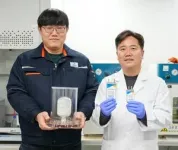
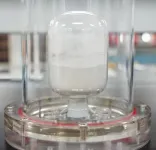
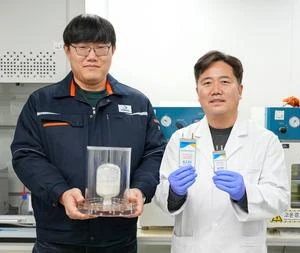
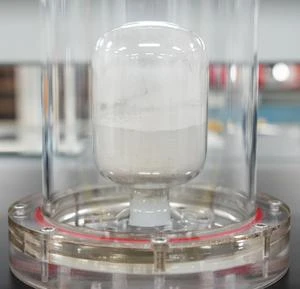
Dr. Ha Yoon-Cheol's team at KERI's Next Generation Battery Research Center has developed an 'enhanced coprecipitation method' that enables faster and higher-quality production of lithium superionic conductors for ASSBs.
ASSB replaces the ‘electrolyte’, which transfers ions between the anode and cathode, with a solid instead of a liquid, significantly reducing the risk of fire or explosion..
Solid electrolytes are difficult to manufacture and expensive. However, in 2021, Dr. Ha Yoon-Cheol's team garnered significant attention by proposing the 'coprecipitation method', which enables large-scale production of solid electrolytes through a one-pot solution process, without the need for expensive lithium sulfide (Li2S) by directly adding the raw materials into a single container. This method is a groundbreaking technology that significantly reduces raw material costs compared to conventional methods and does not require high-energy milling or evaporation processes. The technology has been transferred to Daejoo Electronic Materials Co., Ltd., a domestic company specializing in electrical and electronic materials.
Since then, KERI has continued follow-up research with KAIST, Daejoo Electronic Materials Co., Ltd., and others. Through these efforts, they successfully identified the detailed mechanisms behind the dissolution and coprecipitation phenomena, leading to the development of an optimized, upgraded coprecipitation method that significantly shortens production time and dramatically improves the quality of solid electrolytes.
The key to the coprecipitation method is the process of evenly dissolving the raw materials in a solution, precipitating them, and then filtering them out. Dr. Ha Yoon-Cheol's team first mixed lithium, sulfur, and catalyst in the optimal proportions, and analyzed the process in which lithium polysulfides and lithium sulfide are sequentially formed depending on the degree of lithium dissolution. They then applied this to the synthesis processes of three-element (such as Li3PS4) and four-element (such as Li6PS5Cl) solid electrolytes, developing a technology that enables rapid and homogeneous dissolution and coprecipitation of various raw materials.
The detailed mechanism analysis of KERI's coprecipitation method was carried out by top researchers from leading universities in Korea. Professor Byon Hye Ryung's team at KAIST led the chemical analysis of the intermediate species formed depending on the degree of lithium dissolution. Additionally, quantum calculations and anion mass spectrometry conducted by Professor Baek Moo-Hyeon’s team at KAIST and Professor Seo Jongcheol’s team at POSTECH played a crucial role in uncovering the accurate molecular structures. Based on this, Daejoo Electronic Materials Co., Ltd. incorporated the technology related to continuous processes that will be applied in the actual mass production of solid electrolytes.
Through continuous collaboration between industry, academia, and research institutes, the upgraded coprecipitation method was developed, significantly reducing the production time of solid electrolytes from 14 hours to just 4 hours.
The quality of the optimally synthesized solid electrolytes has also been improved. Conventional manufacturing methods faced a persistent issue of lower ionic conductivity during the scale-up process. However, with the application of the upgraded coprecipitation method in the scale-up process, the ion conductivity of the solid electrolytes reached 5.7 mS/cm. This surpasses the level of liquid electrolytes (~4 mS/cm)1). In addition, by applying the solid electrolytes to a 700mAh ASSB pouch cell, which is about one-fifth the capacity of a smartphone battery, an energy density of 352Wh/kg was achieved, surpassing the energy density of commercial lithium-ion batteries (270Wh/kg)2). Moreover, in experiments where the ASSB was charged and discharged 1,000 times, it maintained over 80% of its capacity, confirming its stable lifespan.
1) The ionic conductivity of liquid electrolytes is around 10 mS/cm, but when considering the lithium-ion transfer number, the actual lithium-ion conductivity drops to about 3-4 mS/cm.
2) mAh (milliampere-hour) is a unit that indicates the amount of current that can be used over the course of one hour. Currently, smartphone batteries are typically around 3,500–4,500mAh. When multiplied by the voltage (V), it gives the amount of energy, represented in Wh (watt-hours). Wh/kg is a unit that signifies how much energy can be charged and discharged per kilogram of the battery.
The research results were highly regarded and published in the internationally renowned journal ‘Energy Storage Materials’ in the field of energy. (Paper title: Lithiation-driven cascade dissolution coprecipitation of sulfide superionic conductors). The journal's JCR Impact Factor is 18.9, placing it in the top 4.2% of its field. The research team has confirmed that this technology can be applied not only to the synthesis of solid electrolytes but also to the production of various functional coatings. Recently, a patent for the technology has also been filed.
Dr. Ha Yoon-Cheol of KERI stated, "The previous achievement was significant in that it introduced the coprecipitation technology for the first time in the world to the manufacturing process of solid electrolytes, while this upgraded method is a result of optimizing the principles of the coprecipitation method through detailed analysis, leading to better outcomes." He also added, "This will serve as a key enabler for opening an era of mass production of ASSBs at a low cost."
Meanwhile, KERI is a government-funded research institute under the National Research Council of Science & Technology (NST) of the Ministry of Science and ICT. This research was conducted as part of KERI's Primary research program and the Materials & Components Technology Development program of the Ministry of Trade, Industry and Energy. <KERI>
END
ASSB replaces the ‘electrolyte’, which transfers ions between the anode and cathode, with a solid instead of a liquid, significantly reducing the risk of fire or explosion..
Solid electrolytes are difficult to manufacture and expensive. However, in 2021, Dr. Ha Yoon-Cheol's team garnered significant attention by proposing the 'coprecipitation method', which enables large-scale production of solid electrolytes through a one-pot solution process, without the need for expensive lithium sulfide (Li2S) by directly adding the raw materials into a single container. This method is a groundbreaking technology that significantly reduces raw material costs compared to conventional methods and does not require high-energy milling or evaporation processes. The technology has been transferred to Daejoo Electronic Materials Co., Ltd., a domestic company specializing in electrical and electronic materials.
Since then, KERI has continued follow-up research with KAIST, Daejoo Electronic Materials Co., Ltd., and others. Through these efforts, they successfully identified the detailed mechanisms behind the dissolution and coprecipitation phenomena, leading to the development of an optimized, upgraded coprecipitation method that significantly shortens production time and dramatically improves the quality of solid electrolytes.
The key to the coprecipitation method is the process of evenly dissolving the raw materials in a solution, precipitating them, and then filtering them out. Dr. Ha Yoon-Cheol's team first mixed lithium, sulfur, and catalyst in the optimal proportions, and analyzed the process in which lithium polysulfides and lithium sulfide are sequentially formed depending on the degree of lithium dissolution. They then applied this to the synthesis processes of three-element (such as Li3PS4) and four-element (such as Li6PS5Cl) solid electrolytes, developing a technology that enables rapid and homogeneous dissolution and coprecipitation of various raw materials.
The detailed mechanism analysis of KERI's coprecipitation method was carried out by top researchers from leading universities in Korea. Professor Byon Hye Ryung's team at KAIST led the chemical analysis of the intermediate species formed depending on the degree of lithium dissolution. Additionally, quantum calculations and anion mass spectrometry conducted by Professor Baek Moo-Hyeon’s team at KAIST and Professor Seo Jongcheol’s team at POSTECH played a crucial role in uncovering the accurate molecular structures. Based on this, Daejoo Electronic Materials Co., Ltd. incorporated the technology related to continuous processes that will be applied in the actual mass production of solid electrolytes.
Through continuous collaboration between industry, academia, and research institutes, the upgraded coprecipitation method was developed, significantly reducing the production time of solid electrolytes from 14 hours to just 4 hours.
The quality of the optimally synthesized solid electrolytes has also been improved. Conventional manufacturing methods faced a persistent issue of lower ionic conductivity during the scale-up process. However, with the application of the upgraded coprecipitation method in the scale-up process, the ion conductivity of the solid electrolytes reached 5.7 mS/cm. This surpasses the level of liquid electrolytes (~4 mS/cm)1). In addition, by applying the solid electrolytes to a 700mAh ASSB pouch cell, which is about one-fifth the capacity of a smartphone battery, an energy density of 352Wh/kg was achieved, surpassing the energy density of commercial lithium-ion batteries (270Wh/kg)2). Moreover, in experiments where the ASSB was charged and discharged 1,000 times, it maintained over 80% of its capacity, confirming its stable lifespan.
1) The ionic conductivity of liquid electrolytes is around 10 mS/cm, but when considering the lithium-ion transfer number, the actual lithium-ion conductivity drops to about 3-4 mS/cm.
2) mAh (milliampere-hour) is a unit that indicates the amount of current that can be used over the course of one hour. Currently, smartphone batteries are typically around 3,500–4,500mAh. When multiplied by the voltage (V), it gives the amount of energy, represented in Wh (watt-hours). Wh/kg is a unit that signifies how much energy can be charged and discharged per kilogram of the battery.
The research results were highly regarded and published in the internationally renowned journal ‘Energy Storage Materials’ in the field of energy. (Paper title: Lithiation-driven cascade dissolution coprecipitation of sulfide superionic conductors). The journal's JCR Impact Factor is 18.9, placing it in the top 4.2% of its field. The research team has confirmed that this technology can be applied not only to the synthesis of solid electrolytes but also to the production of various functional coatings. Recently, a patent for the technology has also been filed.
Dr. Ha Yoon-Cheol of KERI stated, "The previous achievement was significant in that it introduced the coprecipitation technology for the first time in the world to the manufacturing process of solid electrolytes, while this upgraded method is a result of optimizing the principles of the coprecipitation method through detailed analysis, leading to better outcomes." He also added, "This will serve as a key enabler for opening an era of mass production of ASSBs at a low cost."
Meanwhile, KERI is a government-funded research institute under the National Research Council of Science & Technology (NST) of the Ministry of Science and ICT. This research was conducted as part of KERI's Primary research program and the Materials & Components Technology Development program of the Ministry of Trade, Industry and Energy. <KERI>
END
Attachments