UTA partnership boosts biomanufacturing in North Texas
Partnership with Texas A&M Engineering drives biotech innovation and workforce growth
Published 2025-02-21 · Original archive entry · Explore research explainers
The University of Texas at Arlington is joining forces with the Texas A&M Engineering Experiment Station (TEES) to operate the new National Center for Therapeutics Manufacturing Satellite Campus at Pegasus Park (NCTM2) in Dallas.
UTA’s Institute of Biomanufacturing and Precision Medicine (IMPRINT) is partnering with TEES on NCTM2, an extension of the National Center for Therapeutics Manufacturing (NCTM) in College Station. The collaboration will expand UTA’s biomanufacturing capabilities and provide NCTM2 with access to financial support and UTA’s extensive network of industry partners in the North Texas ecosystem.
“At UT Arlington, we have been strategically growing our academic programs to ensure we are providing the talent to support the incredible growth in biomanufacturing in North Texas,” said Jon Weidanz, senior associate vice president of research and innovation at UTA and founding director of IMPRINT. “We know this new partnership with NCTM2 will not only help prepare a talented workforce, but will also allow our researchers to develop, scale and commercialize production of new bioproducts to help solve some of society’s biggest health issues.”
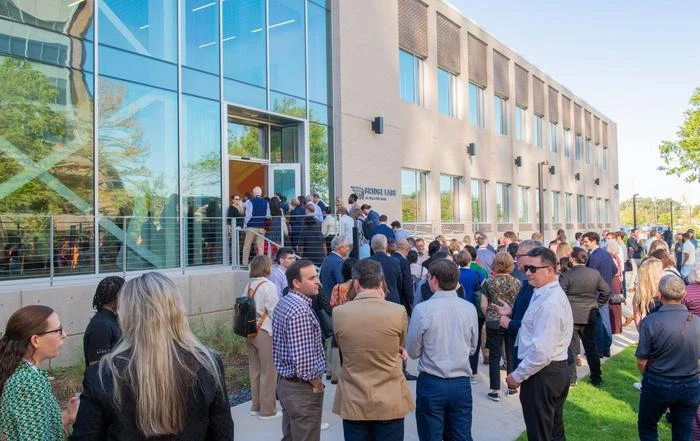
NCTM2 will be located in Bridge Labs, part of the Pegasus Park center that houses other significant biomanufacturing entities in North Texas, including the BioLabs incubator building and the newly launched Advanced Research Projects Agency for Health (ARPA-H) Customer Experience Hub. Bridge Labs is a two-story, 135,000-square-foot facility featuring laboratory and office space designed for both emerging and established biotech companies. NCTM2 will occupy 5,003 square feet of space in the Bridge Labs building.
“UTA’s research activity is strategically focused on improving lives,” said Kate C. Miller, UTA’s vice president for research and innovation. “This partnership with NCTM2 is another way that our talented faculty, staff and students are driving discoveries that provide immediate benefits while advancing long-term initiatives.”
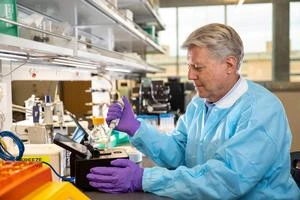
NCTM2 will enhance capabilities and expand geographic reach to serve more students and faculty in North Texas. It will offer state-of-the-art equipment, providing students with hands-on training programs while enabling industry partners to utilize a simulated current Good Manufacturing Practices training facility. Additionally, it will house biomanufacturing equipment to support academia and startups in translating research discoveries into potential commercial products.
“This center will not only serve as a hub for cutting-edge research and workforce development for the biomedical industry in North Texas, but also as a beacon of innovation and collaboration," said Robert H. Bishop, director of TEES and vice chancellor and dean of Texas A&M University’s College of Engineering. "Together, we will cultivate a skilled workforce and drive advancements that address some of the most pressing health challenges of our time. The future of biomanufacturing in North Texas is bright, and we are excited to be at the forefront of this transformative journey."
Projected to open in fall 2025, the center was made possible in part by a gift from Lyda Hill Philanthropies, which recognizes the vital role of workforce development in building a comprehensive biotech industry network.
“The growing bioeconomy is vitally important to the United States,” said Baley Reeves, director of the NTCM. “Ensuring we have domestic production capabilities to provide a robust supply of pharmaceutical products, vaccines, biofuels and other critical specialty chemicals and commodities is of utmost importance to national security and the U.S. economy. There is a need for skilled workers to support this field, and NCTM is poised to continue to serve the nation by providing a trained workforce to support domestic biomanufacturing capabilities.”
About The University of Texas at Arlington (UTA)
Located in the heart of the Dallas-Fort Worth Metroplex, The University of Texas at Arlington is a comprehensive teaching, research, and public service institution dedicated to the advancement of knowledge through scholarship and creative work. With an enrollment of approximately 41,000 students, UT Arlington is the second-largest institution in the UT System. UTA’s combination of outstanding academics and innovative research contributes to its designation as a Carnegie R-1 “Very High Research Activity” institution, a significant milestone of excellence. The University is designated as a Hispanic Serving-Institution and an Asian American Native American Pacific Islander-Serving Institution by the U.S. Department of Education and has earned the Seal of Excelencia for its commitment to accelerating Latino student success. The University ranks in the top five nationally for veterans and their families (Military Times, 2024), is No. 4 in Texas for advancing social mobility (U.S. News & World Report, 2025), and is No. 6 in the United States for its undergraduate ethnic diversity (U.S. News & World Report, 2025). UT Arlington’s approximately 270,000 alumni occupy leadership positions at many of the 21 Fortune 500 companies headquartered in North Texas and contribute to the University’s $28.8 billion annual economic impact on Texas.
END
UTA’s Institute of Biomanufacturing and Precision Medicine (IMPRINT) is partnering with TEES on NCTM2, an extension of the National Center for Therapeutics Manufacturing (NCTM) in College Station. The collaboration will expand UTA’s biomanufacturing capabilities and provide NCTM2 with access to financial support and UTA’s extensive network of industry partners in the North Texas ecosystem.
“At UT Arlington, we have been strategically growing our academic programs to ensure we are providing the talent to support the incredible growth in biomanufacturing in North Texas,” said Jon Weidanz, senior associate vice president of research and innovation at UTA and founding director of IMPRINT. “We know this new partnership with NCTM2 will not only help prepare a talented workforce, but will also allow our researchers to develop, scale and commercialize production of new bioproducts to help solve some of society’s biggest health issues.”
NCTM2 will be located in Bridge Labs, part of the Pegasus Park center that houses other significant biomanufacturing entities in North Texas, including the BioLabs incubator building and the newly launched Advanced Research Projects Agency for Health (ARPA-H) Customer Experience Hub. Bridge Labs is a two-story, 135,000-square-foot facility featuring laboratory and office space designed for both emerging and established biotech companies. NCTM2 will occupy 5,003 square feet of space in the Bridge Labs building.
“UTA’s research activity is strategically focused on improving lives,” said Kate C. Miller, UTA’s vice president for research and innovation. “This partnership with NCTM2 is another way that our talented faculty, staff and students are driving discoveries that provide immediate benefits while advancing long-term initiatives.”
NCTM2 will enhance capabilities and expand geographic reach to serve more students and faculty in North Texas. It will offer state-of-the-art equipment, providing students with hands-on training programs while enabling industry partners to utilize a simulated current Good Manufacturing Practices training facility. Additionally, it will house biomanufacturing equipment to support academia and startups in translating research discoveries into potential commercial products.
“This center will not only serve as a hub for cutting-edge research and workforce development for the biomedical industry in North Texas, but also as a beacon of innovation and collaboration," said Robert H. Bishop, director of TEES and vice chancellor and dean of Texas A&M University’s College of Engineering. "Together, we will cultivate a skilled workforce and drive advancements that address some of the most pressing health challenges of our time. The future of biomanufacturing in North Texas is bright, and we are excited to be at the forefront of this transformative journey."
Projected to open in fall 2025, the center was made possible in part by a gift from Lyda Hill Philanthropies, which recognizes the vital role of workforce development in building a comprehensive biotech industry network.
“The growing bioeconomy is vitally important to the United States,” said Baley Reeves, director of the NTCM. “Ensuring we have domestic production capabilities to provide a robust supply of pharmaceutical products, vaccines, biofuels and other critical specialty chemicals and commodities is of utmost importance to national security and the U.S. economy. There is a need for skilled workers to support this field, and NCTM is poised to continue to serve the nation by providing a trained workforce to support domestic biomanufacturing capabilities.”
About The University of Texas at Arlington (UTA)
Located in the heart of the Dallas-Fort Worth Metroplex, The University of Texas at Arlington is a comprehensive teaching, research, and public service institution dedicated to the advancement of knowledge through scholarship and creative work. With an enrollment of approximately 41,000 students, UT Arlington is the second-largest institution in the UT System. UTA’s combination of outstanding academics and innovative research contributes to its designation as a Carnegie R-1 “Very High Research Activity” institution, a significant milestone of excellence. The University is designated as a Hispanic Serving-Institution and an Asian American Native American Pacific Islander-Serving Institution by the U.S. Department of Education and has earned the Seal of Excelencia for its commitment to accelerating Latino student success. The University ranks in the top five nationally for veterans and their families (Military Times, 2024), is No. 4 in Texas for advancing social mobility (U.S. News & World Report, 2025), and is No. 6 in the United States for its undergraduate ethnic diversity (U.S. News & World Report, 2025). UT Arlington’s approximately 270,000 alumni occupy leadership positions at many of the 21 Fortune 500 companies headquartered in North Texas and contribute to the University’s $28.8 billion annual economic impact on Texas.
END
Attachments