When birds lose the ability to fly, their bodies change faster than their feathers
Published 2025-02-27 · Original archive entry · Explore research explainers
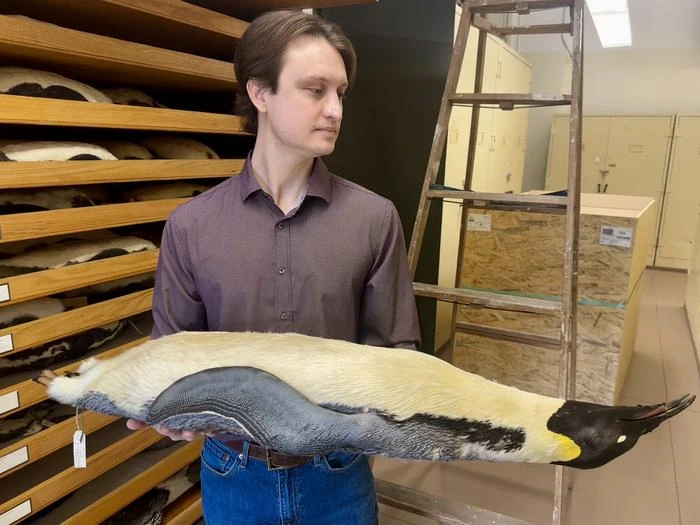
More than 99% of birds can fly. But that still leaves many species that evolved to be flightless, including penguins, ostriches, and kiwi birds. In a new study in the journal Evolution, researchers compared the feathers and bodies of different species of flightless birds and their closest relatives who can still fly. They were able to determine which features change first when birds evolve to be flightless, versus which traits take more time for evolution to alter. These findings help shed light on the evolution of complex traits that lose their original function, and could even help reveal which fossil birds were flightless.
All of the flightless birds alive today evolved from ancestors who could fly and later lost that ability. “Going from something that can't fly to flying is quite the engineering challenge, but going from something that can fly to not flying is rather easy,” says Evan Saitta, a research associate at the Field Museum in Chicago and lead author of the paper.
In general, there are two common reasons why birds evolve flightlessness. When birds land on an island where there aren’t predators (including mammals) that would hunt them or steal their eggs, they sometimes settle there and gradually adapt to living on the ground. Since they don’t experience evolutionary pressure to stay in flying form, they gradually lose some of the features of their skeletons and feathers that help them fly. Meanwhile, some birds’ bodies change when they evolve semi-aquatic lifestyles. Penguins, for instance, can’t fly, but they swim in a way that’s akin to “flying underwater.” Their feathers and skeletons have changed accordingly.
Saitta is a paleontologist who often studies non-avian dinosaurs (the branches of the dinosaur family tree that do not include modern birds). However, when he arrived at the Field Museum for a postdoctoral fellowship, he was struck by the Field’s collections of over half a million birds.
“I suddenly had access to all these modern birds, and it made me wonder, ‘What happens when a bird loses the ability to fly?’” says Saitta. “And because I'm not an ornithologist, I went in and measured as many features of as many different feathers as I could. So it was a highly exploratory study in that sense.”
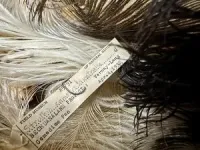
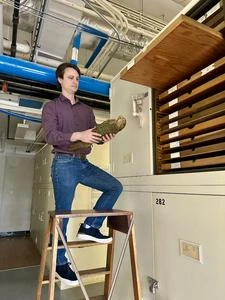
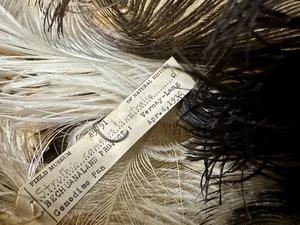
Saitta examined the preserved skins of thirty species of flightless birds and their closest flighted relatives and measured a variety of the birds’ feathers, including the microscopic branching structures that make up feather plumage. He also examined specimens of other, more distantly related species to represent more of the bird family tree.
Previous research has revealed how long ago different species of flightless birds branched off from their flying relatives. The ancestors of ostriches, for example, lost the ability to fly much longer ago than the ancestors of a flightless South American duck called the Fuegian steamer. Saitta found that these species’ feathers are very different. “Ostriches have been flightless for so long that their feathers are no longer optimized for being aerodynamic,” says Saitta. As a result, their feathers have become so long and shaggy that they're sometimes used in feather dusters and boas. But even though Fuegian streamers can no longer fly, they lost this ability relatively recently, and their feathers remain similar to those of their flying cousins.
Saitta says he was surprised by how long it seemed to take flightless birds to lose the feather features that would have helped them fly. It didn’t seem to make sense why a flightless species would “waste” energy growing a bunch of feathers optimized for an activity that it no longer did, or why feathers no longer required for flight wouldn’t be freed up to evolve into a wide variety of forms. However, Saitta says, his postdoctoral advisor, Field Museum research associate and former Field curator Peter Makovicky (now at the University of Minnesota’s Bell Museum), had another perspective.
“Pete pointed out that when trying to understand why a modern bird looks the way it does, you can’t just think about natural selection or relaxation thereof. You have to also consider developmental constraints,” says Saitta. “Feathers are complex structures that have a really well-defined developmental sequence that’s hard to change. And when birds lose flight, those feather features disappear in the opposite order that they first evolved.”
When bird embryos develop feathers, those feathers increase in complexity in the same general order that those feather features first evolved in dinosaurs. After losing the ability to fly, birds lose those feather features in the opposite order that they first evolved. It’s like remodeling a house-- it’s faster and easier to change elements that went in last, like the wallpaper, than it is to tear down a load-bearing wall and rebuild it into something new.
Some more recently-evolved feather adaptations, like the asymmetry in the flight feathers that allows birds to fly, are easier to change, and thus disappear relatively quickly once birds no longer need to fly. But overall, the basic feather structure is like those load-bearing walls. It takes a lot of evolutionary time for the underlying development of a standard feather to be transformed into producing something like a plume-y ostrich feather.
Saitta and his colleagues also found that certain larger features changed relatively quickly once a lineage lost the ability to fly. “The first things to change when birds lose flight, possibly even before the flight feathers become symmetrical, is the proportion of their wings and their tails. We therefore see skeletal changes and also a change in overall body mass,” he says.
The reason behind this, says Saitta, may be the comparative “costs” to grow these features. When animals develop, it takes a lot more energy to grow bones than it does to grow feathers-- so evolution “prioritizes” changing the skeleton before the majority of the feathers.
“Let’s say a bird species lands on an island where they are able to safely live on the ground and don’t need to fly anymore. The first things to go are going to be these big, expensive bones and muscles, but feathers are cheap, so there’s less active selection to change them,” says Saitta. It’s like how if you auto-paid your $1,500 monthly rent on an old apartment that you no longer live in, that would have a bigger effect on your bank account than forgetting to cancel a $5-a-month subscription. For newly flightless birds, maintaining a flight-friendly skeleton is a bigger unnecessary cost than keeping some of their old feathers around unaltered.
Insights from this research could help scientists trying to determine whether a fossil bird, or a feathered dinosaur that isn’t part of the bird family, was able to fly. “Flight didn’t evolve overnight, and flight, or at least gliding, was possibly lost many times in extinct species, just as in surviving bird lineages. Our paper helps show the order in which birds’ bodies reflect those changes,” says Saitta. “Unless you have a fossil whose ancestors, even older fossils, have been flightless for a very long time, you might not see too many changes in their feathers. You might first want to look for changes in body mass, the relative length of the wings. Those change first, and then you can perhaps see changes in the symmetry of the feathers.”
Saitta’s research corroborates previous studies that have shown that a bird’s flight feathers become more symmetric after flight loss. “The good news is that because I came at this question from a different angle, we got results that are very consistent with a lot of the previous research, but I think maybe a little bit broader than if I had approached the question with a more specific focus,” says Saitta.
###
END
All of the flightless birds alive today evolved from ancestors who could fly and later lost that ability. “Going from something that can't fly to flying is quite the engineering challenge, but going from something that can fly to not flying is rather easy,” says Evan Saitta, a research associate at the Field Museum in Chicago and lead author of the paper.
In general, there are two common reasons why birds evolve flightlessness. When birds land on an island where there aren’t predators (including mammals) that would hunt them or steal their eggs, they sometimes settle there and gradually adapt to living on the ground. Since they don’t experience evolutionary pressure to stay in flying form, they gradually lose some of the features of their skeletons and feathers that help them fly. Meanwhile, some birds’ bodies change when they evolve semi-aquatic lifestyles. Penguins, for instance, can’t fly, but they swim in a way that’s akin to “flying underwater.” Their feathers and skeletons have changed accordingly.
Saitta is a paleontologist who often studies non-avian dinosaurs (the branches of the dinosaur family tree that do not include modern birds). However, when he arrived at the Field Museum for a postdoctoral fellowship, he was struck by the Field’s collections of over half a million birds.
“I suddenly had access to all these modern birds, and it made me wonder, ‘What happens when a bird loses the ability to fly?’” says Saitta. “And because I'm not an ornithologist, I went in and measured as many features of as many different feathers as I could. So it was a highly exploratory study in that sense.”
Saitta examined the preserved skins of thirty species of flightless birds and their closest flighted relatives and measured a variety of the birds’ feathers, including the microscopic branching structures that make up feather plumage. He also examined specimens of other, more distantly related species to represent more of the bird family tree.
Previous research has revealed how long ago different species of flightless birds branched off from their flying relatives. The ancestors of ostriches, for example, lost the ability to fly much longer ago than the ancestors of a flightless South American duck called the Fuegian steamer. Saitta found that these species’ feathers are very different. “Ostriches have been flightless for so long that their feathers are no longer optimized for being aerodynamic,” says Saitta. As a result, their feathers have become so long and shaggy that they're sometimes used in feather dusters and boas. But even though Fuegian streamers can no longer fly, they lost this ability relatively recently, and their feathers remain similar to those of their flying cousins.
Saitta says he was surprised by how long it seemed to take flightless birds to lose the feather features that would have helped them fly. It didn’t seem to make sense why a flightless species would “waste” energy growing a bunch of feathers optimized for an activity that it no longer did, or why feathers no longer required for flight wouldn’t be freed up to evolve into a wide variety of forms. However, Saitta says, his postdoctoral advisor, Field Museum research associate and former Field curator Peter Makovicky (now at the University of Minnesota’s Bell Museum), had another perspective.
“Pete pointed out that when trying to understand why a modern bird looks the way it does, you can’t just think about natural selection or relaxation thereof. You have to also consider developmental constraints,” says Saitta. “Feathers are complex structures that have a really well-defined developmental sequence that’s hard to change. And when birds lose flight, those feather features disappear in the opposite order that they first evolved.”
When bird embryos develop feathers, those feathers increase in complexity in the same general order that those feather features first evolved in dinosaurs. After losing the ability to fly, birds lose those feather features in the opposite order that they first evolved. It’s like remodeling a house-- it’s faster and easier to change elements that went in last, like the wallpaper, than it is to tear down a load-bearing wall and rebuild it into something new.
Some more recently-evolved feather adaptations, like the asymmetry in the flight feathers that allows birds to fly, are easier to change, and thus disappear relatively quickly once birds no longer need to fly. But overall, the basic feather structure is like those load-bearing walls. It takes a lot of evolutionary time for the underlying development of a standard feather to be transformed into producing something like a plume-y ostrich feather.
Saitta and his colleagues also found that certain larger features changed relatively quickly once a lineage lost the ability to fly. “The first things to change when birds lose flight, possibly even before the flight feathers become symmetrical, is the proportion of their wings and their tails. We therefore see skeletal changes and also a change in overall body mass,” he says.
The reason behind this, says Saitta, may be the comparative “costs” to grow these features. When animals develop, it takes a lot more energy to grow bones than it does to grow feathers-- so evolution “prioritizes” changing the skeleton before the majority of the feathers.
“Let’s say a bird species lands on an island where they are able to safely live on the ground and don’t need to fly anymore. The first things to go are going to be these big, expensive bones and muscles, but feathers are cheap, so there’s less active selection to change them,” says Saitta. It’s like how if you auto-paid your $1,500 monthly rent on an old apartment that you no longer live in, that would have a bigger effect on your bank account than forgetting to cancel a $5-a-month subscription. For newly flightless birds, maintaining a flight-friendly skeleton is a bigger unnecessary cost than keeping some of their old feathers around unaltered.
Insights from this research could help scientists trying to determine whether a fossil bird, or a feathered dinosaur that isn’t part of the bird family, was able to fly. “Flight didn’t evolve overnight, and flight, or at least gliding, was possibly lost many times in extinct species, just as in surviving bird lineages. Our paper helps show the order in which birds’ bodies reflect those changes,” says Saitta. “Unless you have a fossil whose ancestors, even older fossils, have been flightless for a very long time, you might not see too many changes in their feathers. You might first want to look for changes in body mass, the relative length of the wings. Those change first, and then you can perhaps see changes in the symmetry of the feathers.”
Saitta’s research corroborates previous studies that have shown that a bird’s flight feathers become more symmetric after flight loss. “The good news is that because I came at this question from a different angle, we got results that are very consistent with a lot of the previous research, but I think maybe a little bit broader than if I had approached the question with a more specific focus,” says Saitta.
###
END
Attachments