Equal distribution of wealth is bad for the climate
It's broadly assumed that improving conditions for the world's poor is also good for the climate. New research suggests otherwise.
Published 2025-03-04 · Original archive entry · Explore research explainers
Both the UN and several Nobel laureates have said that political and economic inequality is a driver of high carbon emissions.
The argument is that more democratic societies – where wealth, power and opportunities are more evenly distributed – are better at reducing their emissions.
But that is not true – quite the opposite.
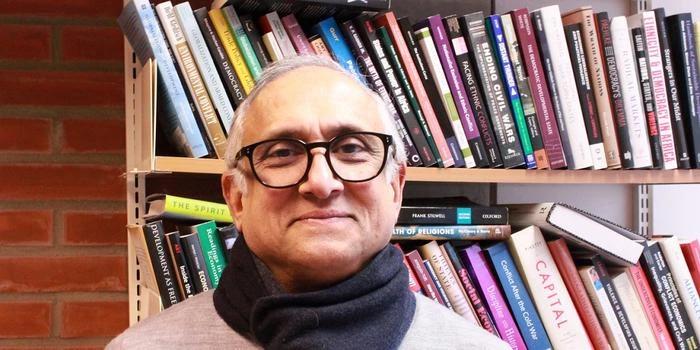
“Some people hold that a rich power elite stands in the way of climate action, and that democracies can more easily implement measures such as banning emissions or raising taxes,” said Professor Indra de Soysa from the Norwegian University of Science and Technology (NTNU's) Department of Sociology and Political Science.
The idea that democracy is good for the climate is often ideologically driven, but this is based on a faulty premise.
Countries with large inequalities pollute less It is actually the case that countries with large economic and political disparities have lower emissions than more democratic countries where wealth and power are more evenly distributed.
In practice, a more equal distribution of wealth essentially means that the poorest must receive more.
“If poor people are given better conditions, total consumption increases. As a result, emissions also increase,” explained de Soysa.
The countries with the greatest inequalities are also better at implementing greener energy technologies – not worse, as other theorists have assumed.
Overall wealth is what counts de Soysa investigated data from approximately 170 countries between 1990 and 2020, where the climate figures were taken from the World Bank. Looking at the results, there is no doubt.
“Climate emissions are lowest in countries with major inequalities in various societal aspects, including economy, opportunities and politics,” he stated.
However, it is not the inequalities themselves that cause this – undemocratic countries often have less money overall, and it is the overall wealth that matters most.
More democracy leads to more wealth and total consumption In less democratic countries, there are often only a few wealthy individuals, who tend to be extremely wealthy and hold almost all the power.
More democratic countries are generally better at generating more overall wealth, even though this wealth is distributed more evenly among a larger portion of the population. Democratic societies therefore have more wealth in total, and that is not particularly good for the climate.
Increased carbon emissions are closely linked to the total consumption of a society.
“Increased per capita income in a country is clearly and unmistakably linked to higher carbon emissions. The more money a society has, the more it contributes to carbon emissions. More money automatically leads to increased consumption.”
The more money we have, the more things we buy. Perhaps we also eat more, or we consume more products that have a greater environmental impact, such as eating more meat instead of plant-based foods.
“Greater freedom leads to greater economic activity, and this increases both consumption and emissions from production. Greater equality in a society exacerbates this, as more people acquire what others have. Just imagine the day when Indians start consuming as much as the Chinese do,” said de Soysa.
A wicked problem So what does all of this mean? Should there only be a few rich and powerful people while the rest of us are held back, unable to afford a new mobile phone, a new Tesla, and a wardrobe full of barely worn clothes? What about a holiday in the sun? Or at least enough to meet our needs? For the sake of the climate?
“Reducing inequality and poverty poses a moral and practical dilemma. Providing a more even distribution of income both within and between countries would worsen the climate problems, at least with today’s technological capabilities,” said de Soysa.
This is what researchers call ‘a wicked problem’. Should the majority really be kept in poverty in order to protect the climate? That doesn’t sound very fair.
de Soysa therefore calls for new solutions and ways of thinking that can ensure a more even distribution and also protect the climate – and new technology is undoubtedly the most comfortable solution.
“Aside from reducing consumption, which can happen as a result of war, pandemics, stock market crashes, and so on, technological changes are the only solution I can see,” said de Soysa.
However, even technological solutions can be extremely slow to develop and implement, and they will create both winners and losers.
Reference: Indra de Soysa, Green with envy? The effects of inequality and equity within and across social groups on greenhouse gas emissions, 1990–2020, World Development, Volume 188, 2025, 106885, ISSN 0305-750X. https://doi.org/10.1016/j.worlddev.2024.106885
END
The argument is that more democratic societies – where wealth, power and opportunities are more evenly distributed – are better at reducing their emissions.
But that is not true – quite the opposite.
“Some people hold that a rich power elite stands in the way of climate action, and that democracies can more easily implement measures such as banning emissions or raising taxes,” said Professor Indra de Soysa from the Norwegian University of Science and Technology (NTNU's) Department of Sociology and Political Science.
The idea that democracy is good for the climate is often ideologically driven, but this is based on a faulty premise.
Countries with large inequalities pollute less It is actually the case that countries with large economic and political disparities have lower emissions than more democratic countries where wealth and power are more evenly distributed.
In practice, a more equal distribution of wealth essentially means that the poorest must receive more.
“If poor people are given better conditions, total consumption increases. As a result, emissions also increase,” explained de Soysa.
The countries with the greatest inequalities are also better at implementing greener energy technologies – not worse, as other theorists have assumed.
Overall wealth is what counts de Soysa investigated data from approximately 170 countries between 1990 and 2020, where the climate figures were taken from the World Bank. Looking at the results, there is no doubt.
“Climate emissions are lowest in countries with major inequalities in various societal aspects, including economy, opportunities and politics,” he stated.
However, it is not the inequalities themselves that cause this – undemocratic countries often have less money overall, and it is the overall wealth that matters most.
More democracy leads to more wealth and total consumption In less democratic countries, there are often only a few wealthy individuals, who tend to be extremely wealthy and hold almost all the power.
More democratic countries are generally better at generating more overall wealth, even though this wealth is distributed more evenly among a larger portion of the population. Democratic societies therefore have more wealth in total, and that is not particularly good for the climate.
Increased carbon emissions are closely linked to the total consumption of a society.
“Increased per capita income in a country is clearly and unmistakably linked to higher carbon emissions. The more money a society has, the more it contributes to carbon emissions. More money automatically leads to increased consumption.”
The more money we have, the more things we buy. Perhaps we also eat more, or we consume more products that have a greater environmental impact, such as eating more meat instead of plant-based foods.
“Greater freedom leads to greater economic activity, and this increases both consumption and emissions from production. Greater equality in a society exacerbates this, as more people acquire what others have. Just imagine the day when Indians start consuming as much as the Chinese do,” said de Soysa.
A wicked problem So what does all of this mean? Should there only be a few rich and powerful people while the rest of us are held back, unable to afford a new mobile phone, a new Tesla, and a wardrobe full of barely worn clothes? What about a holiday in the sun? Or at least enough to meet our needs? For the sake of the climate?
“Reducing inequality and poverty poses a moral and practical dilemma. Providing a more even distribution of income both within and between countries would worsen the climate problems, at least with today’s technological capabilities,” said de Soysa.
This is what researchers call ‘a wicked problem’. Should the majority really be kept in poverty in order to protect the climate? That doesn’t sound very fair.
de Soysa therefore calls for new solutions and ways of thinking that can ensure a more even distribution and also protect the climate – and new technology is undoubtedly the most comfortable solution.
“Aside from reducing consumption, which can happen as a result of war, pandemics, stock market crashes, and so on, technological changes are the only solution I can see,” said de Soysa.
However, even technological solutions can be extremely slow to develop and implement, and they will create both winners and losers.
Reference: Indra de Soysa, Green with envy? The effects of inequality and equity within and across social groups on greenhouse gas emissions, 1990–2020, World Development, Volume 188, 2025, 106885, ISSN 0305-750X. https://doi.org/10.1016/j.worlddev.2024.106885
END