Poo-romising frontier in fecal microbiota transplantation
Published 2025-04-10 · Original archive entry · Explore research explainers
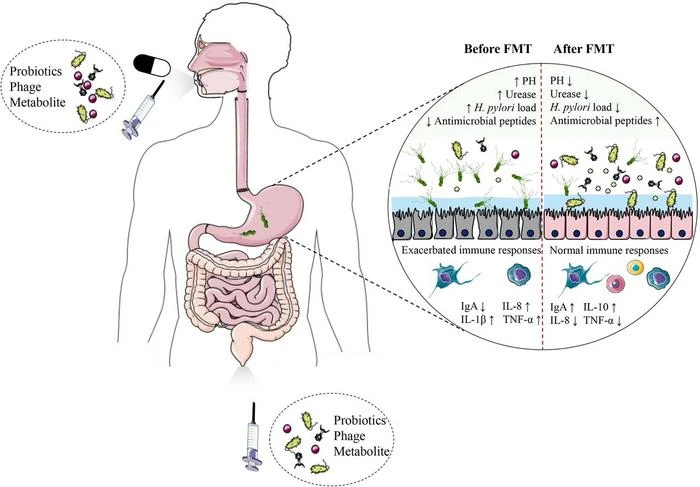
Helicobacter pylori (H. pylori) is a widespread bacterial infection associated with gastritis, peptic ulcers, and gastric cancer. While conventional antibiotic-based treatments have been the gold standard for eradication, their efficacy has been steadily declining due to the alarming rise in antibiotic resistance. This has spurred interest in alternative therapies, one of which is fecal microbiota transplantation (FMT).
FMT is a novel therapeutic approach that involves transferring microbiota from a healthy donor to a patient’s gastrointestinal tract. This process aims to restore microbial balance and has shown promise in treating various gastrointestinal disorders, particularly Clostridioides difficile infections. Recent research suggests that FMT could play a pivotal role in the eradication of H. pylori, either as a monotherapy or an adjunct to conventional treatments.
The study, published in eGastroenterology, provides an in-depth analysis of FMT’s potential mechanisms in H. pylori eradication. One of the primary hypotheses is that the diverse microbial community introduced through FMT may outcompete H. pylori, preventing its colonization. Additionally, beneficial bacteria in the transplanted microbiota produce antimicrobial peptides and metabolic byproducts that create a hostile environment for H. pylori.
Another key finding of the study is that FMT may help mitigate the adverse effects commonly associated with antibiotic treatments for H. pylori. Standard eradication regimens often involve multiple antibiotics combined with proton pump inhibitors, which can lead to gastrointestinal discomfort, taste disturbances, and nausea. FMT’s ability to restore gut microbiota homeostasis could reduce these side effects and enhance patient tolerance to therapy.
Clinical trials have provided preliminary support for FMT’s efficacy in H. pylori treatment. One pilot study reported a 40.6% eradication rate with FMT alone, a figure higher than that observed with probiotic monotherapy. When used as an adjunct to high-dose dual therapy, FMT did not significantly increase eradication rates but was found to improve gastrointestinal symptom scores and reduce the incidence of treatment-related adverse effects. These findings underscore the need for further investigation to refine FMT protocols and maximize its therapeutic potential.
While FMT’s promise in H. pylori treatment is encouraging, several challenges remain. Donor selection is a critical factor influencing treatment success, as variations in microbiota composition can impact FMT efficacy. Optimizing the preparation and delivery of fecal suspensions is also essential, with emerging research suggesting that washed microbiota transplantation (WMT) may enhance safety and effectiveness.
Moreover, the study highlights the need to explore the specific mechanisms through which FMT exerts its effects on H. pylori. Apart from bacteria, other components within the fecal suspension, such as bacteriophages and microbial metabolites, may play a role in disrupting H. pylori colonization. Further research is required to elucidate these interactions and identify the key bioactive factors responsible for FMT’s therapeutic effects.
Another crucial aspect for future research is the identification of patient populations most likely to benefit from FMT. Factors such as age, gut microbiota composition, and pre-existing gastrointestinal conditions may influence treatment outcomes. Additionally, given that H. pylori reinfection rates remain a concern, long-term follow-up studies are necessary to assess FMT’s durability in preventing recurrence.
FMT represents a paradigm shift in the approach to H. pylori eradication, offering a potential solution to the challenges posed by antibiotic resistance. While the field is still in its early stages, the accumulating evidence supports the need for large-scale clinical trials to validate FMT as a viable alternative or adjunct to existing treatments. If proven effective, FMT could revolutionize the management of H. pylori infection and pave the way for microbiota-based therapies in other gastrointestinal disorders.
See the article:
Ye Z-N, Eslick GD, Huang S-G, et al. Faecal microbiota transplantation for eradicating Helicobacter pylori infection: clinical practice and theoretical postulation. eGastroenterology 2024;2:e100099. doi:10.1136/egastro-2024-100099
FMT is a novel therapeutic approach that involves transferring microbiota from a healthy donor to a patient’s gastrointestinal tract. This process aims to restore microbial balance and has shown promise in treating various gastrointestinal disorders, particularly Clostridioides difficile infections. Recent research suggests that FMT could play a pivotal role in the eradication of H. pylori, either as a monotherapy or an adjunct to conventional treatments.
The study, published in eGastroenterology, provides an in-depth analysis of FMT’s potential mechanisms in H. pylori eradication. One of the primary hypotheses is that the diverse microbial community introduced through FMT may outcompete H. pylori, preventing its colonization. Additionally, beneficial bacteria in the transplanted microbiota produce antimicrobial peptides and metabolic byproducts that create a hostile environment for H. pylori.
Another key finding of the study is that FMT may help mitigate the adverse effects commonly associated with antibiotic treatments for H. pylori. Standard eradication regimens often involve multiple antibiotics combined with proton pump inhibitors, which can lead to gastrointestinal discomfort, taste disturbances, and nausea. FMT’s ability to restore gut microbiota homeostasis could reduce these side effects and enhance patient tolerance to therapy.
Clinical trials have provided preliminary support for FMT’s efficacy in H. pylori treatment. One pilot study reported a 40.6% eradication rate with FMT alone, a figure higher than that observed with probiotic monotherapy. When used as an adjunct to high-dose dual therapy, FMT did not significantly increase eradication rates but was found to improve gastrointestinal symptom scores and reduce the incidence of treatment-related adverse effects. These findings underscore the need for further investigation to refine FMT protocols and maximize its therapeutic potential.
While FMT’s promise in H. pylori treatment is encouraging, several challenges remain. Donor selection is a critical factor influencing treatment success, as variations in microbiota composition can impact FMT efficacy. Optimizing the preparation and delivery of fecal suspensions is also essential, with emerging research suggesting that washed microbiota transplantation (WMT) may enhance safety and effectiveness.
Moreover, the study highlights the need to explore the specific mechanisms through which FMT exerts its effects on H. pylori. Apart from bacteria, other components within the fecal suspension, such as bacteriophages and microbial metabolites, may play a role in disrupting H. pylori colonization. Further research is required to elucidate these interactions and identify the key bioactive factors responsible for FMT’s therapeutic effects.
Another crucial aspect for future research is the identification of patient populations most likely to benefit from FMT. Factors such as age, gut microbiota composition, and pre-existing gastrointestinal conditions may influence treatment outcomes. Additionally, given that H. pylori reinfection rates remain a concern, long-term follow-up studies are necessary to assess FMT’s durability in preventing recurrence.
FMT represents a paradigm shift in the approach to H. pylori eradication, offering a potential solution to the challenges posed by antibiotic resistance. While the field is still in its early stages, the accumulating evidence supports the need for large-scale clinical trials to validate FMT as a viable alternative or adjunct to existing treatments. If proven effective, FMT could revolutionize the management of H. pylori infection and pave the way for microbiota-based therapies in other gastrointestinal disorders.
See the article:
Ye Z-N, Eslick GD, Huang S-G, et al. Faecal microbiota transplantation for eradicating Helicobacter pylori infection: clinical practice and theoretical postulation. eGastroenterology 2024;2:e100099. doi:10.1136/egastro-2024-100099
About eGastroenterology
eGastroenterology is a new, open-access, and open peer-reviewed BMJ Journal, which focuses on basic, clinical, translational, and evidence-based medicine research in all areas of gastroenterology (including hepatology, pancreatology, esophagology, and gastrointestinal surgery). eGastroenterology is now indexed by PubMed, Scopus, CAS, DOAJ, Dimensions, OpenAlex, ROAD, and COPE, with more to come!
For more information, please visit: egastroenterology.bmj.com and follow us on Twitter (@eGastro_BMJ).
Sign-up to Email Alerts for eGastroenterology: https://emails.bmj.com/k/Bmj/jausu/egastroenterology
END