PRESS-NEWS.org - Press Release Distribution
PRESS RELEASES DISTRIBUTION

Ozone reduces fungal spoilage of fruits and vegetables

Ozone reduces fungal spoilage of fruits and vegetables
2011-04-11
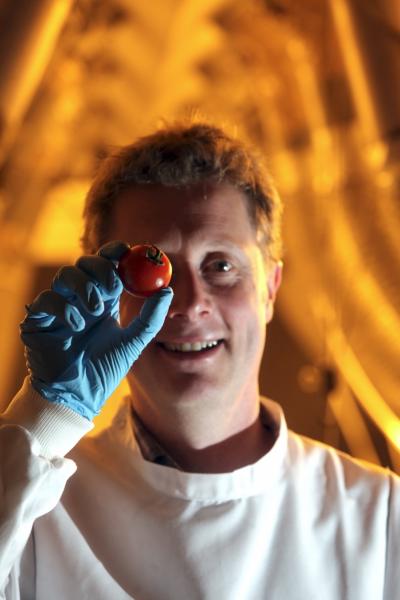
(Press-News.org) Storing fruits and vegetables in ozone-enriched environments reduces spoilage explains a scientist at the Society for General Microbiology's Spring Conference in Harrogate. Dr Ian Singleton explains how ozone treatment could be a safe, effective replacement for pesticides as it leaves no residue on foods.

It is estimated that up to 30% of fresh produce can be lost due to microbial spoilage. Dr Singleton from Newcastle University explains that low levels of gaseous ozone are able to prevent fungal spoilage in a wide range of stored fresh produce, including strawberries, tomatoes, grapes and plums. His work has shown that enriching the storage environment with ozone causes a substantial decline in fungal spore production as well as a reduction in visible lesions on fruits that are already infected. Fruit stored at low levels of ozone for up to 8 days prevented almost 95% of disease from developing, depending on the fruit and levels of fungal infection.

Fungal contamination is the most common cause of spoilage of stored fruit, salads and vegetables and the risk of microbial contamination increases with longer storage periods. From the 1950s onwards, heat treatment was replaced with cheap and effective synthetic fungicides, often used in combination with pre-pack sanitation treatment containing chlorine or bromine.

Dr Singleton explains why alternative methods to reduce fungal spoilage are needed. "There are public concerns over pesticide residues on fresh produce. Ozone is a viable alternative to pesticides as it is safe to use and effective against a wide spectrum of micro-organisms. Importantly, it leaves no detectable residues in contrast to traditional methods of preserving fresh produce."

Interestingly, Dr Singleton's team found that exposing tomatoes to ozone before infecting them with fungus also reduced spoilage. "This suggests that ozone treatment exerts a 'memory' or 'vaccination' effect that protects fruit from damage. It is unclear how this phenomenon works, but is certainly worthy of further, detailed investigation," suggested Dr Singleton.

Careful work is also needed to optimize levels of ozone and length of exposure for each variety of produce. "Different fruits have been shown to have different tolerances for ozone. We need to look carefully at how we control the atmospheric concentration of the gas in stores and transit containers, since levels of ozone that are too high can damage produce, causing financial losses"


INFORMATION:


[Attachments] See images for this press release:
Ozone reduces fungal spoilage of fruits and vegetables

ELSE PRESS RELEASES FROM THIS DATE:

Mapping the brain: New technique poised to untangle the complexity of the brain

2011-04-11
Scientists have moved a step closer to being able to develop a computer model of the brain after developing a technique to map both the connections and functions of nerve cells in the brain together for the first time. A new area of research is emerging in the neuroscience known as 'connectomics'. With parallels to genomics, which maps the our genetic make-up, connectomics aims to map the brain's connections (known as 'synapses'). By mapping these connections – and hence how information flows through the circuits of the brain – scientists hope to understand how perceptions, ...

Blueberries may inhibit development of fat cells

2011-04-11
The benefits of blueberry consumption have been demonstrated in several nutrition studies, more specifically the cardio-protective benefits derived from their high polyphenol content. Blueberries have shown potential to have a positive effect on everything from aging to metabolic syndrome. Recently, a researcher from Texas Woman's University (TWU) in Denton, TX, examined whether blueberries could play a role in reducing one of the world's greatest health challenges: obesity. Shiwani Moghe, MS, a graduate student at TWU, decided to evaluate whether blueberry polyphenols ...

Green tea and tai chi enhance bone health and reduce inflammation in postmenopausal women

2011-04-11
C.S. Lewis, the famous author and Oxford academic, once proclaimed "You can't get a cup of tea big enough or a book long enough to suit me." We sip it with toast in the morning, enjoy it with sweets and biscuits in the afternoon, and relax with it at the end of the day. Tea has for generations been an integral infusion worldwide, carrying both epicurean and economic significance. But, does it impart honest-to-goodness health benefits? In other words, is its persistence in the human diet perhaps coincident with enhanced quality (or quantity) of life? Dr. Chwan-Li (Leslie) ...

The health halo effect: Don't judge a food by its organic label

2011-04-11
Jenny Wan-chen Lee, a graduate student in Cornell University's Dyson School of Applied Economics and Management, has been fascinated with a phenomenon known as "the halo effect" for some time. Psychologists have long recognized that how we perceive a particular trait of a person can be influenced by how we perceive other traits of the same individual. In other words, the fact that a person has a positive attribute can radiate a "halo", resulting in the perception that other characteristics associated with that person are also positive. An example of this would be judging ...

Accelerated lab evolution of biomolecules could yield new generation of medicines

2011-04-11
CAMBRIDGE, Mass. -- Scientists at Harvard University have harnessed the prowess of fast-replicating bacterial viruses, also known as phages, to accelerate the evolution of biomolecules in the laboratory. The work, reported this week in the journal Nature, could ultimately allow the tailoring of custom pharmaceuticals and research tools from lab-grown proteins, nucleic acids, and other such compounds. The researchers, led by Professor David R. Liu, say their approach -- dubbed phage-assisted continuous evolution, or PACE -- is roughly 100 times faster than conventional ...

Drinking during pregnancy increases risk of premature birth

2011-04-11
Drinking alcohol during pregnancy is associated with an increased risk of miscarriage, premature birth, and low birth weight. But there are conflicting reports about how much alcohol, if any, it is safe for a pregnant woman to drink. New research published in Biomed Central's open access journal BMC Pregnancy and Childbirth looked at the amounts of alcohol women drank during their early pregnancy and showed the effect this had on their babies. Researchers in Dublin questioned more than 60,000 pregnant women during their hospital booking interview, which usually occurred ...

Sensitivity and Words - Robert Lauri Announces His New Album "Power In Heaven"

Sensitivity and Words - Robert Lauri Announces His New Album Power In Heaven
2011-04-11
Robert Lauri, an eclectic international musician, controls a wide variety of musical genres and the extent of his musical creativity truly characterizes him as an artist. He knows how to build a melody into a unique musical work of art, a true canvas of harmonies and color variations that, upon hearing, will remain etched in the listener's memory. He always operates with the same mastery in terms of harmonies and musical arrangements. He is a melodic visionary, a unique creator within his genre in all musical styles that he offers his listeners. He literally puts ...

Scripps Research scientists uncover new DNA role in modifying gene function

2011-04-11
JUPITER, FL, April 10, 2010 – For years, scientists have thought of DNA as a passive blueprint capable only of producing specific proteins through RNA transcription. Now, research led by scientists from the Florida campus of The Scripps Research Institute has shown DNA can also act to fine-tune the activity of certain proteins known as nuclear receptors. These new findings may make it possible to design therapies that could activate specific genes in a highly targeted manner in a number of important diseases including osteoporosis, obesity, autoimmune disease, and cancer. ...

New genetic study helps to solve Darwin's mystery about the ancient evolution of flowering plants

New genetic study helps to solve Darwins mystery about the ancient evolution of flowering plants
2011-04-11
The evolution and diversification of the more than 300,000 living species of flowering plants may have been "jump started" much earlier than previously calculated, a new study indicates. According to Claude dePamphilis, a professor of biology at Penn State University and the lead author of the study, which includes scientists at six universities, two major upheavals in the plant genome occurred hundreds of millions of years ago -- nearly 200 million years earlier than the events that other research groups had described. The research also indicates that these upheavals produced ...

Experimental drug achieves unprecedented weight loss

2011-04-11
DURHAM, N.C.— An investigational combination of drugs already approved to treat obesity, migraine and epilepsy produced up to a 10 percent weight loss in obese individuals participating in a one-year clinical trial, according to researchers at Duke University Medical Center. Appearing online in The Lancet today, the study found that treatment with the controlled-release combination therapy consisting of phentermine and topiramate also achieved significant reductions in blood pressure and hemoglobin A1C. Study participants also experienced improvements in cholesterol, ...

LAST 30 PRESS RELEASES:

Eye for trouble: Automated counting for chromosome issues under the microscope

The vast majority of US rivers lack any protections from human activities, new research finds

Ultrasound-responsive in situ antigen "nanocatchers" open a new paradigm for personalized tumor immunotherapy

Environmental “superbugs” in our rivers and soils: new one health review warns of growing antimicrobial resistance crisis

Triple threat in greenhouse farming: how heavy metals, microplastics, and antibiotic resistance genes unite to challenge sustainable food production

Earthworms turn manure into a powerful tool against antibiotic resistance

AI turns water into an early warning network for hidden biological pollutants

Hidden hotspots on “green” plastics: biodegradable and conventional plastics shape very different antibiotic resistance risks in river microbiomes

Engineered biochar enzyme system clears toxic phenolic acids and restores pepper seed germination in continuous cropping soils

Retail therapy fail? Online shopping linked to stress, says study

How well-meaning allies can increase stress for marginalized people

Commercially viable biomanufacturing: designer yeast turns sugar into lucrative chemical 3-HP

Control valve discovered in gut’s plumbing system

George Mason University leads phase 2 clinical trial for pill to help maintain weight loss after GLP-1s

Hop to it: research from Shedd Aquarium tracks conch movement to set new conservation guidance

Weight loss drugs and bariatric surgery improve the body’s fat ‘balance:’ study

The Age of Fishes began with mass death

TB harnesses part of immune defense system to cause infection

Important new source of oxidation in the atmosphere found

A tug-of-war explains a decades-old question about how bacteria swim

Strengthened immune defense against cancer

Engineering the development of the pancreas

The Journal of Nuclear Medicine ahead-of-print tip sheet: Jan. 9, 2026

Mount Sinai researchers help create largest immune cell atlas of bone marrow in multiple myeloma patients

Why it is so hard to get started on an unpleasant task: Scientists identify a “motivation brake”

Body composition changes after bariatric surgery or treatment with GLP-1 receptor agonists

Targeted regulation of abortion providers laws and pregnancies conceived through fertility treatment

Press registration is now open for the 2026 ACMG Annual Clinical Genetics Meeting

Understanding sex-based differences and the role of bone morphogenetic protein signaling in Alzheimer’s disease

Breakthrough in thin-film electrolytes pushes solid oxide fuel cells forward

[Press-News.org] Ozone reduces fungal spoilage of fruits and vegetables