PRESS-NEWS.org - Press Release Distribution
PRESS RELEASES DISTRIBUTION

Drug helps purge hidden HIV virus, study shows

Drug helps purge hidden HIV virus, study shows
2012-03-12
(Press-News.org) CHAPEL HILL, N.C. -- A team of researchers at the University of North Carolina at Chapel Hill have successfully flushed latent HIV infection from hiding, with a drug used to treat certain types of lymphoma.

Tackling latent HIV in the immune system is critical to finding a cure for AIDS.

The results were presented today at the 19th Conference on Retroviruses and Opportunistic Infections in Seattle, Washington.

While current antiretroviral therapies can very effectively control virus levels, they can never fully eliminate the virus from the cells and tissues it has infected.

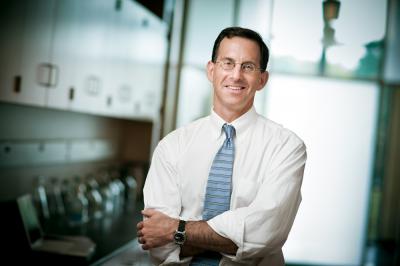
"Lifelong use of antiretroviral therapy is problematic for many reasons, not least among them are drug resistance, side effects, and cost," said David Margolis, MD, professor of medicine, microbiology and immunology, and epidemiology at the University of North Carolina at Chapel Hill. "We need to employ better long-term strategies, including a cure."

Margolis' new study is the first to demonstrate that the biological mechanism that keeps the HIV virus hidden and unreachable by current antiviral therapies can be targeted and interrupted in humans, providing new hope for a strategy to eradicate HIV completely.

In a clinical trial, six HIV-infected men who were medically stable on anti-AIDS drugs, received vorinostat, an oncology drug. Recent studies by Margolis and others have shown that vorinostat also attacks the enzymes that keep HIV hiding in certain CD4+ T cells, specialized immune system cells that the virus uses to replicate. Within hours of receiving the vorinostat, all six patients had a significant increase in HIV RNA in these cells, evidence that the virus was being forced out of its hiding place.

"This proves for the first time that there are ways to specifically treat viral latency, the first step towards curing HIV infection," said Margolis, who led the study. "It shows that this class of drugs, HDAC inhibitors, can attack persistent virus. Vorinostat may not be the magic bullet, but this success shows us a new way to test drugs to target latency, and suggests that we can build a path that may lead to a cure."

INFORMATION:

The research conducted is part of a UNC-led consortium, the Collaboratory of AIDS Researchers for Eradication (CARE), funded by the National Institute of Allergy and Infectious Diseases. The consortium is administered by the North Carolina Translational and Clinical Sciences (NC TraCS) Institute at UNC, one of 60 medical research institutions in the US working to improve biomedical research through the NIH Clinical and Translational Science Awards (CTSA) program.

Other UNC authors on the paper include Nanci Archin, PhD, Shailesh Choudary, PhD, Joann Kuruc, MSN, and Joseph Eron, MD of the medical school; Angela Kashuba, PharmD of the Eshelman School of Pharmacy; and Michael Hudgens, PhD, of the Gillings School of Global Public Health.

Funding for this research was provided by the National Institutes of Health, Merck & Co., and the James B. Pendleton Charitable Trust.

[Attachments] See images for this press release:
Drug helps purge hidden HIV virus, study shows

ELSE PRESS RELEASES FROM THIS DATE:

New discovery shines light on the 3 faces of neutrinos

New discovery shines light on the 3 faces of neutrinos
2012-03-12
A new discovery provides a crucial key to understanding how neutrinos – ghostly particles with multiple personalities – change identity and may help shed light on why matter exists in the universe. In an announcement today (Thursday, March 8), members of the large international Daya Bay collaboration reported the last of three measurements that describe how the three types, or flavors, of neutrinos blend with one another, providing an explanation for their spooky morphing from one flavor to another, a phenomenon called neutrino oscillation. The measurement makes possible ...

First findings released from Swaziland HIV incidence measurement survey announced at CROI 2012

2012-03-12
Seattle, Washington - The first findings from a nationally representative HIV survey were presented today at the 19th Conference on Retroviruses and Opportunistic Infections (CROI 2012) in Seattle, WA. The Swaziland HIV Incidence Measurement Survey (SHIMS) found that overall HIV prevalence, or percentage of the population living with HIV infection, is 31% among adults ages 18-49. This figure matches the 2006 Demographic Health Survey findings for the same age group, indicating that the HIV epidemic in Swaziland has stabilized over the past five years. "The country continues ...

Scientists discover effects of PD-1 blockade on ART therapy in SIV-infected monkeys

2012-03-12
Scientists have discovered that blocking PD-1 (programmed death-1), an immune molecule that inhibits the immune response to viral infections, can have a significant effect on HIV-like illness in nonhuman primates. In earlier research, the scientists showed that PD-1 blockade could restore T and B cell function against SIV. Now they have new findings about the effects of PD-1 blockade along with antiretroviral therapy (ART). Vijayakumar Velu, PhD, a scientist at Yerkes National Primate Research Center and the Emory Vaccine Center presented the information at the 19th ...

Discovery of hair-cell roots suggests the brain modulates sound sensitivity

2012-03-12
The hair cells of the inner ear have a previously unknown "root" extension that may allow them to communicate with nerve cells and the brain to regulate sensitivity to sound vibrations and head position, researchers at the University of Illinois at Chicago College of Medicine have discovered. Their finding is reported online in advance of print in the Proceedings of the National Academy of Sciences. The hair-like structures, called stereocilia, are fairly rigid and are interlinked at their tops by structures called tip-links. When you move your head, or when a sound ...

B.R. Garrison Software Group is Pleased to Announce Their New Internet Testing System. 12 to 18 Page Reports Will Allow You to Know the Applicants Better Than Their Own Friends!

2012-03-12
Now clients may have applicants take 4 different tests available online and receive a report within 10 minutes 24/7. The web tests may be placed on the clients site or a simple link may be placed to B.R. Garrisons generic testing site. The new Internet system combines B. R. Garrisons 26 years in the testing business with new technology. The website tests include: Personality Profile in English, Spanish and French and Italian Sales Aptitude in English and Spanish IQ test in English and Spanish Math & verbal test Great for consultants, small business and ...

Researchers show influence of nanoparticles on nutrient absorption

Researchers show influence of nanoparticles on nutrient absorption
2012-03-12
BINGHAMTON, NY – Nanoparticles are everywhere. From cosmetics and clothes, to soda and snacks. But as versatile as they are, nanoparticles also have a downside, say researchers at Binghamton University and Cornell University in a recent paper published in the journal Nature Nanotechnology. These tiny particles, even in low doses, could have a big impact on our long-term health. According to lead author of the article, Gretchen Mahler, assistant professor of bioengineering at Binghamton University, much of the existing research on the safety of nanoparticles has been on ...

OAI: Abuse of NY Auto Insurance System Highlighted by New Initiative

2012-03-12
A recent announcement from New York Gov. Andrew Cuomo saying that new capabilities would be granted to the state Department of Financial Services to help penalize medical care providers who abuse the state's no-fault system highlights the problems New York and other no-fault states have had keeping suspect claims out of those systems, according to OnlineAutoInsurance.com. No-fault or personal injury protection (PIP) coverage was originally designed to be an affordable car insurance policy that got its cost savings from keeping car accident victims out of the court room. ...

Genetic manipulation boosts growth of brain cells linked to learning, enhances antidepressants

Genetic manipulation boosts growth of brain cells linked to learning, enhances antidepressants
2012-03-12
DALLAS -- UT Southwestern Medical Center investigators have identified a genetic manipulation that increases the development of neurons in the brain during aging and enhances the effect of antidepressant drugs. The research finds that deleting the Nf1 gene in mice results in long-lasting improvements in neurogenesis, which in turn makes those in the test group more sensitive to the effects of antidepressants. "The significant implication of this work is that enhancing neurogenesis sensitizes mice to antidepressants – meaning they needed lower doses of the drugs to affect ...

JDRF-funded study shows roles of beta cells and the immune system in Type 1 diabetes

2012-03-12
New York, March 8, 2012 — A new JDRF-funded study shows that many of the genes known to play a role in type 1 diabetes (T1D) are expressed in pancreatic beta cells, suggesting that the cell responsible for producing insulin may be playing a part in its own destruction to lead to T1D. Published in the March issue of PLoS Genetics, researchers in Belgium suggest this interpretation after producing an extensive catalogue of more than 15,000 genes expressed in human islets, forming the most extensive characterization of human islets reported to date. The researchers, ...

Effects of flooding on Cairo, Ill.

Effects of flooding on Cairo, Ill.
2012-03-12
URBANA – When faced with a choice between a deluge or a controlled deluge in May 2011 that would protect the city of Cairo, Illinois, the U.S. Army Corps of Engineers chose the latter by ordering an intentional breach of the Mississippi River levee at Bird's Point, but was it the right decision? "The decision was a difficult and complex engineering problem with significant social and political trade-offs between loss of human lives and loss of properties in urban and rural areas," said University of Illinois researcher Ken Olson. "But it was a calculated risk built on ...

LAST 30 PRESS RELEASES:

Making lighter work of calculating fluid and heat flow

Normalizing blood sugar can halve heart attack risk

Lowering blood sugar cuts heart attack risk in people with prediabetes

Study links genetic variants to risk of blinding eye disease in premature infants

Non-opioid ‘pain sponge’ therapy halts cartilage degeneration and relieves chronic pain

AI can pick up cultural values by mimicking how kids learn

China’s ecological redlines offer fast track to 30 x 30 global conservation goal

Invisible indoor threats: emerging household contaminants and their growing risks to human health

Adding antibody treatment to chemo boosts outcomes for children with rare cancer

Germline pathogenic variants among women without a history of breast cancer

Tanning beds triple melanoma risk, potentially causing broad DNA damage

Unique bond identified as key to viral infection speed

Indoor tanning makes youthful skin much older on a genetic level

Mouse model sheds new light on the causes and potential solutions to human GI problems linked to muscular dystrophy

The Journal of Nuclear Medicine ahead-of-print tip sheet: December 12, 2025

Smarter tools for peering into the microscopic world

Applications open for funding to conduct research in the Kinsey Institute archives

Global measure underestimates the severity of food insecurity

Child survivors of critical illness are missing out on timely follow up care

Risk-based vs annual breast cancer screening / the WISDOM randomized clinical trial

University of Toronto launches Electric Vehicle Innovation Ontario to accelerate advanced EV technologies and build Canada’s innovation advantage

Early relapse predicts poor outcomes in aggressive blood cancer

American College of Lifestyle Medicine applauds two CMS models aligned with lifestyle medicine practice and reimbursement

Clinical trial finds cannabis use not a barrier to quitting nicotine vaping

Supplemental nutrition assistance program policies and food insecurity

Switching immune cells to “night mode” could limit damage after a heart attack, study suggests

URI-based Global RIghts Project report spotlights continued troubling trends in worldwide inhumane treatment

Neutrophils are less aggressive at night, explaining why nighttime heart attacks cause less damage than daytime events

Menopausal hormone therapy may not pose breast cancer risk for women with BRCA mutations

Mobile health tool may improve quality of life for adolescent and young adult breast cancer survivors

[Press-News.org] Drug helps purge hidden HIV virus, study shows