PRESS-NEWS.org - Press Release Distribution
PRESS RELEASES DISTRIBUTION

Immune cell death safeguards against autoimmune disease

Immune cell death safeguards against autoimmune disease
2012-09-06
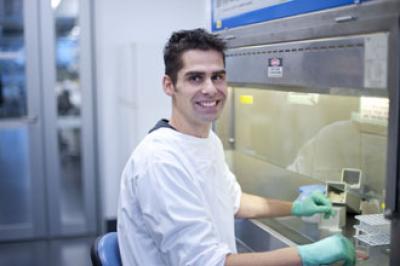
(Press-News.org) Researchers at the Walter and Eliza Hall Institute have discovered that a pair of molecules work together to kill so-called 'self-reactive' immune cells that are programmed to attack the body's own organs. The finding is helping to explain how autoimmune diseases develop.

Dr Daniel Gray and colleagues from the institute's Molecular Genetics of Cancer division and the University of Ballarat discovered that the absence of two related proteins, called Puma and Bim, led to self-reactive immune cells accumulating and attacking many different body organs, causing illness. The research is published online today in the journal Immunity.

Autoimmune diseases, such as type 1 diabetes, rheumatoid arthritis, inflammatory bowel disease and multiple sclerosis, develop when immune cells launch an attack on the body's own cells, destroying important body organs or structures. Around one in 20 Australians is affected by autoimmune conditions, most of which are chronic illnesses with no cure.

Puma and Bim are so-called 'BH3-only' proteins that make cells die by a process called apoptosis. Defects in apoptosis proteins have been linked to many human diseases, including cancer and neurodegenerative disorders.

Dr Gray said one way the body protects against autoimmune disease is by forcing most self-reactive immune cells to die during their development. "If any self-reactive cells manage to reach maturity, the body normally has a second safeguard of switching these potentially dangerous cells into an inactive state, preventing them from causing autoimmune disease," he said.

"Until now, there has been debate about how important the death of self-reactive cells is as a protection against autoimmune diseases. Our research has identified two molecules that are needed for this process. We were able to use this discovery to show that the death of self-reactive immune cells is indeed an important protection against autoimmune disease development."

Dr Gray is now collaborating with researchers who have identified human gene defects linked to the development of autoimmune conditions. "We now know that self-reactive cell death is an important protection against autoimmunity," Dr Gray said. "The next stage of our work is to discover whether defects in the cell death process cooperate with other factors to cause human autoimmune disease."


INFORMATION:

The research was funded by the National Health and Medical Research Council, the Juvenile Diabetes Foundation, the US Leukemia and Lymphoma Society, the US National Cancer Institute and the Victorian Government.


[Attachments] See images for this press release:
Immune cell death safeguards against autoimmune disease

ELSE PRESS RELEASES FROM THIS DATE:

A family portrait of galaxies

A family portrait of galaxies
2012-09-06
6 September 2012: Two very different galaxies feature in this family portrait taken by the NASA/ESA Hubble Space Telescope, together forming a peculiar galaxy pair called Arp 116. The image shows the dramatic differences in size, structure and colour between spiral and elliptical galaxies. Arp 116 is composed of a giant elliptical galaxy known as Messier 60, and a much smaller spiral galaxy, NGC 4647. Being a typical elliptical galaxy, Messier 60 on its own may not be very exciting to look at, but together with its adjacent spiral friend, the pair becomes a rather interesting ...

Novel therapeutic targets identified for small cell lung cancer

2012-09-06
PHILADELPHIA — Newly discovered molecular differences between small cell lung cancer and nonsmall cell lung cancer have revealed PARP1 and EZH2 as potential therapeutic targets for patients with small cell lung cancer, according to the results of a study published in Cancer Discovery, a journal of the American Association for Cancer Research. Currently, small cell lung cancer accounts for about 15 percent of lung cancer diagnoses in the United States. Patients with the disease will initially respond to chemotherapy, but almost all will have disease recurrence within a ...

Master gene affects neurons that govern breathing at birth and in adulthood

2012-09-06
HOUSTON - (Sept. 7, 2012) – When mice are born lacking the master gene Atoh1, none breathe well and all die in the newborn period. Why and how this occurs could provide new answers about sudden infant death syndrome (SIDS), but the solution has remained elusive until now. Research led by Baylor College of Medicine and the Jan and Dan Duncan Neurological Research Institute at Texas Children's Hospital demonstrates that when the gene is lacking in a special population of neurons called RTN (retrotrapezoid nucleus), roughly half the young mice die at birth. Those who survive ...

Scientists create germ cell-supporting embryonic Sertoli-like cells from skin cells

2012-09-06
CAMBRIDGE, Mass. (September 6, 2012) – Using a stepwise trans-differentiation process, Whitehead Institute researchers have turned skin cells into embryonic Sertoli-like cells. The main role of mature Sertoli cells is to provide support and nutrition to the developing sperm cells. Furthermore, Sertoli cells have been demonstrated to possess trophic properties, which have been utilized for the protection of non-testicular cellular grafts in transplantations. However, mature Sertoli cells are mitotically inactive, and the primary immature Sertoli cells during prolonged ...

Wild bees: Champions for food security and protecting our biodiversity

Wild bees: Champions for food security and protecting our biodiversity
2012-09-06
Pollinating insects contribute to agricultural production in 150 (84%) European crops. These crops depend partly or entirely upon insects for their pollination and yield. The value of insect pollinators is estimated to be €22 billion a year in Europe. Declines in managed pollinators, such as honeybees, and wild pollinator such bumblebees, solitary bees and hoverflies, are therefore of growing concern as we need to protect food production and the maintain wildflower diversity. Scientists involved in STEP, a large-scale project funded by the 7th Framework Program (FP7) ...

Study: Married lung cancer patients survive longer than single patients after treatment

2012-09-06
CHICAGO – Sept. 6, 2012. Married patients with locally advanced lung cancer are likely to survive longer after treatment than patients who are single, according to a study by researchers at the University of Maryland Marlene and Stewart Greenebaum Cancer Center in Baltimore. The results of the retrospective study are being presented at the 2012 Chicago Multidisciplinary Symposium in Thoracic Oncology. The University of Maryland researchers studied 168 patients with Stage III non-small cell lung cancer, the most common type of lung cancer, who were treated with chemotherapy ...

New research: Soluble corn fiber plays important role in gut health and calcium absorption

2012-09-06
Chicago – (Sept. 6, 2012) – Savvy consumers and health professionals know that fibre is an essential nutrient associated with important health benefits, yet barriers such as overall poor tolerance to higher-fibre diets may be why average intake is far less than experts recommend (1). Two new research studies supported by Tate & Lyle, the global provider of specialty food ingredients and solutions, provide further evidence that certain higher-fibre diets can in fact be well-tolerated, and that fibre may play an important role in supporting a healthy gut as well as promoting ...

Breast cancer screening saves lives, new study shows

2012-09-06
The study, published today in Cancer Epidemiology, Biomarkers and Prevention is the largest of its kind in Australia and one of the largest in the world. It followed about 4,000 women in a study of the BreastScreen program in Western Australia. University of Melbourne Research Fellow Dr Carolyn Nickson and colleagues from the Melbourne School of Population Health said the findings reaffirmed the importance and efficacy of mammography. The study focused on women aged 50-69 years, who are in the target age range for screening. It included 427 cases where women had died ...

Chikyu sets a new world drilling-depth record of scientific ocean drilling

Chikyu sets a new world drilling-depth record of scientific ocean drilling
2012-09-06
Off Hachinohe, Japan—Scientific deep sea drilling vessel Chikyu sets a world new record by drilling down and obtains rock samples from deeper than 2,111 meters below the seafloor off Shimokita Peninsula of Japan in the northwest Pacific Ocean. The Japan Agency for Marine-Earth Science and Technology (JAMSTEC), the implementing organization for scientific expedition aboard the Chikyu, announced this achievement on 6th September, 2012. Chikyu made this achievement during the Deep Coalbed Biosphere expedition, Expedition 337, conducted within the framework of an international ...

Almost 1 in 5 young children with cancer suffers from a trauma disorder

2012-09-06
People who suffer from posttraumatic stress disorder relive their traumatic experiences in the form of flashbacks and nightmares – and in childhood, also in traumatic plays during which they re-enact the experience over and over again. They avoid stimuli that remind them of the trauma or suffer from vegetative hyperarousal such as insomnia, hypervigilance or concentration problems. For the first time, researchers from the University of Zurich and the University Children's Hospital Zurich now show that infants and toddlers can also develop posttraumatic stress disorder in ...

LAST 30 PRESS RELEASES:

Heart-brain connection: international study reveals the role of the vagus nerve in keeping the heart young

Researchers identify Rb1 as a predictive biomarker for a new therapeutic strategy in some breast cancers

Survey reveals ethical gaps slowing AI adoption in pediatric surgery

Stimulant ADHD medications work differently than thought

AI overestimates how smart people are, according to HSE economists

HSE researchers create genome-wide map of quadruplexes

Scientists boost cell "powerhouses" to burn more calories 

Automatic label checking: The missing step in making reliable medical AI

Low daily alcohol intake linked to 50% heightened mouth cancer risk in India

American Meteorological Society announces Rick Spinrad as 2026 President-Elect

Biomass-based carbon capture spotlighted in newly released global climate webinar recording

Illuminating invisible nano pollutants: advanced bioimaging tracks the full journey of emerging nanoscale contaminants in living systems

How does age affect recovery from spinal cord injury?

Novel AI tool offers prognosis for patients with head and neck cancer

Fathers’ microplastic exposure tied to their children’s metabolic problems

Research validates laboratory model for studying high-grade serous ovarian cancer

SIR 2026 delivers transformative breakthroughs in minimally invasive medicine to improve patient care

Stem Cell Reports most downloaded papers of 2025 highlight the breadth and impact of stem cell research

Oxford-led study estimates NHS spends around 3% of its primary and secondary care budget on the health impacts of heat and cold in England

A researcher’s long quest leads to a smart composite breakthrough

Urban wild bees act as “microbial sensors” of city health.

New study finds where you live affects recovery after a hip fracture

Forecasting the impact of fully automated vehicle adoption on US road traffic injuries

Alcohol-related hospitalizations from 2016 to 2022

Semaglutide and hospitalizations in patients with obesity and established cardiovascular disease

Researchers ‘listen in’ to embryo-mother interactions during implantation using a culture system replicating the womb lining

How changing your diet could help save the world

How to make AI truly scalable and reliable for real-time traffic assignment?

Beyond fragmented markets: A new framework for efficient and stable ride-pooling

Can shape priors make road perception more reliable for autonomous driving?

[Press-News.org] Immune cell death safeguards against autoimmune disease