Education program developed for preventing antisocial behavior in 3-year-old children
Published 2010-10-08 · Original archive entry · Explore research explainers
University of Granada researchers have developed a pioneer intervention program aimed at 3 year-old children, that helps in preventing antisocial behavior in adulthood. In its first year of implementation, the program –named Aprender a convivir– achieved that 90% of participating children interacted more actively with their peers, and that 86% reduced symptoms such as anxiety/depression, somatization, poor emotional reactivity, shyness, and social isolation.
To carry out this study –funded by the Spanish Ministry of Education and Science–, the researchers took a sample of 131 children aged 3. The control group consisted of 53 subjects, and the experimental group was composed of 78. The later was trained with the program Aprender a convivir for 3 months and they were evaluated before and after the intervention.
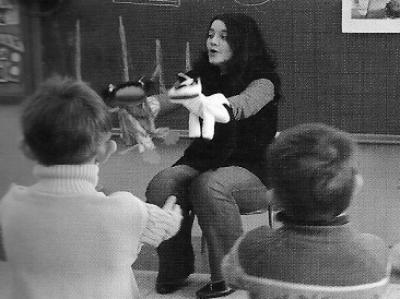
The program was divided into four blocks with a duration of 3 weeks respectively. Two 1.5 hour-sessions were held per week. In the first half of the session, three puppets explained to the children the contents of the session. Then, different activities were developed in small groups.
More Independent Children
The results obtained revealed that the children having participated in the program Aprender a convivir were more independent, complied with established rules, shared their things, respected others' feelings, expressed their own, helped their peers and teachers, paid attention, apologized, thanked others and showed less aggressive/violent behavior, than those who had not participated in the program.
This research was conducted by María Fernández Cabezas, Department of Evolutionary and Education Psychology, University of Granada, and coordinated by professors Fernando Justicia Justicia, Carmen Pichardo Martínez and Trinidad García Berbén. However, it is a 5-year project aimed at studying the effects of training on social competences from early childhood for reducing behavior disorders.
Potential Improvement in Academic Performance
After their participation in the program Aprender a convivir, the percentage of children scoring high in Social Competence increased from 7.8% to 47.8%. As regards behavior disorders, the program reduced the percentage of children with this problem from 27.8% to 11.9%. In addition, 60% of participants experienced an improvement in their attention-deficit and hyperactivity, which will have a positive impact on their academic and learning performance.
After completion of this research, the authors of this study concluded that it is necessary that social and emotional education is provided in primary school in a systematic and rigorous way, and that the results obtained are assessed. "Therefore, it would be positive that this program was implemented in the future by primary teachers, and that the results obtained were extended to other environments such as families" –María Fernández Cabezas says.
INFORMATION:
References: Benítez, J.L., Fernández, M., Justicia, F. Fernández de Haro, E. y Justicia, A. (en prensa). Results of the Aprender a Convivir Program for development of social competence and prevention of antisocial behavior in 4-year-old children. School Psychology International, nº13. Justicia, F., Benítez, J.L., Pichardo, M.C., Fernández, E., García, T. y Fernández, M. (2006). Aproximación a un modelo explicativo del comportamiento antisocial. Revista electrónica de Investigación Psicoeducativa, nº 9,vol 4 (2). Justicia Justicia, F., Benítez Muñoz, J.L., Fernández Cabezas, M., Fernández de Haro, E. y Pichardo Martínez, M.C. (2008). Aprender a convivir: programa de prevención do comportamento antisocial na educación infantil. Cadernos de psicoloxía, nº 32, 37- 47. ISSN: 0213-5973.
Contact: María Fernández Cabezas. Department of Evolutionary and Education Psychology, University of Granada. Telephone: +34 958 249 037. E-mail: mariafc@ugr.es
Accessible on English version
Accesible en Versión española
Accessible sur le site Version française
To carry out this study –funded by the Spanish Ministry of Education and Science–, the researchers took a sample of 131 children aged 3. The control group consisted of 53 subjects, and the experimental group was composed of 78. The later was trained with the program Aprender a convivir for 3 months and they were evaluated before and after the intervention.
The program was divided into four blocks with a duration of 3 weeks respectively. Two 1.5 hour-sessions were held per week. In the first half of the session, three puppets explained to the children the contents of the session. Then, different activities were developed in small groups.
More Independent Children
The results obtained revealed that the children having participated in the program Aprender a convivir were more independent, complied with established rules, shared their things, respected others' feelings, expressed their own, helped their peers and teachers, paid attention, apologized, thanked others and showed less aggressive/violent behavior, than those who had not participated in the program.
This research was conducted by María Fernández Cabezas, Department of Evolutionary and Education Psychology, University of Granada, and coordinated by professors Fernando Justicia Justicia, Carmen Pichardo Martínez and Trinidad García Berbén. However, it is a 5-year project aimed at studying the effects of training on social competences from early childhood for reducing behavior disorders.
Potential Improvement in Academic Performance
After their participation in the program Aprender a convivir, the percentage of children scoring high in Social Competence increased from 7.8% to 47.8%. As regards behavior disorders, the program reduced the percentage of children with this problem from 27.8% to 11.9%. In addition, 60% of participants experienced an improvement in their attention-deficit and hyperactivity, which will have a positive impact on their academic and learning performance.
After completion of this research, the authors of this study concluded that it is necessary that social and emotional education is provided in primary school in a systematic and rigorous way, and that the results obtained are assessed. "Therefore, it would be positive that this program was implemented in the future by primary teachers, and that the results obtained were extended to other environments such as families" –María Fernández Cabezas says.
INFORMATION:
References: Benítez, J.L., Fernández, M., Justicia, F. Fernández de Haro, E. y Justicia, A. (en prensa). Results of the Aprender a Convivir Program for development of social competence and prevention of antisocial behavior in 4-year-old children. School Psychology International, nº13. Justicia, F., Benítez, J.L., Pichardo, M.C., Fernández, E., García, T. y Fernández, M. (2006). Aproximación a un modelo explicativo del comportamiento antisocial. Revista electrónica de Investigación Psicoeducativa, nº 9,vol 4 (2). Justicia Justicia, F., Benítez Muñoz, J.L., Fernández Cabezas, M., Fernández de Haro, E. y Pichardo Martínez, M.C. (2008). Aprender a convivir: programa de prevención do comportamento antisocial na educación infantil. Cadernos de psicoloxía, nº 32, 37- 47. ISSN: 0213-5973.
Contact: María Fernández Cabezas. Department of Evolutionary and Education Psychology, University of Granada. Telephone: +34 958 249 037. E-mail: mariafc@ugr.es
Accessible on English version
Accesible en Versión española
Accessible sur le site Version française