PRESS-NEWS.org - Press Release Distribution
PRESS RELEASES DISTRIBUTION

Using less gas and oil to get where you're going

Using less gas and oil to get where you're going
2012-10-05
(Press-News.org) An engine without oil will not survive for very long. Pistons need plenty of lubricant in order to be able to move within the cylindrical sleeves in the engine block. Two things are known to raise the resultant level of friction. The first is attributed to distortion of the cylindrical bore hole when the cylinder head is attached, which is known as static distortion. The second occurs when the engine is running and temperatures warp the bore hole. The extent of this thermal distortion depends on prevailing engine temperatures and the specific engine model. In reality, the piston does not follow a perfectly smooth up and down motion, but instead touches at points within the bore hole. This results in the engine requiring a great deal more oil as well as more gas. Automakers are already able to compensate static distortion. During the final machining stage, honing, technicians mount a honing liner to the engine which simulates the cylinder head that will later be mounted. Only then the work on the bore hole is completed. Thermal distortion, on the other hand, presents difficulties since it has not been possible to compensate for this effect until now.

Saving two to three percent of fuel

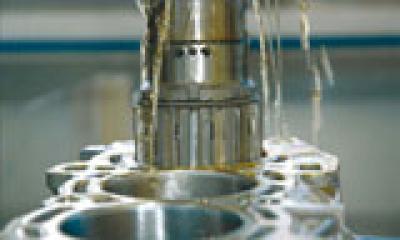
This problem has now been solved by researchers at the Fraunhofer Institute for Machine Tools and Forming Technology IWU in collaboration with a car manufacturer and a machine tool producer. "Our technology makes it possible to compensate for both static and thermal distortion. This can lead to a fuel saving of two to three percent in combustion engines, and remove one step in their production," says IWU head of department André Bucht. This clever technology is based on a tool that can adapt its own shape. Researchers start by working out how an engine block is likely to become distorted: they determine the level of static distortion by unscrewing the cylinder head and measuring the extent to which the bore hole has been warped. They then simulate thermal distortion that occurs in each engine series, using an operating temperature of 90 degrees Celsius as their reference. The honing tool adjusts its shape based on these calculations, thereby altering the profile of the bore hole so that motions of the piston are perfectly smooth later on when the engine is running, preventing excessive friction. Researchers have integrated small Piezo actuators into the tool which alter its shape and expand the diameter as required. "This is how we can incorporate any 'imperfections' in the otherwise perfectly round shape of the finished bore hole," says Bucht.

A prototype of the tool already exists. The researchers have put it to use to prove that they can achieve the surface accuracy required without slowing down production – there being no more than 20 to 30 seconds for the assembly of each engine. Research is currently being performed on the test rig in collaboration with auto manufacturers. This is where an engine produced using the tool is put through its paces. Researchers are examining to what extent piston friction and fuel consumption are reduced, and how the lifespan of the engine might be affected in comparison with engines manufactured using conventional tools . The tests are scheduled to be completed by the end of the year. Researchers then plan to design the tool and the production process so that they can be adopted by manufacturers.


INFORMATION:


[Attachments] See images for this press release:
Using less gas and oil to get where you're going

ELSE PRESS RELEASES FROM THIS DATE:

Origin of ultra-fast manipulation of domain walls discovered

2012-10-05
An international team of researchers has found at the free electron laser FLASH a surprising effect that leads in ferromagnetic materials to a spatially varying magnetization manipulation on an ultrafast timescale. This effect could be the key to further miniaturization and performance increase of magnetic data storage devices. From Mainz, the group of Professor Dr. Mathias Kläui from the Institute of Physics at Johannes Gutenberg University Mainz and in particular Felix Büttner, a member of the Graduate School of Excellence "Materials Science in Mainz", were involved. ...

Testing can be useful for students and teachers

2012-10-05
Pop quiz! Tests are good for: (a) Assessing what you've learned; (b) Learning new information; (c) a & b; (d) None of the above. The correct answer? According to research from psychological science, it's both (a) and (b) – while testing can be useful as an assessment tool, the actual process of taking a test can also help us to learn and retain new information over the long term and apply it across different contexts. New research published in journals of the Association for Psychological Science explores the nuanced interactions between testing, memory, and learning ...

Weather-making high-pressure systems predicted to intensify

2012-10-05
DURHAM, N.C. -- High-pressure systems over oceans, which largely determine the tracks of tropical cyclones and hydrological extremes in much of the northern hemisphere, are likely to intensify this century, according to a Duke University-led study. The study, published online this week in Nature Geoscience, suggests that as summertime near-surface high-pressure systems over the northern Pacific and Atlantic oceans strengthen, they could play an increasingly important role in shaping regional climate, particularly the occurrence of drought and extreme summer rainfall ...

Get with the computer program

2012-10-05
Montreal, October 5, 2012 – From email to Twitter, blogs to word processors, computer programs provide countless communications opportunities. While social applications have dominated the development of the participatory web for users and programmers alike, this era of Web 2.0 is applicable to more than just networking opportunities: it impacts education. The integration of increasingly sophisticated information and communication tools (ICTs) is sweeping university classrooms. Understanding how learners and instructors perceive the effectiveness of these tools in the ...

There's no place like home -- For dialysis

2012-10-05
Highlights Home hemodialysis could allow patients to enjoy increased freedom, quality of life, greater ability to travel, and tangible health improvements. Increased physician and patient education can eliminate barriers to home hemodialysis and increase its use. Approximately 2 million patients in the world receive some sort of dialysis treatment. Washington, DC (October 4, 2012) — Most patients with chronic kidney disease who undergo hemodialysis put up with a grueling treatment regimen that involves going into a clinic several days a week and sitting through a ...

Dating encounters between modern humans and Neandertals

2012-10-05
To discover why Neandertals are most closely related to people outside Africa, Harvard and Max Planck Institute scientists have estimated the date when Neandertals and modern Europeans last shared ancestors. The research, published in the journal PLOS Genetics, provides a historical context for the interbreeding. It suggests that it occurred when modern humans carrying Upper Paleolithic technologies encountered Neandertals as they expanded out of Africa. When the Neandertal genome was sequenced in 2010 it revealed that people outside Africa share slightly more genetic ...

BPA's real threat may be after it has metabolized

BPAs real threat may be after it has metabolized
2012-10-05
Bisphenol A or BPA is a synthetic chemical widely used in the making of plastic products ranging from bottles and food can linings to toys and water supply lines. When these plastics degrade, BPA is released into the environment and routinely ingested. New research, however, from the University of California, San Diego School of Medicine suggests it is the metabolic changes that take place once BPA is broken down inside the body that pose the greater health threat. More than 90 percent of all Americans are believed to carry varying levels of BPA exposure. In recent ...

Insects shape the genetic landscape through plant defenses

2012-10-05
As restaurant patrons' diverse food preferences give rise to varied menu offerings, so plant-eating insects' preferences play an important role in maintaining and shaping the genetic variation of their host plants in a geographic area, reports an international team of researchers that includes a plant scientist at the University of California, Davis. The new study, involving aphids and the broccoli-like research plant Arabidopsis thaliana, provides the first measureable evidence that this selective process is driven, in part, by the pressure that multiple natural enemies ...

14 new biomarkers identified for type 2 diabetes

14 new biomarkers identified for type 2 diabetes
2012-10-05
Potsdam-Rehbruecke/Berlin – A research team led by Anna Floegel of the German Institute of Human Nutrition (DIfE) and Tobias Pischon of the Max Delbrueck Center for Molecular Medicine (MDC) has identified 14 novel biomarkers for type 2 diabetes. They can serve as basis for developing new methods of treatment and prevention of this metabolic disease. The biomarkers can also be used to determine diabetes risk at a very early point in time. At the same time the markers enable insight into the complex mechanisms of this disease, which still have not been completely elucidated. ...

Asteroid fragments could hint at the origin of the solar system

Asteroid fragments could hint at the origin of the solar system
2012-10-05
The tiny pieces of rock – at 50-100 micrometers smaller than a human hair – have been captured from asteroid Itokawa by the Japanese mission Hayabusa. They were carefully unpacked by experts at the University's School of Earth, Atmospheric and Environmental Sciences. It is the first time samples from an asteroid have been returned to Earth. Only about 70 samples have been released for international analysis – seven of these are being studied at the University. The Hayabusa mission is part of a continuing effort to understand how asteroids, which are leftovers from ...

LAST 30 PRESS RELEASES:

Making lighter work of calculating fluid and heat flow

Normalizing blood sugar can halve heart attack risk

Lowering blood sugar cuts heart attack risk in people with prediabetes

Study links genetic variants to risk of blinding eye disease in premature infants

Non-opioid ‘pain sponge’ therapy halts cartilage degeneration and relieves chronic pain

AI can pick up cultural values by mimicking how kids learn

China’s ecological redlines offer fast track to 30 x 30 global conservation goal

Invisible indoor threats: emerging household contaminants and their growing risks to human health

Adding antibody treatment to chemo boosts outcomes for children with rare cancer

Germline pathogenic variants among women without a history of breast cancer

Tanning beds triple melanoma risk, potentially causing broad DNA damage

Unique bond identified as key to viral infection speed

Indoor tanning makes youthful skin much older on a genetic level

Mouse model sheds new light on the causes and potential solutions to human GI problems linked to muscular dystrophy

The Journal of Nuclear Medicine ahead-of-print tip sheet: December 12, 2025

Smarter tools for peering into the microscopic world

Applications open for funding to conduct research in the Kinsey Institute archives

Global measure underestimates the severity of food insecurity

Child survivors of critical illness are missing out on timely follow up care

Risk-based vs annual breast cancer screening / the WISDOM randomized clinical trial

University of Toronto launches Electric Vehicle Innovation Ontario to accelerate advanced EV technologies and build Canada’s innovation advantage

Early relapse predicts poor outcomes in aggressive blood cancer

American College of Lifestyle Medicine applauds two CMS models aligned with lifestyle medicine practice and reimbursement

Clinical trial finds cannabis use not a barrier to quitting nicotine vaping

Supplemental nutrition assistance program policies and food insecurity

Switching immune cells to “night mode” could limit damage after a heart attack, study suggests

URI-based Global RIghts Project report spotlights continued troubling trends in worldwide inhumane treatment

Neutrophils are less aggressive at night, explaining why nighttime heart attacks cause less damage than daytime events

Menopausal hormone therapy may not pose breast cancer risk for women with BRCA mutations

Mobile health tool may improve quality of life for adolescent and young adult breast cancer survivors

[Press-News.org] Using less gas and oil to get where you're going