PRESS-NEWS.org - Press Release Distribution
PRESS RELEASES DISTRIBUTION

Why the leopard got its spots

Why the leopard got its spots
2010-10-20
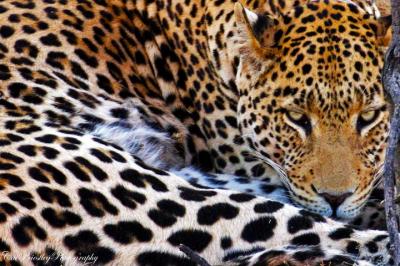
(Press-News.org) Why do leopards have rosette shaped markings but tigers have stripes? Rudyard Kipling suggested that it was because the leopard moved to an environment "full of trees and bushes and stripy, speckly, patchy-blatchy shadows" but is there any truth in this just-so story?

Researchers at the University of Bristol investigated the flank markings of 35 species of wild cats to understand what drives the evolution of such beautiful and intriguing variation. They captured detailed differences in the visual appearance of the cats by linking them to a mathematical model of pattern development.

They found that cats living in dense habitats, in the trees, and active at low light levels, are the most likely to be patterned, especially with particularly irregular or complex patterns. This suggests that detailed aspects of patterning evolve for camouflage. Analysis of the evolutionary history of the patterns shows they can evolve and disappear relatively quickly.

The research also explains why, for example, black leopards are common but black cheetahs unknown. Unlike cheetahs, leopards live in a wide range of habitats and have varied behavioural patterns. Having several environmental niches that different individuals of the species can exploit allows atypical colours and patterns to become stable within a population.

Although a clear link between environment and patterning was established, the study also highlighted some anomalies. For example, cheetahs have evolved or retained spotted patterns despite a strong preference for open habitats, while a number of cats, such as the bay cat and the flat-headed cat, have plain coats despite a preference for closed environments. Why this should be remains unclear.

The study also highlighted just how few species of cats have vertical stripes. Of the 35 species examined, only tigers always had vertically elongated patterns and these patterns were not associated with a grassland habitat, as might be expected. However, tigers seem to be very well camouflaged so this raises the question why vertical stripes are not more common in cats and other mammals.

Will Allen of Bristol's School of Experimental Psychology, who led the research, said: "The method we have developed offers insights into cat patterning at many levels of explanation and we are now applying it to other groups of animals."


INFORMATION:

The research is published today in Proceedings of the Royal Society B.

[Attachments] See images for this press release:
Why the leopard got its spots

ELSE PRESS RELEASES FROM THIS DATE:

New nano techniques integrate electron gas-producing oxides with silicon

2010-10-20
MADISON – In cold weather, many children can't resist breathing onto a window and writing in the condensation. Now imagine the window as an electronic device platform, the condensation as a special conductive gas, and the letters as lines of nanowires. A team led by University of Wisconsin-Madison Materials Science and Engineering Professor Chang-Beom Eom has demonstrated methods to harness essentially this concept for broad applications in nanoelectronic devices, such as next-generation memory or tiny transistors. The discoveries were published Oct. 19 by the journal ...

Prostate cancer patients are at increased risk of precancerous colon polyps

2010-10-20
BUFFALO, NY -- Men with prostate cancer should be especially diligent about having routine screening colonoscopies, results of a new study by gastroenterologists at the University at Buffalo indicate. Their findings show that persons diagnosed with prostate cancer had significantly more abnormal colon polyps, known as adenomas, and advanced adenomas than men without prostate cancer. Results of the research were presented Oct. 19 at a 10:30 a.m. session at the American College of Gastroenterology meeting being held Oct. 15-20 in San Antonio, Texas. While most adenomas ...

Study rejects benefits of fish oil capsules in pregnancy

2010-10-20
A University of Adelaide study has found no evidence that taking fish oil capsules during pregnancy can help reduce the risk of post-natal depression, contrary to international recommendations. In an article published today in the Journal of the American Medical Association, Professor Maria Makrides says a study of 2400 pregnant women in five Australian maternity hospitals between 2005 and 2009 supports this finding. Professor Maria Makrides, who is Professor of Human Nutrition at the University of Adelaide and Deputy Director of the Women's and Children's Health Research ...

Early pregnancy in spring linked to child's susceptibility to food allergies

2010-10-20
A child's likelihood of developing food allergies can be traced back to the season during which s/he completes their first three months of life in the womb, suggests research published online in the Journal of Epidemiology and Community Health. The Finnish researchers base their findings on just under 6000 children, all of whom were born between 2001 and 2006 and lived in one area of Finland. Out of the total, just under 1000 were tested for sensitisation to food allergens between the ages of 0 and 4 years, with the likelihood of a positive test result rising sharply ...

Low testosterone linked to heightened risk of early death

2010-10-20
Low testosterone levels seem to be linked to a heightened risk of premature death from heart disease and all causes, suggests research published online in Heart. The finding refutes received wisdom that the hormone is a risk factor for cardiovascular disease. The researchers base their findings on 930 men, all of whom had coronary artery heart disease, and had been referred to a specialist heart centre between 2000 and 2002. Their heart health was then tracked for around 7 years. On referral, low testosterone was relatively common. One in four of the men was classified ...

SHIP protein identified as a B-cell tumor suppressor

SHIP protein identified as a B-cell tumor suppressor
2010-10-20
LA JOLLA, Calif., October 18, 2010 – Lymphoma is a cancer of the immune system. White blood cells divide again and again, spreading abnormally throughout the body. Lymphomas can arise from two types of white blood cells, T cells or B cells, which divide uncontrollably when the molecular mechanisms that keep them in check go awry. A new study led by Robert Rickert, Ph.D., professor and director of the Inflammatory Diseases Program at Sanford-Burnham Medical Research Institute (Sanford-Burnham), explores the roles of two enzymes, called SHIP and PTEN, in B cell growth and ...

Professional sports persons should drink more water

Professional sports persons should drink more water
2010-10-20
Top sports persons must always perform to their maximum capacity, making them the most vulnerable to the effects of dehydration. Now, a new study conducted by researchers from the Universidad de Castilla la Mancha (UCLM) reveals that 91% of professional basketball, volleyball, handball and football players are dehydrated when they begin their training sessions. "Dehydration negatively affects sporting performance, even when the level of dehydration is low (such as a 2% loss of body weight through perspiration)", UCLM researcher and author of the article Ricardo Mora-Rodríguez ...

More than 200 new snails of the same genus described in a single study

More than 200 new snails of the same genus described in a single study
2010-10-20
Two world experts in micro molluscs, Anselmo Peñas and Emilio Rolán, have made an unprecedented description in a scientific publication of a combined total of 209 snail species. Commissioned by the National Museum of Natural History in Paris, the study was unveiled in September in the French capital, and it covers the most new species from a single genus of any study to date. "Never have so many species from a single genus, nor even from a single family, been described in one single study", Anselmo Peñas, lead author of the collaborative monograph between the National ...

Study reveals how sex hormones influence right heart function

2010-10-20
In the largest human study to date on the topic, researchers have uncovered evidence of the possible influence of human sex hormones on the structure and function of the right ventricle (RV) of the heart. The researchers found that in women receiving hormone therapy, higher estrogen levels were associated with higher RV ejection fraction and lower RV end-systolic volume — both measures of the RV's blood-pumping efficiency — but not in women who were not on hormone therapy, nor in men. Conversely, higher testosterone levels were associated with greater RV mass and larger ...

Air pollution exposure increases risk of severe COPD

2010-10-20
Long term exposure to low-level air pollution may increase the risk of severe chronic obstructive pulmonary disease (COPD), according to researcher s in Denmark. While acute exposure of several days to high level air pollution was known to be a risk factor for exacerbation in pre-existing COPD, until now there had been no studies linking long-term air pollution exposure to the development or progression of the disease. The research was published online ahead of the print edition of the American Thoracic Society's American Journal of Respiratory and Critical Care Medicine. "Our ...

LAST 30 PRESS RELEASES:

Making lighter work of calculating fluid and heat flow

Normalizing blood sugar can halve heart attack risk

Lowering blood sugar cuts heart attack risk in people with prediabetes

Study links genetic variants to risk of blinding eye disease in premature infants

Non-opioid ‘pain sponge’ therapy halts cartilage degeneration and relieves chronic pain

AI can pick up cultural values by mimicking how kids learn

China’s ecological redlines offer fast track to 30 x 30 global conservation goal

Invisible indoor threats: emerging household contaminants and their growing risks to human health

Adding antibody treatment to chemo boosts outcomes for children with rare cancer

Germline pathogenic variants among women without a history of breast cancer

Tanning beds triple melanoma risk, potentially causing broad DNA damage

Unique bond identified as key to viral infection speed

Indoor tanning makes youthful skin much older on a genetic level

Mouse model sheds new light on the causes and potential solutions to human GI problems linked to muscular dystrophy

The Journal of Nuclear Medicine ahead-of-print tip sheet: December 12, 2025

Smarter tools for peering into the microscopic world

Applications open for funding to conduct research in the Kinsey Institute archives

Global measure underestimates the severity of food insecurity

Child survivors of critical illness are missing out on timely follow up care

Risk-based vs annual breast cancer screening / the WISDOM randomized clinical trial

University of Toronto launches Electric Vehicle Innovation Ontario to accelerate advanced EV technologies and build Canada’s innovation advantage

Early relapse predicts poor outcomes in aggressive blood cancer

American College of Lifestyle Medicine applauds two CMS models aligned with lifestyle medicine practice and reimbursement

Clinical trial finds cannabis use not a barrier to quitting nicotine vaping

Supplemental nutrition assistance program policies and food insecurity

Switching immune cells to “night mode” could limit damage after a heart attack, study suggests

URI-based Global RIghts Project report spotlights continued troubling trends in worldwide inhumane treatment

Neutrophils are less aggressive at night, explaining why nighttime heart attacks cause less damage than daytime events

Menopausal hormone therapy may not pose breast cancer risk for women with BRCA mutations

Mobile health tool may improve quality of life for adolescent and young adult breast cancer survivors

[Press-News.org] Why the leopard got its spots