Medicine Technology 🌱 Environment Space Energy Physics Engineering Social Science Earth Science Science
Science 2015-07-16

No bones about it: Cannabis may be used to treat fractures

Cannabis -- marijuana, hashish -- was used as a go-to medical remedy by societies around the world for centuries. But the therapeutic use of marijuana was banned in most countries in the 1930s and '40s due to a growing awareness of the dangers of addiction. The significant medical benefits of marijuana in alleviating symptoms of such diseases as Parkinson's, cancer, and multiple sclerosis have only recently been reinvestigated. A new study published in the Journal of Bone and Mineral Research by Tel Aviv University and Hebrew University researchers explores another promising ...
Read more →
Medicine 2015-07-16

Sitting time not associated with poorer diets in US adults

Previously identified associations between TV viewing and a less healthful diet may stem from exposure to advertisements of high calorie foods and 'distracted eating' rather than the activity of sitting itself, although sitting time remains an independent risk factor requiring public health focus. These findings are according to a new study by American Cancer Society investigators conducted in collaboration with the Gretchen Swanson Center for Nutrition and the University of Texas School of Public Health. For their study, published in Preventive Medicine, researchers examined ...
Read more →
Environment 2015-07-16

Sun's activity controls Greenland temperatures

The following press release and accompanying images can be found at: http://news.agu.org/press-release/suns-activity-controls-greenland-temperatures/ Sun's activity controls Greenland temperatures AGU Contact: Leigh Cooper +1 (202) 777-7324 lcooper@agu.org WASHINGTON, D.C. - The sun's activity could be affecting a key ocean circulation mechanism that plays an important role in regulating Greenland's climate, according to a new study. The phenomenon could be partially responsible for cool temperatures the island experienced in the late 20th century and potentially ...
Read more →
Medicine 2015-07-16

Unprecedented gigapixel multicolor microscope: Powerful new tool to advance drug research

WASHINGTON -- A new multispectral microscope, one capable of processing nearly 17 billion pixels representing 13 individual color channels in a single image, has been successfully demonstrated by a team of researchers from the United States and Australia. This is the largest such microscopic image ever created. This level of multicolor detail is essential for studying the impact of experimental drugs on biological samples and is an important advancement over traditional microscope designs, which have fallen short when it comes to imaging large, spectrally diverse samples. ...
Read more →
Medicine 2015-07-16

Midlife high blood pressure may negatively impact the brain years later

(Boston)--Having high blood pressure in your 50's may impact your ability to keep track or plan ahead in your 80's. This study reports a connection between high blood pressure at a younger age can affect cognition many years later. It currently appears in the Journal of Alzheimer's Disease. Life expectancy is on the rise and people the age of 80 are the fastest growing demographic in the world. Several studies have demonstrated that high cardiovascular risk at midlife, particularly hypertension, is linked to subsequent increased risk of dementia. However, there is ...
Read more →
Feathered cousin of 'Jurassic Park' star unearthed in China
Space 2015-07-16

Feathered cousin of 'Jurassic Park' star unearthed in China

A newly identified species of feathered dinosaur is the largest ever discovered to have a well-preserved set of bird-like wings, research suggests. Palaeontologists working in China unearthed the fossil remains of the winged dinosaur - a close cousin of Velociraptor, which was made famous by the Jurassic Park films. Researchers say its wings - which are very short compared with other dinosaurs in the same family - consisted of multiple layers of large feathers. They found that the species' feathers were complex structures made up of fine branches stemming from a central ...
Read more →
Medicine 2015-07-16

International team revealed the mystery of major depressive disorder

July 16, 2015, Shenzhen, China--The CONVERGE Consortium identifies two robust genetic variants for major depressive disorder (MDD). The findings, published online today in Nature, help enhance our understandings of the genetic basis of MDD. The CONVERGE Consortium is comprised of international research organizations, including BGI, University of Oxford, Virginia Commonwealth University, Chinese Academy of Medical Sciences and Peking Union Medical College, etc. Major depressive disorder, one of the most frequently encountered forms of mental illness and a leading cause ...
Read more →
Science 2015-07-16

Potential target pathway may pave way therapeutic approaches fragile X syndrome & autism

Scientists at VIB and KU Leuven have discovered that the protein APP plays a significant role in the development of fragile X syndrome (FXS) at young stages. They identified an unexpected biological pathway as a promising target to ameliorate deficits associated with FXS and autism. The results have recently been published in Neuron, one of the most influential journals in the field of neuroscience. FXS is the most common inherited cause of intellectual disability worldwide, and the most frequent cause of autism spectrum disorders (ASDs). The syndrome is a consequence ...
Read more →
Environment 2015-07-16

Are marine ecosystems headed toward a new productivity regime?

uman-induced carbon dioxide (CO2) emissions to the atmosphere are projected to rise to up to 30 gigatonnes of carbon per year by 2100, assuming a "business-as-usual" scenario. As a result, global mean temperatures are projected to increase by almost five degrees Celsius. According to a team of scientists from the Climate Change Research Centre at the University of New South Wales (UNSW), Australia, the Australian Research Council's Centre of Excellence for Climate System Science and GEOMAR Helmholtz Centre for Ocean Research Kiel, these changes might have the power to shift ...
Read more →
Environment 2015-07-16

Tradable Energy Quotas offer fair and effective route to low carbon society

To achieve public support for a transformation to a low carbon society, politicians would be advised to implement a quantity-based energy quota system, with a fixed and decreasing cap on total use, rather than relying on carbon pricing and taxation mechanisms, according to a new study. In a wide-ranging paper published in the Carbon Management journal, researchers from the Fleming Policy Centre - including Dr Victoria Hurth from Plymouth University - set out the potential of a policy framework termed Tradable Energy Quotas (TEQs) for meeting the ambitious carbon emissions ...
Read more →
Medicine 2015-07-16

Common mental health drug could be used to treat arthritis

The research carried out at Queen Mary University of London (QMUL) in collaboration with scientists at the University of Otago in New Zealand, tested the effects of lithium chloride on cartilage and found that it slowed the degradation associated with osteoarthritis. Osteoarthritis results in degradation of cartilage in joints leading to pain and immobility. It currently affects a third of over 45s in the UK and there are currently no treatments that can prevent it. The study used bovine cartilage samples exposed to inflammatory molecules to mimic the effects of arthritis ...
Read more →
Science 2015-07-16

It's official: Workplace rudeness is contagious

Rudeness in the workplace isn't just unpleasant: it's also contagious. Encountering rude behavior at work makes people more likely to perceive rudeness in later interactions, a University of Florida study shows. That perception makes them more likely to be impolite in return, spreading rudeness like a virus. "When you experience rudeness, it makes rudeness more noticeable," said lead author Trevor Foulk, a doctoral student in management at UF's Warrington College of Business Administration. "You'll see more rudeness even if it's not there." The findings, published ...
Read more →
Medicine 2015-07-16

Taxing the dose of calories in sugary drinks could help reduce obesity

Amsterdam, July 16, 2015 - A tax on sugary drinks that depends on the number of calories or amount of sugar per liter could help fight obesity, suggests new research published in Social Science & Medicine. While a few countries are already trialing a tax on sugary drinks, taxing the dose would encourage drinks companies to offer low-calorie alternatives. Worldwide, an estimated 1.9 billion adults are overweight, and of these 600 million are obese. Obesity increases the risk of diseases like type 2 diabetes; in the US alone, obesity-related healthcare costs around $200 ...
Read more →
Science 2015-07-16

Researchers discover surprising link between chronic stress and preterm birth

Like most health professionals, David Olson has known for some time of the dangers posed by excessive stress. His latest research, though, is giving surprising new insight into how chronic stress in childhood can have an impact years after it occurred in women giving birth. "Chronic stress is one of the better predictors of preterm birth," says Olson, a professor of obstetrics and gynecology in the University of Alberta's Faculty of Medicine & Dentistry. "In fact, if women are exposed to two or more adverse childhood experiences while growing up, their risk of preterm ...
Read more →
Medicine 2015-07-16

Air pollution from wildfires may ignite heart hazards

Air pollution from wildfires may increase risk of cardiac arrests, and other sudden acute heart problems, researchers have found. Lead author, Dr Anjali Haikerwal, Department of Epidemiology and Preventive Medicine at Monash University, said while breathing wildfire smoke was linked to respiratory problems such as asthma - evidence of an association between wildfire smoke exposure and heart problems has been inconsistent. In the new study, published in the Journal of the American Heart Association, researchers examined the association between exposure to tiny particulate ...
Read more →
Medicine 2015-07-16

Non-invasive brain stimulation technique could transform learning

Researchers have discovered a new technique to enhance brain excitability that could improve physical performance in healthy individuals such as athletes and musicians. The technique could also improve treatments for neurological and neuropsychological conditions such as stroke, depression and chronic pain. The idea of stimulating different parts of the brain with electricity may sound futuristic, but these types of treatments have a remarkably long history. Early physicians and scientists such as Claudius Galen (the Roman physician) and Avicenna (the Persian physician) ...
Read more →
Medicine 2015-07-16

Better DNA hair analysis for catching criminals

A simple, lower-cost new method for DNA profiling of human hairs developed by the University of Adelaide should improve opportunities to link criminals to serious crimes. The researchers have modified existing laboratory methods and been able to produce accurate DNA profiles from trace amounts at a much higher success rate. "Technological advancements over the last 10 years have allowed police and forensic scientists to profile crime-scene DNA from ever smaller and more challenging samples collected from fingerprints, skin cells, saliva and hairs," says Associate Professor ...
Read more →
Science 2015-07-16

Body temperature may trigger sudden cardiac death

Scientists, including SFU professor Peter Ruben, have found that sudden death caused by cardiac arrhythmia can be triggered by changes in body temperature. The study is published in the Journal of Physiology. The soccer player who drops dead in the middle of a game, or the infant who dies during sleep is often a victim of arrhythmia. Sudden cardiac death has several causes, including inheritable mutations in our DNA affecting structure and function of proteins in the heart. Simon Fraser University professor Peter Ruben found when studying the proteins that underlie electrical ...
Read more →
Science 2015-07-16

Eating habits matter most with overweight children

A recent study looks at why some children put on weight faster than others. The study's goal is to identify factors that can lead to obesity. Assistant Professor Silje Steinsbekk and Professor Lars Wichstrøm at the Norwegian University of Science and Technology's Department of Psychology are conducting the survey. "We've looked to see if physical activity, television time and appetite traits can explain why some children's body mass index (BMI) increases more than others' do," says Steinsbekk. At the clinic, most parents have seen the percentile curves on the ...
Read more →
Science 2015-07-16

TGen finds gene causing appearance of premature aging and severe loss of fat in children

PHOENIX, Ariz. -- July 15, 2015 -- Researchers at the Translational Genomics Research Institute (TGen) have identified a genetic mutation associated with the appearance of premature aging and severe loss of body fat in children. TGen's Center for Rare Childhood Disorders found that the appearance of premature aging, a neonatal form of Progeroid syndrome, in a 3-year-old girl was caused by a mutation in the gene CAV1, according to a study published today in the scientific journal PLOS ONE. The Center for Rare Childhood Disorders was established in 2010 to examine the ...
Read more →
Science 2015-07-16

Innovative sodium reduction ingredient provides meaningful reductions in sodium intake

15 July, 2015, Hoffman Estates, IL - Sodium intake in the U.S. exceeds dietary recommendations and has been identified as a nutrient of public health concern in the Scientific Report of the 2015 Dietary Guidelines Advisory Committee1 due to its link to increased risk of hypertension, heart disease, and stroke2. While authorities continue to call for people to lower their sodium intake, much progress still needs to be made and multiple solutions are necessary to meet the recommended maximum intake of 2,300 milligrams per day for the general population and 1,500 milligrams ...
Read more →
On the way to breaking the terahertz barrier for graphene nanoelectronics
Physics 2015-07-16

On the way to breaking the terahertz barrier for graphene nanoelectronics

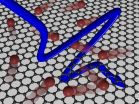
Mainz/Barcelona. A team of scientists at the Max Planck Institute for Polymer Research (MPI-P) discovered that electrical conduction in graphene on the picosecond timescale - a picosecond being one thousandth of one billionth of a second - is governed by the same basic laws that describe the thermal properties of gases. This much simpler thermodynamic approach to the electrical conduction in graphene will allow scientists and engineers not only to better understand but also to improve the performance of graphene-based nanoelectronic devices. The researchers found that ...
Read more →
New resource makes gene-editing technology even more user friendly
Technology 2015-07-16

New resource makes gene-editing technology even more user friendly

Researchers at Harvard University and the University of California, San Diego, have developed a new user-friendly resource to accompany the powerful gene editing tool called CRISPR/Cas9, which has been widely adopted to make precise, targeted changes in DNA. This breakthrough has the potential to facilitate new discoveries in gene therapies and basic genetics research. The research was published in the July 13 issue of Nature Methods. The study describes an approach to simplify a laborious part of the gene editing process using the CRISPR/Cas9 system: choosing the best ...
Read more →
Science 2015-07-16

UI researchers stimulate human amygdala to gain key insight into SUDEP

Sudden unexpected death in epilepsy (SUDEP) is becoming increasingly recognized as a very real and devastating problem in which impaired breathing is thought to play a critical role. Researchers believe breathing may be impaired during and after seizures, without the patient's knowledge. By using electrical stimulation to activate the amygdala, a group of University of Iowa researchers has identified areas of the human brain in which breathing is controlled and, in some cases, impaired, providing an important insight into SUDEP. Their study - which marks the first time ...
Read more →
NASA's Aqua satellite sees Typhoon Halola elongating
Space 2015-07-15

NASA's Aqua satellite sees Typhoon Halola elongating

NASA's Aqua satellite flew over Typhoon Halola in the northwestern Pacific Ocean and captured temperature data on the storm. Satellite data showed that wind shear is affecting the stubborn storm. NASA's Aqua satellite passed over Halola on July 14 at 20:20 UTC (4:20 p.m. EDT/1:20 p.m. PDT) infrared data from the Atmospheric Infrared Sounder or AIRS instrument that also flies aboard Aqua showed cloud top temperatures were as cold as -63F/-52C. Cloud top temperatures that cold have the ability to drop heavy rainfall. The Joint Typhoon Warning Center noted that animated ...
Read more →