PRESS-NEWS.org - Press Release Distribution
PRESS RELEASES DISTRIBUTION

Ordinary conditioner removes head lice eggs as effectively as special products

Ordinary conditioner removes head lice eggs as effectively as special products
2014-02-25
(Press-News.org) Eggs from head lice, also called nits, are incredibly difficult to remove. Female lice lay eggs directly onto strands of hair, and they cement them in place with a glue-like substance, making them hard to get rid of. In fact, the eggs are glued down so strongly that they will stay in place even after hair has been treated with pediculicides -- substances used to kill lice.

Some shampoos and conditioners that contain chemicals or special oils are marketed as nit-removal products. However, new research just published in the Journal of Medical Entomology shows that ordinary hair conditioner is just as effective.

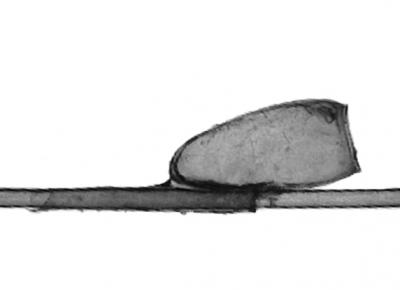
In an article called "Efficacy of Products to Remove Eggs of Pediculus humanus capitis (Phthiraptera: Pediculidae) From the Human Hair," (DOI: http://dx.doi.org/10.1603/ME13106) scientists from Belgium gathered 605 hairs from six different children. Each hair had a single nit attached to it. Approximately 14% of the eggshells contained a dead egg, whereas the rest were empty.

They then tried to remove the eggs and tested the amount of force needed to do so. They found that nits on the hairs that were left completely untreated were the most difficult to remove. Eggs on hairs that had been soaked in deionized water were much easier to remove, as were the eggs on hairs that had been treated with ordinary hair conditioner and with products specifically marketed for the purpose of nit removal.

However, they found no significant differences between the ordinary conditioners and the special nit-removal products. In all cases, less force was required to remove the nits after the hair had been treated, but the effectiveness of the products was essentially the same.

"There were no significant differences in measured forces between the ordinary conditioner and the commercial nit removal product," the authors write. "The commercial nit removal products tested in the current study do not seem to have an additional effect."

The authors hypothesize that the deionized water was effective because it acts as a lubricant, so less friction is needed to remove the nits from the hairs. The same goes for the conditioners.

"Treatment with conditioner reduces the coefficient of friction of undamaged and damaged hair," they write. "As a consequence, conditioners will facilitate nit removal."

INFORMATION:

The fast-tracked article is available now at http://tinyurl.com/qy2dpzn. In the future it will available at http://dx.doi.org/10.1603/ME13106.

The Journal of Medical Entomology is published by the Entomological Society of America, the largest organization in the world serving the professional and scientific needs of entomologists and people in related disciplines. Founded in 1889, ESA today has more than 6,500 members affiliated with educational institutions, health agencies, private industry, and government. Members are researchers, teachers, extension service personnel, administrators, marketing representatives, research technicians, consultants, students, and hobbyists. For more information, visit http://www.entsoc.org.

[Attachments] See images for this press release:
Ordinary conditioner removes head lice eggs as effectively as special products

ELSE PRESS RELEASES FROM THIS DATE:

Research links risky behaviors of gambling and sex

2014-02-25
February 25, 2014 -- Late adolescence is a period when many youth become involved in high-risk behaviors with adverse consequences. Researchers at the Mailman School of Public Health with colleagues at Johns Hopkins University studied the degree to which two such behaviors, adolescent sexual behaviors and gambling, affected African American youth in nine primary schools in Baltimore, MD. In data collected from a cohort study, they assessed whether certain adolescent sexual behaviors linked with unintended consequences such as adolescent pregnancy and sexually transmitted ...

Dartmouth-led research shows temperature, not snowfall, driving tropical glacier size

Dartmouth-led research shows temperature, not snowfall, driving tropical glacier size
2014-02-25
Temperature, not snowfall, has been driving the fluctuating size of Peru's Quelccaya Ice Cap, whose dramatic shrinkage in recent decades has made it a symbol for global climate change, a Dartmouth-led study shows. The findings support many scientists' suspicions that tropical glaciers are rapidly shrinking because of a warming climate, and will help scientists to better understand the natural variability of past and modern climate and to refine models that predict tropical glaciers' response to future climate change. The study appears in the journal Geology. A PDF ...

PFC exposure may spark metabolic changes in overweight children

2014-02-25
Washington, DC—Overweight children who were exposed to higher levels of perfluorinated chemicals tended to show early signs of developing the metabolic syndrome, according to a new study published in The Endocrine Society's Journal of Clinical Endocrinology & Metabolism. The term metabolic syndrome describes a cluster of risk factors that increase the chances of developing heart disease, stroke and diabetes. The study is the first to find changing metabolic markers in children were associated with exposure to perfluorinated chemicals (PFCs), common industrial chemicals ...

Vitamin D deficiency may compromise immune function

2014-02-25
Washington, DC—Older individuals who are vitamin D deficient also tend to have compromised immune function, according to new research accepted for publication in the Endocrine Society's Journal of Clinical Endocrinology & Metabolism (JCEM). Vitamin D plays an important role in helping the body absorb calcium needed for healthy bones. The skin naturally produces vitamin D when it is exposed to sunlight. People also obtain smaller amounts of the vitamin through foods, such as milk fortified with vitamin D. More than 1 billion people worldwide are estimated to have deficient ...

Tissue repair drug helps heal diabetic foot ulcers

2014-02-25
Washington, DC—Patients were twice as likely to have a diabetic foot ulcer heal within eight weeks when they were treated with a tissue repair drug versus a placebo, according to new research accepted for publication in the Endocrine Society's Journal of Clinical Endocrinology & Metabolism (JCEM). Foot ulcers are a common complication from diabetes than can lead to hospitalization and lower limb amputation. In 2006, about 65,700 non-traumatic lower-limb amputations were performed in people with diabetes, according to the Centers for Disease Control and Prevention. Up ...

New study presents evidence that blood pressure should be measured in both arms

2014-02-25
Philadelphia, PA, February 25, 2014 – As heart disease continues to be one of the leading causes of death in the United States, practitioners and patients alike are looking for ways to cut risk factors and identify new clues to assist with early detection. New research published in the March issue of The American Journal of Medicine suggests that there is an association between a difference in interarm systolic blood pressure and a significant increased risk for future cardiovascular events, leading researchers to recommend expanded clinical use of interarm blood pressure ...

Ecotoxicity: All clear for silver nanoparticles?

2014-02-25
It has long been known that, in the form of free ions, silver particles can be highly toxic to aquatic organisms. Yet to this day, there is a lack of detailed knowledge about the doses required to trigger a response and how the organisms deal with this kind of stress. To learn more about the cellular processes that occur in the cells, scientists from the Aquatic Research Institute, Eawag, subjected algae to a range of silver concentrations. In the past, silver mostly found its way into the environment in the vicinity of silver mines or via wastewater emanating from the ...

Georgia Tech project ensures 'what you see is what you send'

2014-02-25
Imagine a user who intends to send $2 to a friend through PayPal. Embedded malware in the user's laptop, however, converts the $2 transaction into a $2,000 transfer to the account of the malware author instead. Researchers at Georgia Tech have created a prototype software, Gyrus, that takes extra steps to prevent malware from sending spam emails and instant messages, and blocking unauthorized commands such as money transfers. Current protection programs might recognize the original user's intent to send email, transfer money or engage in other transactions, but cannot ...

Unhealthy attachments

Unhealthy attachments
2014-02-25
(Santa Barbara, Calif.) — Using the surface forces apparatus and an atomic force microscope, researchers at UC Santa Barbara have taken a molecular approach to myelin membrane interactions, leading to insights into demyelinating diseases, such as multiple sclerosis. Their research is published in the Proceedings of the National Academy of the Sciences. For a healthy nervous system, axons — the long projections of our nerve cells that run throughout our bodies — must be properly insulated. Much like conventional power cords need electrical insulators around the conducting ...

Penn researchers show nuclear stiffness keeps stem cells and cancer cells in place

Penn researchers show nuclear stiffness keeps stem cells and cancer cells in place
2014-02-25
Adult stem cells and cancer cells have many things in common, including an ability to migrate through tiny gaps in tissue. Both types of cells also experience a trade-off when it comes to this ability; having a flexible nucleus makes migration easier but is worse at protecting the nucleus' DNA compared to a stiffer nucleus. Nuclear proteins that regulate nuclear stiffness are therefore thought to control processes as diverse as tissue repair and tumor growth. In a study published in the Journal of Cell Biology, researchers at the University of Pennsylvania have shown ...

LAST 30 PRESS RELEASES:

Making lighter work of calculating fluid and heat flow

Normalizing blood sugar can halve heart attack risk

Lowering blood sugar cuts heart attack risk in people with prediabetes

Study links genetic variants to risk of blinding eye disease in premature infants

Non-opioid ‘pain sponge’ therapy halts cartilage degeneration and relieves chronic pain

AI can pick up cultural values by mimicking how kids learn

China’s ecological redlines offer fast track to 30 x 30 global conservation goal

Invisible indoor threats: emerging household contaminants and their growing risks to human health

Adding antibody treatment to chemo boosts outcomes for children with rare cancer

Germline pathogenic variants among women without a history of breast cancer

Tanning beds triple melanoma risk, potentially causing broad DNA damage

Unique bond identified as key to viral infection speed

Indoor tanning makes youthful skin much older on a genetic level

Mouse model sheds new light on the causes and potential solutions to human GI problems linked to muscular dystrophy

The Journal of Nuclear Medicine ahead-of-print tip sheet: December 12, 2025

Smarter tools for peering into the microscopic world

Applications open for funding to conduct research in the Kinsey Institute archives

Global measure underestimates the severity of food insecurity

Child survivors of critical illness are missing out on timely follow up care

Risk-based vs annual breast cancer screening / the WISDOM randomized clinical trial

University of Toronto launches Electric Vehicle Innovation Ontario to accelerate advanced EV technologies and build Canada’s innovation advantage

Early relapse predicts poor outcomes in aggressive blood cancer

American College of Lifestyle Medicine applauds two CMS models aligned with lifestyle medicine practice and reimbursement

Clinical trial finds cannabis use not a barrier to quitting nicotine vaping

Supplemental nutrition assistance program policies and food insecurity

Switching immune cells to “night mode” could limit damage after a heart attack, study suggests

URI-based Global RIghts Project report spotlights continued troubling trends in worldwide inhumane treatment

Neutrophils are less aggressive at night, explaining why nighttime heart attacks cause less damage than daytime events

Menopausal hormone therapy may not pose breast cancer risk for women with BRCA mutations

Mobile health tool may improve quality of life for adolescent and young adult breast cancer survivors

[Press-News.org] Ordinary conditioner removes head lice eggs as effectively as special products