PRESS-NEWS.org - Press Release Distribution
PRESS RELEASES DISTRIBUTION

Imaging scientists develop a better tool for tracking MS

Imaging scientists develop a better tool for tracking MS
2014-05-27
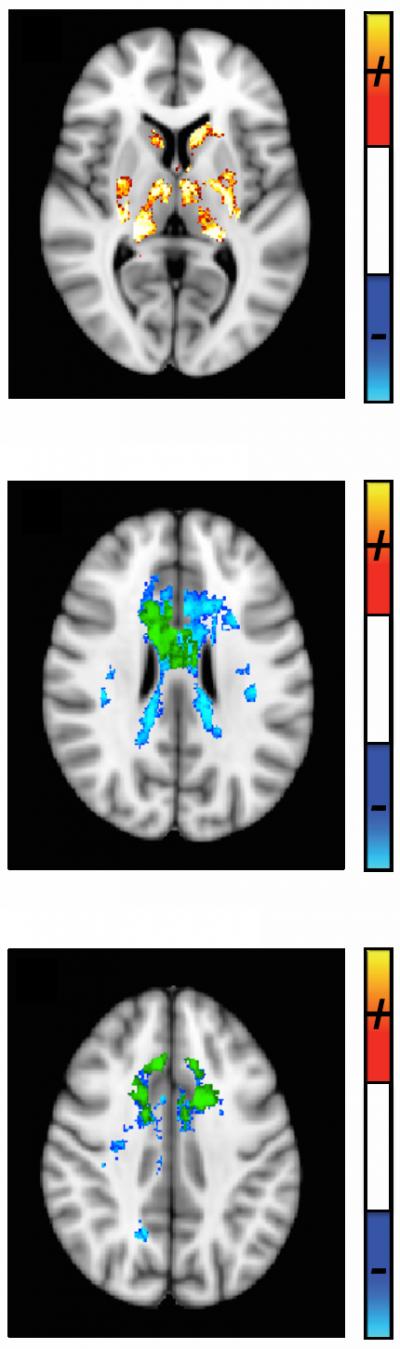
(Press-News.org) Imaging scientists at Western University's Robarts Research Institute (London, Canada) have developed a better way to track the progression of Multiple Sclerosis (MS) from its earliest stages. Led by Ravi Menon, PhD, the researchers used what's called "Quantitative Susceptibility (QS) Magnetic Resonance Imaging (MRI)," to measure damage in specific areas of the brain which the study showed to be common to all patients. The findings are published in advance online, in Radiology.

"In MS research, there is something we call a clinical-radiological paradox. When you do conventional MRIs on these patients you see lesions in the brain very clearly, but the number or volume of their lesions do not correlate with the patients' disabilities. This paradox has been recognized since the MRI was introduced to clinical practice in the early 80s, and yet this is the only imaging tool we have for assessing MS," says Menon. "Our research provides a quantitative tool using a relatively conventional imaging sequence but with novel analysis. This tool shows that there is considerable damage occurring in common areas of all patients in both the white matter and in the deep brain structures –the gray matter. Those quantitative measures –what we call quantitative susceptibility, correlate with disease symptoms."

The process used a standard Siemens 3T MRI so it could be reproduced in any hospital, using the technique, called QS. The researchers mapped this MRI parameter in 25 patients with relapsing-remitting MS or clinically isolated syndrome (CIS –half of those diagnosed with CIS will go on to be diagnosed with MS) measuring both demyelination and iron deposition. Fifteen age and sex-matched control subjects were also scanned. While brain and spine lesions visualized with normal MRI tend to appear and disappear over time, QS shows common areas of damage in all patients that correlated very well with the Extended Disability Status Score (EDSS) which is a standard tool used to measure MS progression, as well as with age and time since diagnosis.

"Significantly, in white matter, even where we see no lesions whatsoever, we're able to measure damage in the same area of all patients using QS mapping. So even at the very earliest stages of the disease when the disability score is very low, or when the person hasn't yet been diagnosed with MS, there's already significant damage," adds Menon. This could have important diagnostic and prognostic implications, as there are drugs available to slow or stop the progression of MS, if started early enough.

INFORMATION: This research was funded by the Canadian Institutes of Health Research. David Rudho, Igor Solovey, Joseph Gati and Dr. Marcelo Kremenchutsky also worked on the paper, which is titled "Multiple Sclerosis: Improved identification of disease-relevant changes in gray and white matter using susceptibility-based MR imaging."

[Attachments] See images for this press release:
Imaging scientists develop a better tool for tracking MS

ELSE PRESS RELEASES FROM THIS DATE:

Steroids prescribed in the ICU linked to delirium

2014-05-27
New Johns Hopkins research suggests that critically ill patients receiving steroids in a hospital's intensive care unit (ICU) are significantly more likely to develop delirium. Results of their research, they say, suggest minimizing the use of steroids could reduce delirium in the ICU. While it usually goes away after a few days, studies show delirium in the ICU has a long-term impact. It has been associated with worse functional recovery and cognitive impairments of a magnitude consistent with moderate traumatic brain injury or mild Alzheimer's disease. Overall, up ...

HSP90 is a potential target for ameliorating skeletal muscle abnormalities in PD

2014-05-27
Heat shock protein (HSP90) has been suggested to be involved in neuronal protein misfolding and accumulation in Parkinson's disease (PD) brains leading to dopaminergic neuronal death and the eventual dopamine depletion. Therefore, HSP90 has been suggested as a therapeutic target in PD. Dr. Muhammed Al-Jarrah and co-workers from Jordan University of Science and Technology (JUST) point out exercise training significantly inhibited HSP90 overexpression in the soleus and gastrocnemius in PDe rats, which is a potential therapeutic target for ameliorating skeletal muscle abnormalities ...

A new 'Kabuto-like' nickel catalyst forms bioactive frameworks from phenol derivatives

A new Kabuto-like nickel catalyst forms bioactive frameworks from phenol derivatives
2014-05-27
Researchers at ITbM, Nagoya University developed a new nickel catalyst with a "Kabuto-like" structure that was found to catalyze the cross-coupling reaction between carbonyl compounds and readily available phenol derivatives, to form alpha-arylketones, which are found in many biologically active compounds (Kabuto = a helmet worn by Japanese samurai). Nagoya, Japan – Professors Kenichiro Itami and Junichiro Yamaguchi of the Institute of Transformative Bio-Molecules (WPI-ITbM) and graduate students Ryosuke Takise and Kei Muto of Nagoya University have succeeded in developing ...

New tick-borne disease threatens primarily immune suppressed persons

New tick-borne disease threatens primarily immune suppressed persons
2014-05-27
A newly discovered tick-borne bacterium known as "Candidatus Neoehrlichia mikurensis" has been implicated in six cases of disease in Sweden. A new international study led by the Sahlgrenska Academy has shown that this bacterium is primarily a risk for people who are already sick and who are receiving immunosuppressive drugs. The Candidatus Neoehrlichia mikurensis bacterium, known in the medical world by its short name Neoehrlichia, was discovered and described for the first time in a scientific article in 2010. The bacterium, which is spread by rodents and ticks mainly ...

New jigsaw piece for the repair of DNA crosslinks

New jigsaw piece for the repair of DNA crosslinks
2014-05-27
Environmental influences such as ionizing radiation, intense heat or various chemical substances damage the DNA constantly. Only thanks to efficient repair systems can mutations – changes in the DNA – largely be prevented. DNA crosslinks that covalently link both strands of the DNA double helix are among the most dangerous DNA lesions. Crosslinks block DNA replication and can thus cause cell death. Moreover, their faulty repair can trigger the development of tumors. Crosslink repair is highly complex and only vaguely understood today. A team of cancer researchers headed ...

X-ray dark-field radiography provides detailed imaging of lung diseases

2014-05-27
As the team reports in the Investigative Radiology journal, this method shows promise in detecting diseases such as pulmonary emphysema at an earlier stage, than it is currently available. Conventional radiographic procedures generate images based on the absorption of X-rays as they pass through the tissue. The newly developed technique of X-ray dark-field radiography uses new technology to monitor wave changes during tissue transmission to create higher resolution images. Detailed images With the aid of this new technique, the team from the HMGU, KUM and TUM around Dr. ...

Two new possible drug targets for triple negative breast cancer

2014-05-27
HOUSTON -- ( May 27, 2014 ) -- The suppression of two genes reduce breast cancer tumor formation and metastasis by interfering with blood vessel formation and recruitment, report scientists from Houston Methodist and five other institutions in the Proceedings of the National Academy of Sciences (now online). The findings may help medical researchers identify effective drug targets for triple negative breast cancer, or TNBC. The genes, MLF2 (myeloid leukemia factor 2) and RPL39 (a ribosomal protein), were found to most profoundly impact the production of nitric oxide synthase, ...

Large numbers of shadow economy entrepreneurs in developing countries, according to new report

2014-05-27
There are large numbers of entrepreneurs in developing countries who aren't registering their businesses with official authorities, hampering economic growth, according to new research. Shadow entrepreneurs are individuals who manage a business that sells legitimate goods and services but they do not register it. This means that they do not pay tax, operating in a shadow economy where business activities are performed outside the reach of government authorities. The shadow economy results in loss of tax revenue, unfair competition to registered businesses and also poor ...

Mycotoxin protects against nematodes

2014-05-27
This news release is available in German. Most terrestrial plants enter into biocoenosis with funghi. Both sides benefit: the fungus, which surrounds the small roots of the host plant with a thick felt, supplies the plant with trace elements and water. The plant, in turn, supplies the fungus with sugars and other metabolites which it is unable to produce itself. Toxic protein kills intestinal cells ETH researchers from the research group of microbiology professor Markus Aebi have discovered a protein in the cells of one such ectomycorrhizal fungus which offers an ...

AGU: Experts publish new view of zone where Malaysia Airlines flight 370 might lie

AGU: Experts publish new view of zone where Malaysia Airlines flight 370 might lie
2014-05-27
WASHINGTON, D.C. -- A new illustration of the seafloor, created by two of the world's leading ocean floor mapping experts that details underwater terrain where the missing Malaysia Airlines flight might be located, could shed additional light on what type of underwater vehicles might be used to find the missing airplane and where any debris from the crash might lie. The seafloor topography map illustrates jagged plateaus, ridges and other underwater features of a large area underneath the Indian Ocean where search efforts have focused since contact with Malaysia Airlines ...

LAST 30 PRESS RELEASES:

Making lighter work of calculating fluid and heat flow

Normalizing blood sugar can halve heart attack risk

Lowering blood sugar cuts heart attack risk in people with prediabetes

Study links genetic variants to risk of blinding eye disease in premature infants

Non-opioid ‘pain sponge’ therapy halts cartilage degeneration and relieves chronic pain

AI can pick up cultural values by mimicking how kids learn

China’s ecological redlines offer fast track to 30 x 30 global conservation goal

Invisible indoor threats: emerging household contaminants and their growing risks to human health

Adding antibody treatment to chemo boosts outcomes for children with rare cancer

Germline pathogenic variants among women without a history of breast cancer

Tanning beds triple melanoma risk, potentially causing broad DNA damage

Unique bond identified as key to viral infection speed

Indoor tanning makes youthful skin much older on a genetic level

Mouse model sheds new light on the causes and potential solutions to human GI problems linked to muscular dystrophy

The Journal of Nuclear Medicine ahead-of-print tip sheet: December 12, 2025

Smarter tools for peering into the microscopic world

Applications open for funding to conduct research in the Kinsey Institute archives

Global measure underestimates the severity of food insecurity

Child survivors of critical illness are missing out on timely follow up care

Risk-based vs annual breast cancer screening / the WISDOM randomized clinical trial

University of Toronto launches Electric Vehicle Innovation Ontario to accelerate advanced EV technologies and build Canada’s innovation advantage

Early relapse predicts poor outcomes in aggressive blood cancer

American College of Lifestyle Medicine applauds two CMS models aligned with lifestyle medicine practice and reimbursement

Clinical trial finds cannabis use not a barrier to quitting nicotine vaping

Supplemental nutrition assistance program policies and food insecurity

Switching immune cells to “night mode” could limit damage after a heart attack, study suggests

URI-based Global RIghts Project report spotlights continued troubling trends in worldwide inhumane treatment

Neutrophils are less aggressive at night, explaining why nighttime heart attacks cause less damage than daytime events

Menopausal hormone therapy may not pose breast cancer risk for women with BRCA mutations

Mobile health tool may improve quality of life for adolescent and young adult breast cancer survivors

[Press-News.org] Imaging scientists develop a better tool for tracking MS